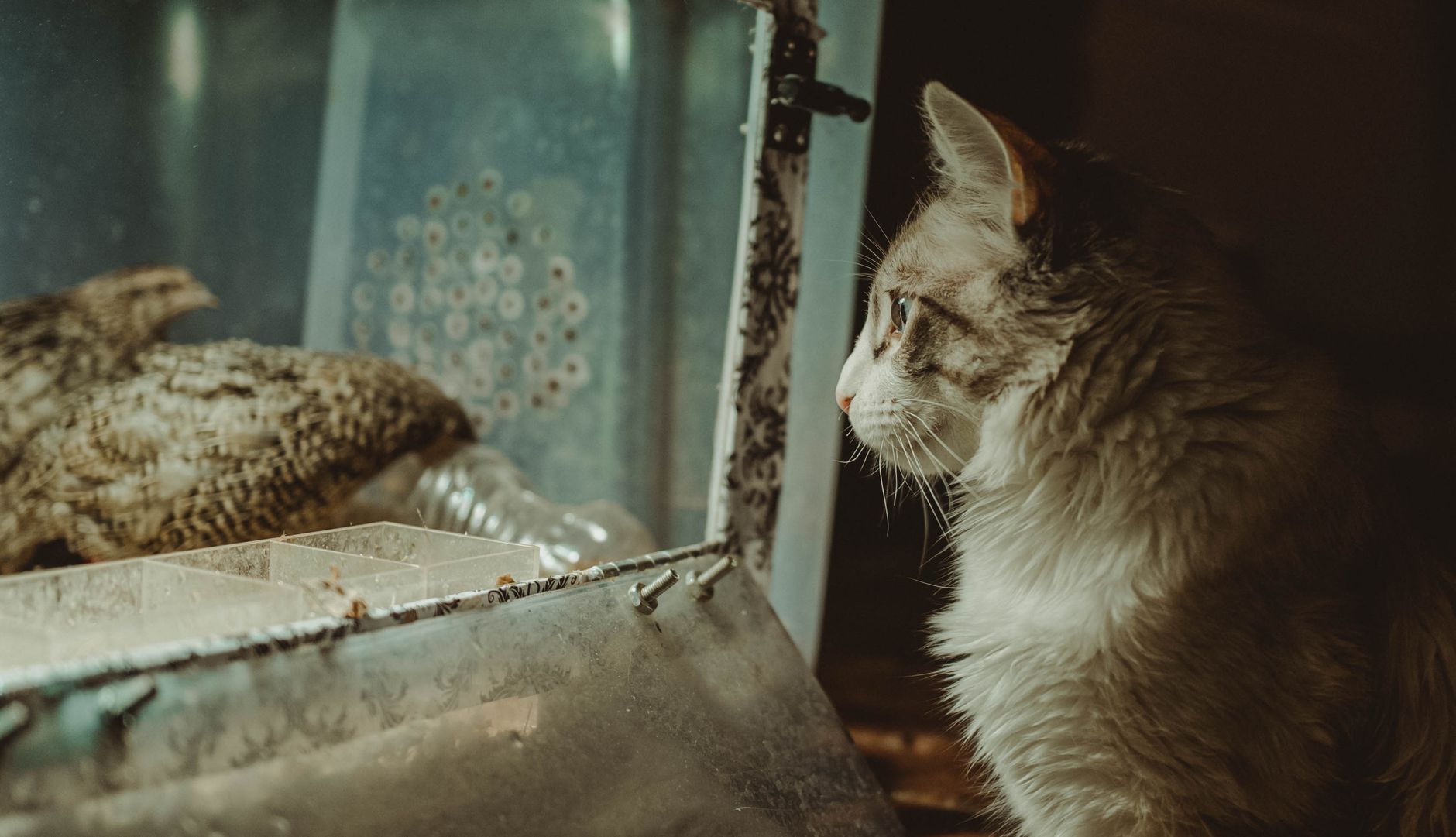
The biggest bird flu mistakes in cat care are feeding raw animal products, allowing cats to hunt birds, and waiting too long after symptoms appear. H5N1 is an avian influenza virus that can infect cats and cause deadly illness. Risk reduction starts with ordinary choices: serve thoroughly cooked or heat-treated food, keep cats indoors, check raw-food packages, and act promptly when a cat becomes sick. Even indoor cats may face exposure through contaminated food.
Table of Contents
- Raw Food and Milk Are Not Safe Shortcuts
- Hunting Creates an Avoidable Exposure Route
- Do Not Wait Out Warning Signs
- Check the Exact Product, Lot, and Date
- Protect the Household While Handling Food
Raw Food and Milk Are Not Safe Shortcuts
Do not give cats raw milk, undercooked meat, or raw pet food. The CDC discourages these foods because they can expose cats to H5N1 and advises owners to keep cats indoors. Freezing, careful sourcing, or a premium label should not be treated as substitutes for heat treatment. The FDA says cats are particularly sensitive to H5N1 and that infections linked to unpasteurized milk or uncooked meat can be deadly.
Thorough heat treatment inactivates the virus in meat, milk, and egg products, according to the FDA's risk-reduction guidance. This risk is documented rather than hypothetical. A Los Angeles County investigation found that 19 cats became ill after consuming commercial raw milk, raw meat, or raw pet food. Nine tested positive for H5N1, and 14 died or were euthanized.
Hunting Creates an Avoidable Exposure Route
Letting a cat roam outdoors can give it access to wild birds. A cat does not need to receive a raw diet at home if it catches and consumes prey outside.
The FDA recommends preventing cats from hunting and eating wild birds. Keeping a cat indoors directly removes that exposure opportunity. owners should also avoid treating captured birds as toys or allowing a cat to continue eating its catch.
Do Not Wait Out Warning Signs
A cat exposed to raw animal products or wild birds needs prompt veterinary attention if illness develops. Waiting for several symptoms—or assuming the cat has an ordinary stomach or respiratory problem—can delay care.
The FDA identifies these warning signs: Contact a veterinarian promptly if any of these signs appear. Mention possible raw-food, raw-milk, or wild-bird exposure so the clinic has useful context before evaluating the cat.
- Fever
- Lethargy or unusual weakness
- Poor appetite
- Eye or nasal discharge
- Difficulty breathing
Check the Exact Product, Lot, and Date
Another mistake is checking only the brand name when a contaminated food is identified. Product notices may apply to specific recipes, lot codes, and sell-by dates. The FDA linked a fatal feline H5N1 infection to RAWR Raw Cat Food Chicken Eats using PCR testing and genome sequencing.
It reported positive results for lot CCS 25 077, with a sell-by date of September 18, 2026, and lot CCS 25 093, dated October 3, 2026, in its notice to pet owners. If that product is in your home, compare all three details: the product name, lot code, and sell-by date. Stop serving a matching lot, and seek veterinary care promptly if the cat has warning signs.
Protect the Household While Handling Food
Raw pet food can spread germs to hands, utensils, counters, and feeding equipment. CDC food-safety guidance advises washing hands before and after handling pet food. It also recommends cleaning bowls, scoops, feeding surfaces, and anything touched by raw food.
Do not assume that an apparently clean bowl or counter is safe. Clean each item after contact instead of carrying the same scoop between containers or leaving residue on a preparation surface. Cat-to-human H5N1 transmission has not been documented, but the risk remains unknown. One veterinary professional had antibody evidence after exposure to an infected cat without respiratory or eye protection, despite having no symptoms, according to the CDC's May 7, 2026 MMWR report.