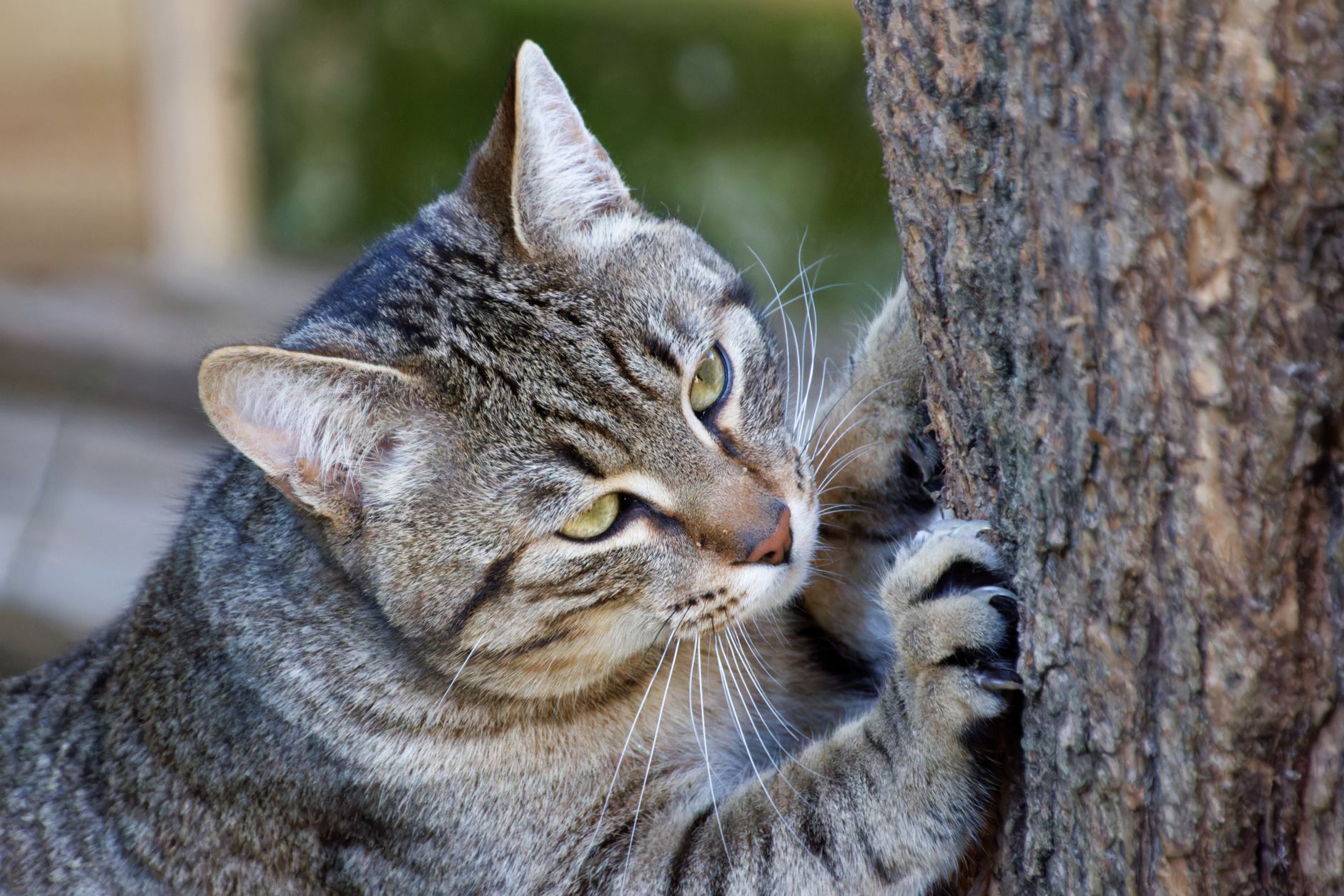
Your cat probably scratches the wall because it better matches their preferred surface, height, stability, or location than the nearby post. The behavior is normal scratching—not revenge or spite. Scratching leaves visible marks and paw scent while helping remove old claw sheaths. The solution is to make an acceptable scratcher work more like the chosen wall.
Table of Contents
- Why the wall wins
- Check the current scratching post
- Put the alternative where scratching happens
- Test a different shape or material
- Avoid punishment and consider stress
- When to contact a veterinarian
Why the wall wins
A scratching post can seem suitable to a person yet fail a cat's practical test. The wall may offer a better texture, a firmer grip, more height, or enough room for a full-body stretch. Cornell University's College of Veterinary Medicine explains that scratching serves several natural functions, including scent marking, visual marking, and shedding claw sheaths. It also notes that the chosen target alone cannot reveal one definite cause.
Cats have individual preferences for surface, orientation, and location, according to Cornell's guidance on destructive scratching. Watch exactly how your cat uses the wall. A long upright stretch suggests that the post may be too short. Firm pulling against the surface may mean the post moves too easily, while repeated attention to one spot points to a location preference.
Check the current scratching post
A useful vertical post should remain steady when the cat pulls against it. cats Protection says cats commonly favor tall, sturdy objects that allow them to grip and stretch, making a short or wobbling post a plausible mismatch in its scratching advice.
Compare the post with the wall rather than judging it on appearance alone: Replace or reinforce a post that tips, slides, or forces the cat to crouch. If the structure is suitable but remains unused, test a different surface rather than buying another post with the same material.
- Is the post tall enough for the cat's full upright stretch?
- Does its base stay still during vigorous scratching?
- Can the cat grip the material easily?
- Is the scratching area wide enough for comfortable use?
- Does the wall offer a texture absent from the post?
Put the alternative where scratching happens
Place a stable, full-height scratching surface directly against or immediately beside the damaged area. At this stage, location matters more than where you would ultimately prefer the scratcher to stand. Reward the cat when they use the new surface. Once they choose it reliably, move it toward the desired position in small stages.
Moving it across the room immediately may remove the very feature that made it useful. Scratching also marks territory, so a quiet corner may be less appealing than an active boundary. Cats may prefer scratchers near sleeping places, doors, cat flaps, windows, sofas, or other busy locations. If the wall is beside one of these areas, consider leaving an appropriate scratcher there permanently.
Test a different shape or material
Not every cat wants a vertical post. A cat that scratches carpet or low wall edges may prefer a horizontal pad, while one that reaches upward may need a taller vertical panel.
Try options that reproduce the useful qualities of the chosen target without encouraging further wall damage: Change one feature at a time when possible. For example, keep the location constant while testing a taller post, then test another material if height alone makes no difference. This makes the cat's preference easier to identify.
- A tall, securely mounted scratching panel
- A heavy post with a broad, stable base
- A horizontal cardboard scratcher
- A scratcher whose texture resembles the favored surface
- More than one orientation in different locations
Avoid punishment and consider stress
Do not yell, spray water, or punish the cat for scratching. Punishment does not show the cat which surface to use and may increase fear or anxiety. Rewarding use of the appropriate surface gives the cat a clearer alternative.
Consider whether the behavior increased after moving, a schedule disruption, a new cat, or tension with another animal. VCA Animal Hospitals notes that anxiety and conflict can increase territorial scratching; adding scratchers may not solve the problem while the cat still feels insecure in its behavior guidance. If there has been a household change, provide suitable scratching surfaces in the areas the cat already uses. Pay attention to patterns involving doors, windows, shared spaces, or encounters with another animal rather than treating the damaged wall as an isolated problem.
When to contact a veterinarian
Arrange a veterinary check if the wall scratching began suddenly or is clearly out of character. Behavioral changes can accompany stress, fear, illness, or pain, and cats may hide discomfort instead of showing obvious lameness, according to Cats Protection's behavior guidance.
A check is especially sensible when you cannot connect the change to the post, its placement, or a clear household event. Record when and where the scratching occurs so you can give the veterinarian a concrete description of the change.