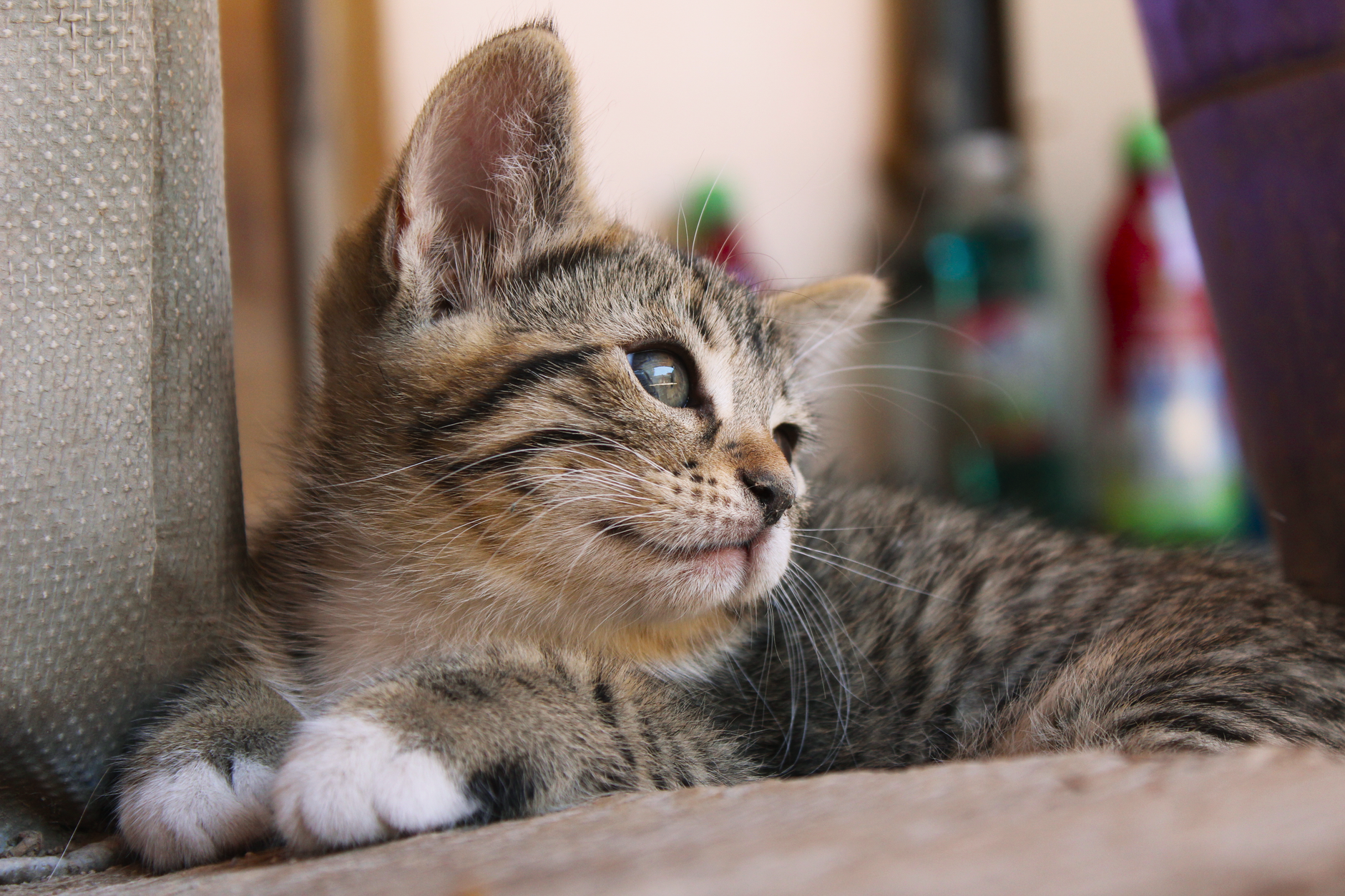
A cat that has suddenly started hiding behind the washing machine is usually doing one of two things: seeking a warm, enclosed refuge from something stressful, or quietly signalling that it feels unwell. Hiding itself is normal feline behaviour — a *new* or increasing amount of it is the part worth acting on, especially if it lasts more than a day or two. There is also a safety problem specific to this particular spot. A cat that has adopted the laundry area is a cat that may one day climb into the drum, so the behaviour question and the hazard question need answering at the same time.
Table of Contents
- Normal hiding versus a warning sign
- Did something in the house change?
- Why behind the washing machine specifically
- The laundry-machine hazard you have to close now
- Hidden pain, and why arthritis is the usual suspect
- Give it a better place to hide
- Frequently Asked Questions
Normal hiding versus a warning sign
cats conceal weakness because, in the wild, an animal that looks sick attracts predators. That instinct means hiding is one of the few outward clues you get.
VCA Animal Hospitals, in its guide to recognizing the signs of illness in cats, advises a check-up when increased hiding lasts more than a day or two, or arrives alongside other changes. Check these alongside the hiding before you decide how urgent it is: A cat that is eating, drinking, using the box and coming out for company is behaving very differently from one that has withdrawn from all of it. The second pattern is a vet visit, not a wait-and-see.
- Eating less, or refusing food entirely
- Drinking noticeably more or less than usual
- Litter-box changes — straining, going elsewhere, diarrhoea, or nothing at all
- Vomiting, weight loss, or a coat that has stopped looking groomed
- Low energy, or flinching when touched in a particular spot
Did something in the house change?
Routine disruption alone is enough to produce this. An Ohio State University study followed 12 healthy cats and 20 with feline interstitial cystitis — a chronic bladder condition — for 77 weeks. In the 11 weeks containing unusual events, such as changed caretakers or an altered schedule, even the healthy cats showed sickness behaviours including hiding, reduced appetite and vomiting.
So think back over the past fortnight. New person in the house, a visitor's dog, building work, a different feeding time, furniture moved, a new cat next door, the washing machine itself being replaced — any of these can be the trigger, and none of them is a health problem. The catch is that this explanation looks identical from the outside to the illness explanation. A plausible stressor does not rule out pain or disease; it just makes the odds a little better while you watch for the signs above.
Why behind the washing machine specifically
The gap behind an appliance is dark, narrow, enclosed on three sides, and warm — which is close to an ideal cat refuge. Warmth matters more than most owners assume. The Veterinary Ireland Journal notes that the feline thermoneutral zone sits at roughly 30–38 °C, well above a typical 20–22 °C home, so cats routinely seek heat sources rather than burn energy staying warm.
The enclosure matters too, and it is genuinely good for the cat. A randomised controlled trial in Dutch shelters, published in PLOS ONE, found cats given a hiding box showed significantly faster falls in Cat-Stress-Score and settled roughly seven days sooner than cats without one. That is the key reframe. The hiding is a coping mechanism that works — the problem is the location your cat picked, not the impulse behind it.
The laundry-machine hazard you have to close now
Treat this as separate from the behaviour, and handle it today. The Animal Medical Center in New York warns in its account of a cat's close call in a dryer that washers and dryers are life-threatening to cats that climb in unobserved, and advises keeping the laundry-room door shut and checking the drum before every cycle.
These are not hypothetical outcomes. One Minnesota cat, Felix, was left in critical condition after more than 40 minutes in a running machine, as reported by Yahoo News, and other cats have died in domestic washers. Practical steps, in order:.
- Keep the machine doors closed between loads, and the laundry-room door shut if you have one
- Look and feel inside the drum before every cycle, without exception
- Do not leave warm laundry piles unattended in the room
- Account for the cat before you press start
Hidden pain, and why arthritis is the usual suspect
If nothing in the household changed, pain is the next thing to rule out — and joint disease is far more common in cats than owners expect. A 2010 cross-sectional study by Lascelles and colleagues radiographed 100 randomly selected cats up to age 20 and found 92% had radiographic degenerative joint disease, 91% with at least one limb site affected. Treat that headline number carefully.
Prevalence varies sharply with the population sampled — Hardie and colleagues reported 26% appendicular osteoarthritis in cats over 12, while a 2020 retrospective radiographic study found 74.26% of 101 cats. There is no single correct figure to quote. What holds across all of them is that feline joint pain is easy to miss. Cats rarely limp visibly; they just do less, jump less, and spend more time tucked away somewhere warm — which is exactly what a spot behind a washing machine offers.
Give it a better place to hide
Blocking the gap without offering an alternative just moves the cat somewhere you cannot see it. The 2013 AAFP/ISFM Feline Environmental Needs Guidelines make "a safe place" the first of five pillars and instruct owners to provide individual hiding places for each cat — cardboard boxes, carriers, hideaway holes — including raised options, because withdrawal is how cats self-regulate. Match the features of the spot your cat chose: enclosed on most sides, warm, and quiet.
A covered bed or a box on its side, placed on a shelf or cat tree away from foot traffic, with a soft mat or a safely designed pet heat pad, covers all three. In a multi-cat home, provide one per cat plus a spare, in different rooms. Then close off the laundry gap with a board or a sealed panel, once the new spot is in use — and book the vet exam anyway if the hiding is new, worsening, or paired with any of the signs in section one.
Frequently Asked Questions
Should I pull my cat out from behind the machine?
No — dragging a cat from its refuge adds stress and can get you scratched. Block the gap only after a better hiding place is set up and being used.
How long should I wait before calling the vet?
VCA suggests a check-up if increased hiding runs past a day or two. Call sooner if your cat is not eating, not using the litter box, vomiting, or reacting to touch.
My cat is young. Can it still be arthritis?
Possibly. The Lascelles study sampled cats up to age 20 and found degenerative joint disease was widespread, though prevalence estimates differ a great deal between studies and age groups.
Will a heat pad stop the appliance-seeking?
It addresses the warmth, which is one of three draws. Enclosure and quiet matter too, so pair any heat source with a covered, low-traffic spot.