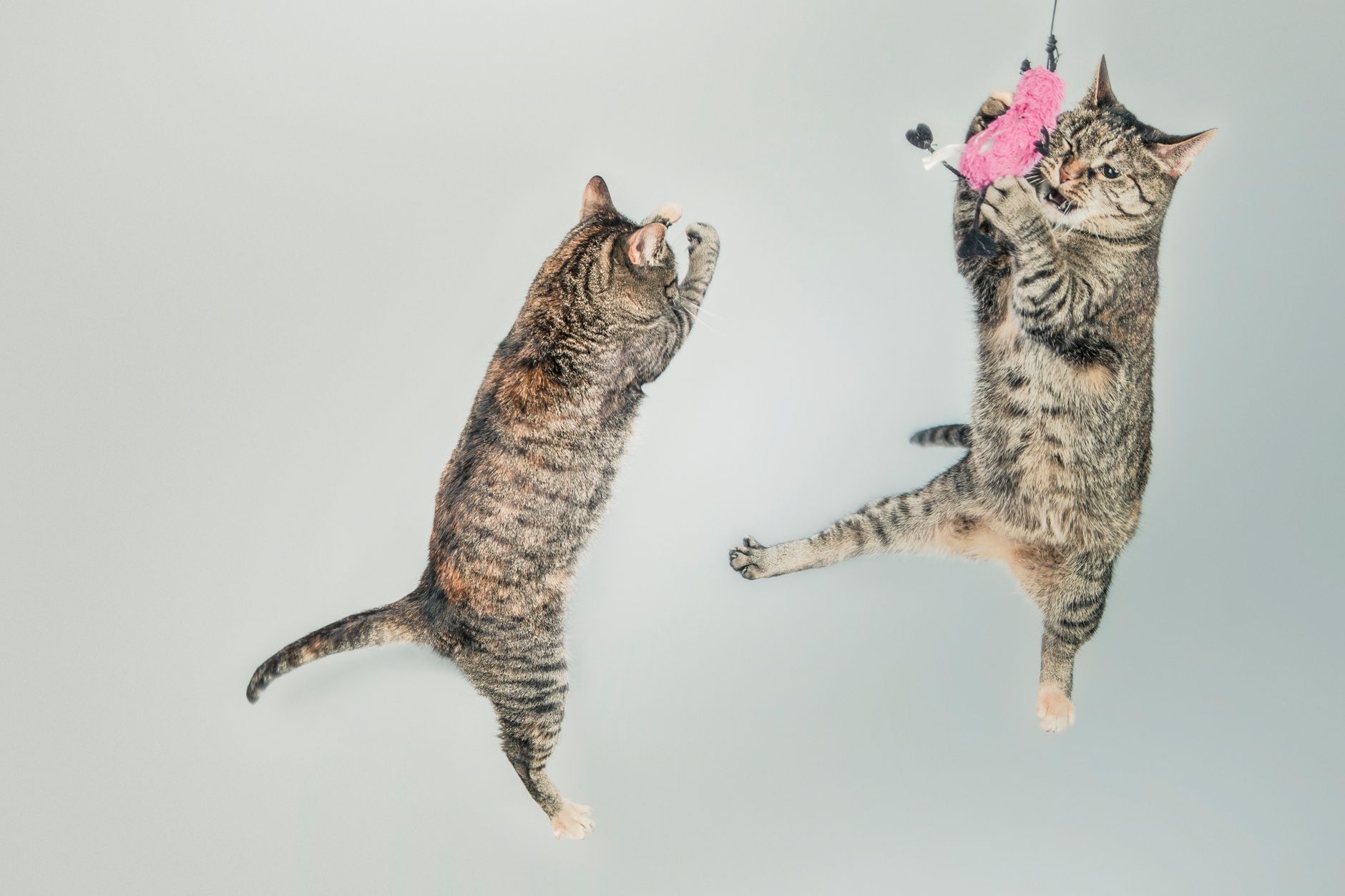
The most common cat toy questions in September 2026 have clear, source-backed answers: play with your cat in structured sessions at least twice a day, keep string toys supervised, check battery-powered toys against active recalls, and reach for silver vine if catnip does nothing. One recall matters right now — JC Sales' "Lil' Buddies" pet laser toys, pulled by the U.S.
Consumer Product Safety Commission over an unsecured button-battery compartment. Beyond that recall, the questions owners ask most — how much play is enough, whether laser pointers are harmful, which toys are dangerous, and what to buy for a cat that ignores catnip — all have research behind them. The answers below draw on veterinary guidelines, peer-reviewed studies, and federal safety notices.
Table of Contents
- How much play does an indoor cat actually need?
- Which cat toys are being recalled, and why do batteries keep coming up?
- Are string and ribbon toys really that dangerous?
- Do laser pointers harm cats?
- What should I buy for a cat that ignores catnip?
- Frequently Asked Questions
How much play does an indoor cat actually need?
Veterinary behaviorists cited by the American Animal Hospital Association and the American Association of Feline Practitioners recommend at least two structured interactive sessions of roughly 10–15 minutes per day for adult indoor cats. "Structured" means you drive the toy, not the cat batting a ball alone. Wand and teaser toys work best for these sessions because they let the cat run its full hunting sequence: stalk, chase, and capture.
A toy the cat can actually catch at the end matters more than how long the session runs. Solo toys left on the floor supplement these sessions; they do not replace them. If your cat loses interest quickly, shorter and more frequent sessions beat one long one. Rotating which toys come out also keeps a familiar wand feeling new.
Which cat toys are being recalled, and why do batteries keep coming up?
In 2026 the CPSC recalled JC Sales' "Lil' Buddies" pet laser toys — model 24496, white with blue paw prints — because the battery compartment is not secure and the included button cells lack the child-resistant packaging and warnings Reese's Law requires. Owners should stop using the toy, dispose of it, and email a photo to [email protected] for a full refund. This is a pattern, not a one-off.
In 2025 the CPSC recalled Petmate's Pet Zone electronic pet toys sold at Menards and warned about Petgravity cat toys on Amazon for the same hazard. A swallowed button cell causes internal chemical burns and can kill a child. The practical rule for any battery-powered cat toy in a home with children:.
- Check that the battery compartment closes with a screw, not a friction tab.
- If a compartment pops open by hand or a cat's teeth, retire the toy.
- Keep spare button cells in their child-resistant packaging until installed.
Are string and ribbon toys really that dangerous?
Yes — string, yarn, ribbon, and elastic are the most dangerous toy materials for cats, and the injury they cause is uniquely severe. VCA Animal Hospitals explains that a swallowed linear foreign body can anchor under the tongue or in the stomach while intestinal contractions saw the trailing end through the gut wall. The result is perforation requiring emergency exploratory surgery. That doesn't mean throwing out every wand toy, since dangling teasers are also the best play tools.
The rule is supervision: string-based toys come out only when you're playing, and go into a closed drawer or cabinet afterward. A cat left alone with a ribbon teaser overnight is the classic setup for this emergency. Warning signs after a suspected swallow include vomiting, refusing food, and pawing at the mouth. Never pull on a string protruding from a cat's mouth or rear — that tension is exactly what cuts the intestine. Go to a veterinarian.
Do laser pointers harm cats?
The evidence says overuse carries a real behavioral cost. A study of 618 cat owners published in the journal Animals found laser-pointer play frequency was the strongest predictor of owner-reported abnormal repetitive behaviors — cats obsessively chasing lights, shadows, and reflections long after the laser is off. The mechanism is frustration.
The AAFP's 2024 intercat-tension guidelines note a laser dot never lets the cat complete the hunt: there is nothing to bite when the chase ends. The fix is simple — end every laser session by landing the dot on a physical toy or a treat the cat can actually catch, so the sequence finishes with a capture. If your cat already stares at walls or stalks reflections, retire the laser in favor of wand toys and mention the behavior to your veterinarian.
What should I buy for a cat that ignores catnip?
Silver vine. A 100-cat study in BMC Veterinary Research found silver vine triggered enjoyment responses in 79% of cats versus 68% for catnip — and 71% of cats that ignored catnip did respond to silver vine. Since roughly a third of cats are catnip non-responders, silver vine is the best-documented alternative, sold as sticks, powder, and stuffed-toy filler.
For everyday enrichment beyond scent toys, food puzzles have the strongest veterinary backing. Researchers writing in the Journal of Feline Medicine and Surgery recommend puzzle feeders as routine enrichment, reporting cases where puzzle feeding contributed to weight loss and reduced attention-seeking and anxiety-related behavior in indoor cats. Introduce puzzles gradually at an easy level — a shallow tray the cat wins from immediately — before moving to harder ones. A cat that fails a difficult puzzle on day one simply stops trying, and the toy becomes furniture.
Frequently Asked Questions
How do I know if my laser toy is the recalled one?
The recalled JC Sales "Lil' Buddies" laser is model 24496, white with blue paw prints. If yours matches, stop using it and email a photo to [email protected] for a full refund.
Can kittens follow the same play schedule as adults?
The two-session, 10–15 minute guideline is for adult indoor cats. Kittens typically want more frequent, shorter bursts; the same rules on string supervision and secure battery compartments apply from day one.
Is silver vine safe to offer regularly?
The BMC Veterinary Research study documented enjoyment responses, not harm, across 100 cats. Offer it as sticks or toy filler and let your cat's interest set the pace, as with catnip.