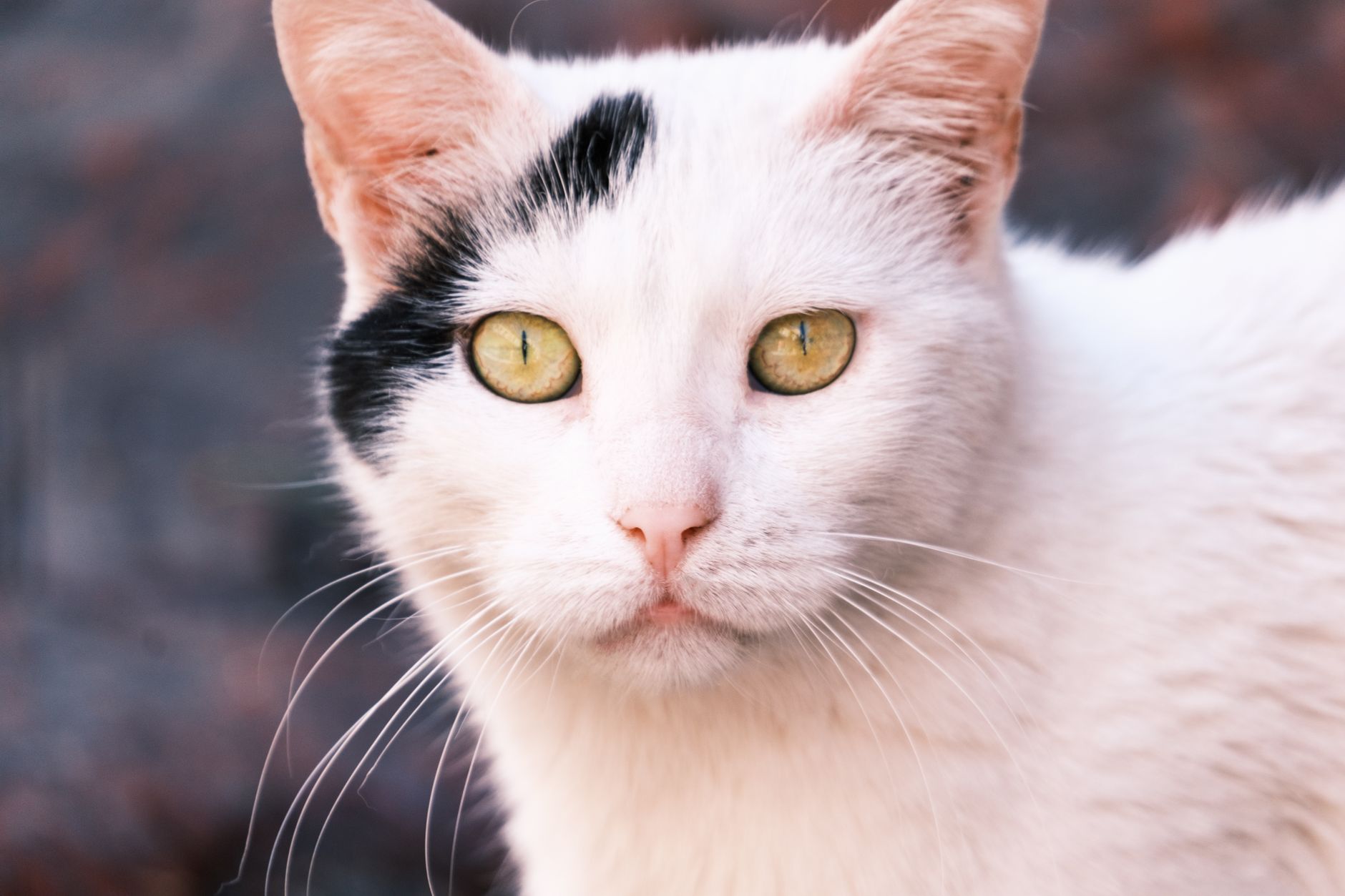
Deafness in white cats comes from the dominant White (W) gene, a coat-color gene that can also disrupt inner-ear development. W always produces a solid white coat, but blue eyes and congenital deafness occur only in some cats. W suppresses pigment-cell migration and survival. When those cells are missing from key eye and ear tissues, eye color changes and hearing can fail from birth.
Table of Contents
- How a coat-color gene harms hearing
- How much do blue eyes raise the risk?
- Why can deafness be easy to miss?
- What should owners and breeders do?
How a coat-color gene harms hearing
W blocks normal development of melanocytes, the pigment-producing cells found in skin, iris, and ear. According to the Veterinary Genetics Laboratory, molecular mapping links dominant White to a FERV1 retrovirus insertion in intron 1 of KIT on chromosome B1, including a truncated form that disrupts pigment cells laboratory summary of W-linked deafness.
The hearing loss happens inside the cochlea. Without melanocytes in the stria vascularis, that tissue degenerates and loses the electrical charge needed for hearing. The result is cochleosaccular sensorineural deafness, present from birth in one or both ears.
How much do blue eyes raise the risk?
Eye color is a useful risk marker, not a diagnosis. According to the Cornell Feline Health Center summary, about 17-22% of solid-white cats without blue eyes are deaf, about 40% with one blue eye, and 65-85% with two blue eyes Cornell Feline Health Center summary. Deafness may affect one ear or both.
Cats with different-colored eyes can be deaf mainly on the blue-eyed side. These percentages are estimates because penetrance varies by genotype and study group. Higher deafness occurs in W homozygotes than heterozygotes, with overall prevalence around 20-30% across cohorts.
Why can deafness be easy to miss?
A white cat deaf in one ear often looks normal. The hearing ear compensates, so the cat still responds to sounds, voices, and toys. That compensation was confirmed in client-owned pure-breed white cats.
According to a 2009 study in the Journal of Veterinary Internal Medicine, brainstem auditory evoked response testing found both unilateral and bilateral congenital sensorineural deafness in white cats 2009 study in the Journal of Veterinary Internal Medicine. Definitive diagnosis requires BAER testing of each ear separately. A home clap test cannot prove which ear hears, especially when one ear works well.
What should owners and breeders do?
Treat every solid-white kitten as potentially hearing-impaired until each ear is tested. Ask a veterinarian about BAER testing, particularly before breeding, rehoming, or allowing outdoor access.
White fur does not always mean the same risk. Blue eyes from TYR-mutation albinism in breeds such as Siamese and Birman do not carry the same deafness risk as W-related white.
- Keep deaf and untested white cats indoors only
- Test each ear separately with BAER
- Do not rely on response to voice or clapping
- Screen breeding cats because deaf cats cannot hear traffic, predators, or calls