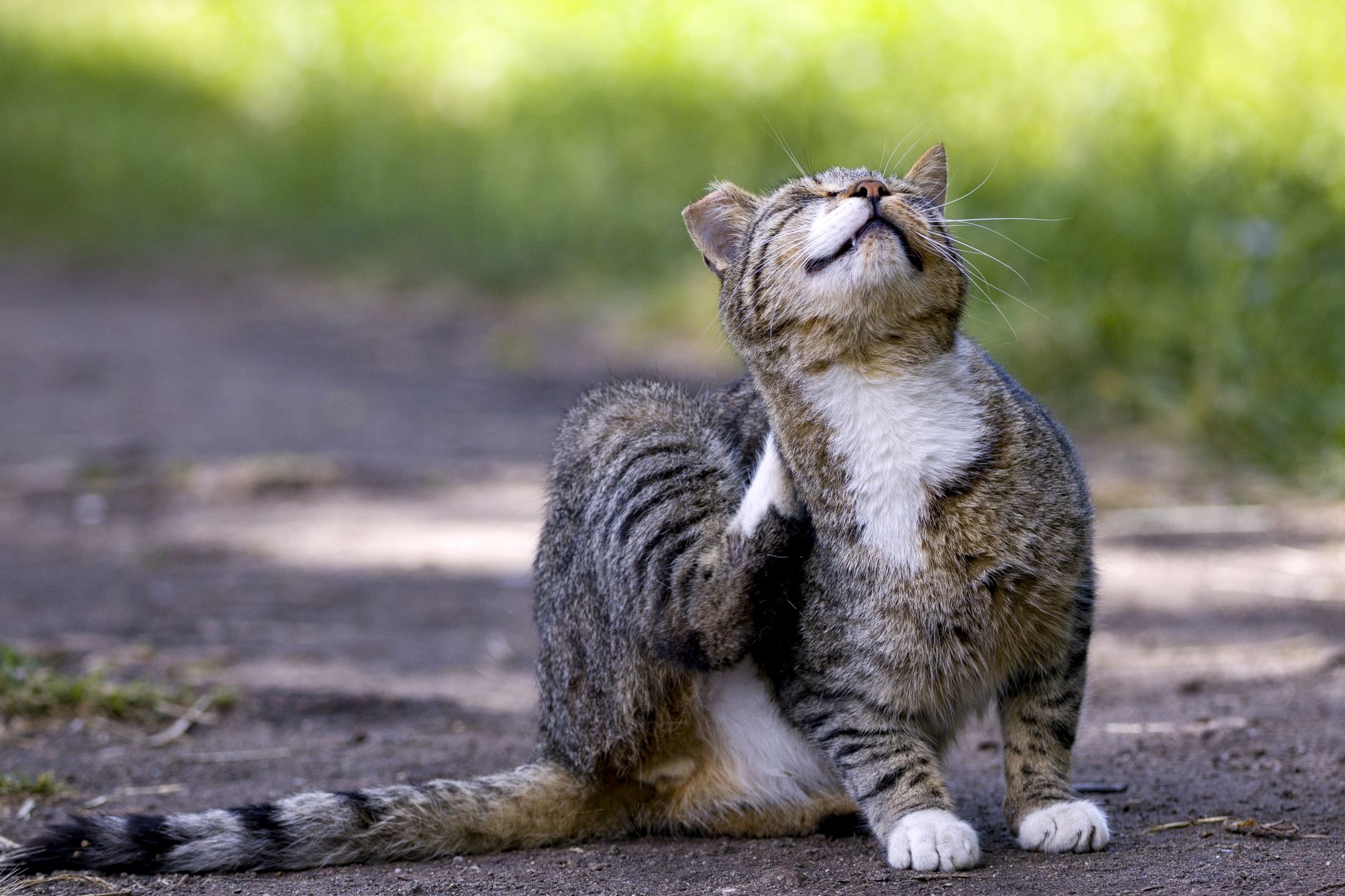
Flea bites usually look like tiny pink-red raised bumps, alone or in groups of two or three, around the neck, back, and tail base. Mosquito bites usually look like red raised bumps, scales, or ulcers on thinly haired skin, especially the bridge of the nose and ear edges.
Itch and skin texture add clues. Flea-bitten cats often scratch, overgroom, and lose hair. Mosquito reactions often appear in summer and center on the face and ears.
Table of Contents
- What do flea bites look and feel like?
- How are mosquito bites different?
- Why do some cats react so strongly?
- What should you check before calling the vet?
What do flea bites look and feel like?
Flea bites form small pink-red raised spots. They may sit alone or in clusters of two or three. They often show a faint red ring, then a crust or scab. Dutch Veterinary describes this pattern on hard-to-groom areas such as the neck, back, and tail base in Dutch Veterinary's guide to cat flea bites. The cat's behavior often speaks louder than one bump.
Intense itching, scratching, overgrooming, and hair loss are common. Many cats develop tiny crusty bumps, sometimes called miliary dermatitis, plus scabs, rash, or hives. Flea dirt is another strong clue. It looks like black pepper-like specks in the fur. Part the hair near the neck, back, and tail base to look for it.
How are mosquito bites different?
Mosquito bites favor places with little hair. The bridge of the nose and the ear pinnae, the thin flaps of the ear, are classic sites. Summer exposure makes mosquito bites more likely.
The sores can look symmetric on both sides of the face. They may start as small red papules, then turn erosive, crusty, ulcerated, or paler than nearby skin. Severe cases spread to eyelids, lips, chin, footpads, and other thinly haired spots. PetMD distinguishes these mosquito lesions — red raised bumps, scales, or even ulcers — from flea clusters along the neck, back, and tail base in PetMD's bug-bite guide.
Why do some cats react so strongly?
Allergy changes the math. Proteins in flea saliva trigger itching in sensitive cats. A few bites can then damage skin as much as dozens do in other cats. Cornell University College of Veterinary Medicine Feline Health Center reports this disproportionate reaction in Cornell's flea-allergy overview. Mosquito sensitivity can also escalate.
Affected cats may develop hair loss, swelling, enlarged lymph nodes, and bleeding from scratching. Severe cases can bring fever. The two parasites point to different internal risks. Cats get Dipylidium tapeworms by swallowing infected fleas during grooming. Cats get heartworms from infected-mosquito bites, and heartworms harm the lungs and heart.
What should you check before calling the vet?
Bumps alone can mislead. Looks overlap, and fastidious grooming can remove fleas and flea dirt.
Missing fleas does not rule out fleas or flea allergy. Use a short check that readers can scan: Bring notes on location, season, and what you found in the coat. Ask for veterinary diagnosis and cat-safe prevention rather than judging by bumps alone.
- Part the fur and look for pepper-like flea dirt.
- Map the sites: neck, back, and tail base suggest fleas; nose bridge and ear edges suggest mosquitoes.
- Note timing: new summer sores on the face favor mosquitoes; year-round itch with crusts favors fleas.
- Note severity: widespread hair loss, ulcers, swelling, bleeding, or fever needs prompt care.