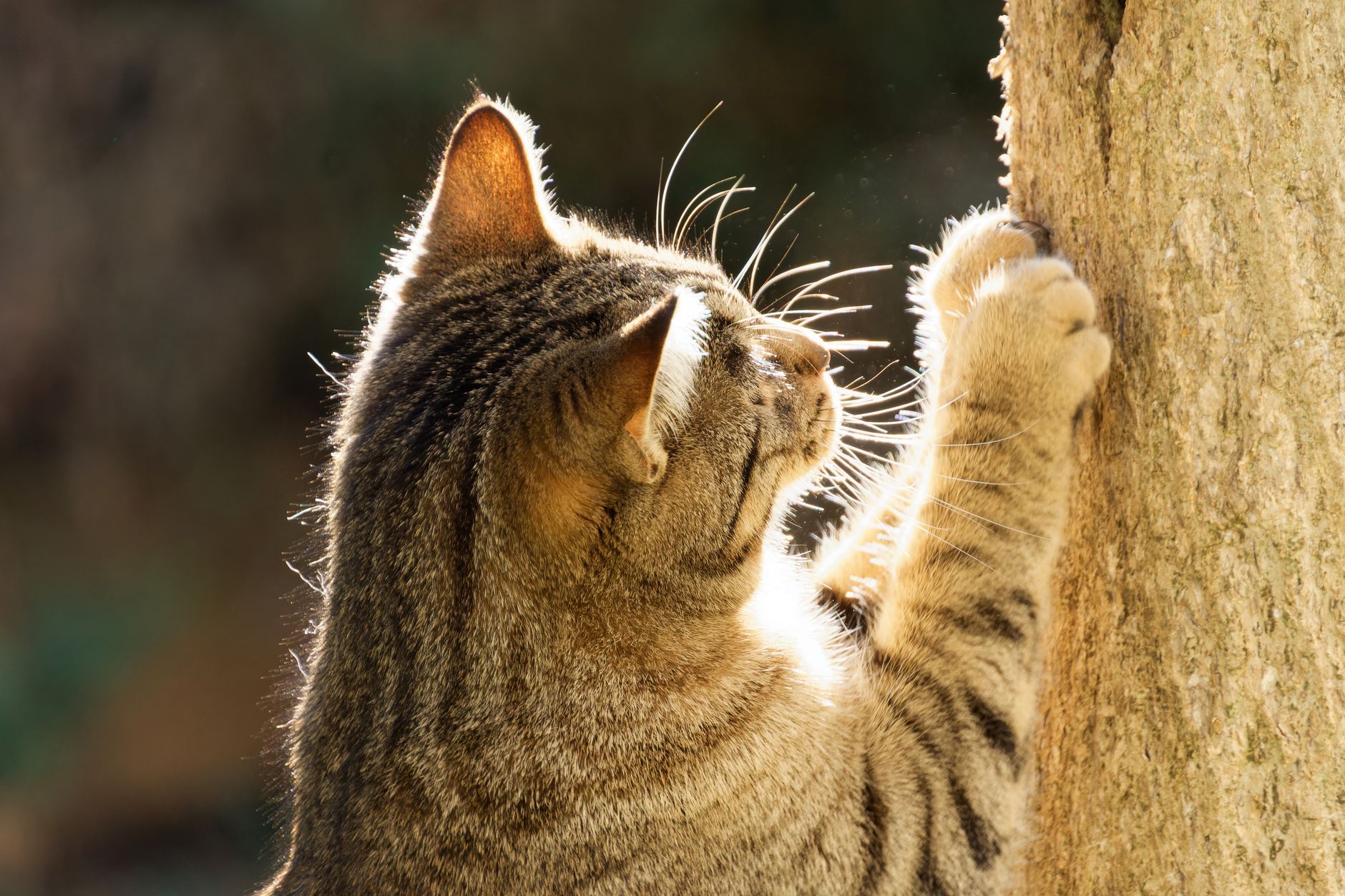
Your cat scratches the Christmas tree trunk because scratching is normal marking behavior that conditions claws and deposits scent. A real tree also brings new smells and climbable bark into familiar territory, which invites investigation and sharpening. Scent marking means your cat leaves both visible scratches and odor from the feet to claim an area. The Cornell University College of Veterinary Medicine Feline Health Center explains that scratching removes the thin outer claw sheath while leaving paw-gland scent, according to Cornell's guide to destructive scratching behavior.
Table of Contents
- What scratching does for your cat
- Why this tree is so tempting
- Why some cats do much more
- When needles and water cause harm
- How to protect the cat and tree
What scratching does for your cat
Scratching shortens and conditions the claws during normal use. It also strips away the translucent sheath, the pale outer covering on each claw. Fresh, sharp claw stays ready for grip and defense.
Scratching is also communication. VCA Animal Hospitals identifies it as primarily territorial marking that leaves visible marks plus foot-pad scent, according to VCA's guide to scratching behavior. Marking can increase with anxiety or conflict between cats.
Why this tree is so tempting
Any large new object in a familiar room draws feline attention. Researcher Mikel Delgado says real trees add outdoor smells plus bark suited to claw sharpening, reported by dvm360 in why cats love Christmas trees.
Height adds a second reward. Veterinarian Lorna Whittemore says cats climb indoor trees for a high perch to survey surroundings and hide, satisfying a surviving wild climbing instinct. Shiny ornaments, lights, tinsel and low branches then trigger play, exploration and hunting behavior, while bark invites climbing and claw care.
Why some cats do much more
Cats do not all respond the same way. Some ignore the tree after one sniff. Others keep climbing, scratching, marking or urinating on it.
Multi-cat homes face more persistent behavior. Whittemore notes that territorial marking increases when cats compete for space and resources. Watch for repeat visits to the same trunk spot, scratching after conflict, or tension near food, litter and resting areas.
When needles and water cause harm
Chewed pine, fir or spruce needles are mildly toxic because of irritating oils and sap. Most cats develop drooling, vomiting or diarrhea. Large amounts may block or puncture the gut, and sap on fur should be washed off.
Stand water adds another risk. Fallen needles and preservatives can contaminate it with bacteria or fertilizer. Vacuum shed needles often and keep the stand covered so cats cannot drink.
How to protect the cat and tree
Give scratching a better outlet before decorating. Place a tall, stable scratching post near the tree and reward its use. Keep the tree itself less rewarding to climb.
- Secure the base and tie the trunk to a wall anchor
- Cover electrical cords with hard cord covers
- Skip tinsel, ribbon and string that can choke or block intestines
- Deter climbing with foil around the base or citrus scent nearby
- Vacuum needles and change or cover stand water often, following holiday guidance from ASPCA Pet Health Insurance holiday safety tips