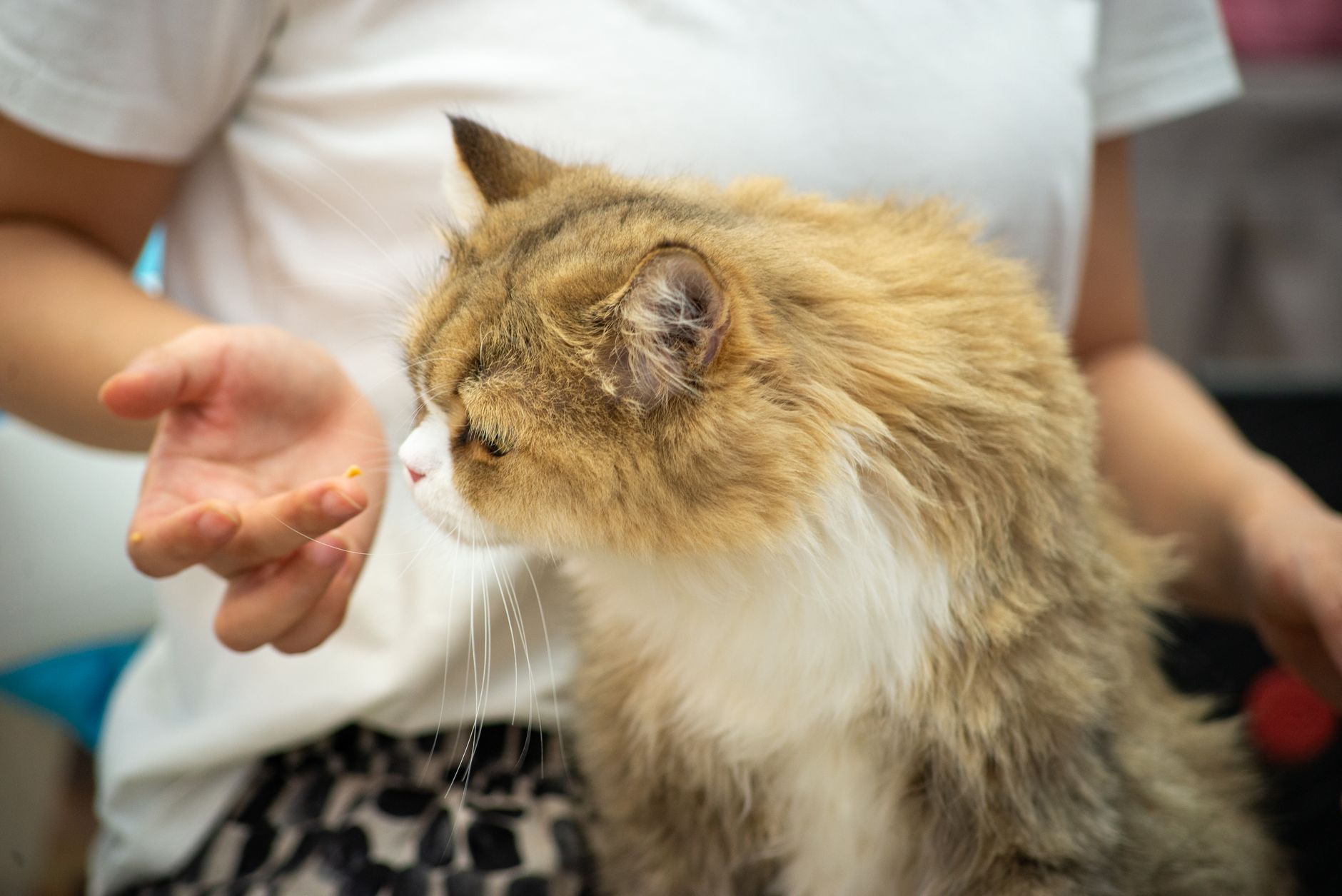
For most cats with a diagnosed food allergy, Temptations are not a safe treat — the classic formulas are built on chicken by-product meal, dried meat by-products and unitemized "natural flavors," which is exactly the protein group cats react to. They are also not safe to use during a diet trial, because a single flavored treat invalidates the whole test. That does not mean Temptations are dangerous for the average cat. The problem is specific: an allergic cat needs a known, limited set of proteins, and this product cannot give you that certainty from its label.
Table of Contents
- What's actually in a classic Temptations treat
- Cats react to proteins, not grain
- Why the label cannot clear a treat for you
- Temptations and the elimination diet trial
- What to do instead
- Frequently Asked Questions
What's actually in a classic Temptations treat
The Tasty Chicken flavor's ingredient panel opens with chicken by-product meal, ground corn, animal fat, wheat flour, brewers rice, dried meat by-products and natural flavors, according to the Temptations product listing. A cat sensitive to chicken, corn or wheat meets all three in one piece. "Animal fat" and "dried meat by-products" are the harder entries.
Neither names a species, so a cat reacting to beef or pork cannot be cleared or convicted by reading the bag. Formulas also differ by country and flavor. An Australian Tasty Chicken pack lists chicken by-product, beef and/or sheep by-products, corn, rice, wheat flour and flavours including salmon, tuna and scallop — four animal species in a chicken-named treat. Same brand, same flavor name, different allergen load.
Cats react to proteins, not grain
The grain-free instinct points at the wrong ingredient. The Merck Veterinary Manual names beef, fish and chicken as the most common feline food allergens — animal proteins, not cereals. Tufts University's Petfoodology makes the same point from the other direction: grains are uncommon causes of pet food allergy, and most affected pets react to animal proteins.
A 2018 BMC Veterinary Research study from NC State likewise found corn an uncommon allergen source in dogs and cats. The evidence base is thinner than the confident rankings suggest. A 2016 systematic review in BMC Veterinary Research counted beef in 14 of the reported cat cases (18%) and fish in 13 (17%), with chicken in only 4 (5%) — and the authors note that just one cat study used standardized food challenges.
Why the label cannot clear a treat for you
Pet food carries no human-style allergen declaration. There is no "contains fish" line, and "natural flavors" is not itemized. Under the FDA/AAFCO flavor rule, a flavor needs only to be present in an amount detectable by the species, and digests of other animal tissues can supply it.
So a product can legitimately carry trace material from a species that never appears by name in the panel. The practical consequence: you can rule an allergen *in* from a label, but you can never rule one *out*. For a cat with a confirmed protein allergy, an ingredient list with by-products and unnamed flavors is an unknown, and an unknown is not a safe treat.
Temptations and the elimination diet trial
Label-reading is not how feline food allergy gets diagnosed. VCA Animal Hospitals describes a strict novel-protein or hydrolyzed-protein diet trial as the only reliable test — hydrolyzed meaning the protein is broken into fragments too small for the immune system to recognize. The trial runs a minimum of about eight weeks, and 10 to 12 weeks for some cats, with nothing else by mouth.
Every treat stops, Temptations included. One flavored item during that window means you cannot interpret the result, and you have spent two months for no answer. Even the replacement diet deserves scrutiny. A 2018 microarray study found undeclared animal species in commercial novel and hydrolyzed diets, so a trial that fails to clear the signs may have been contaminated rather than wrong about the protein.
What to do instead
.
- If your cat has itching, over-grooming, recurrent ear trouble or GI upset, get a diagnosis before changing treats. Guessing at ingredients wastes months.
- During a diet trial, use the trial food itself as the treat — a few kibbles held back from the daily ration works, and costs nothing in accuracy.
- After the trial identifies the offending protein, choose a single-ingredient treat that names its species (freeze-dried rabbit, duck, or whichever protein tested clean). Named species beats "by-products" every time.
- Ask your vet about a hydrolyzed treat matched to a hydrolyzed diet, if you need something that feels like a reward.
- Do not read "low calorie" as "low risk." Temptations states its classic treats are under 2 calories each, around 3,900–4,100 kcal/kg, which keeps them inside a treat allowance — but portion size does not reduce allergen exposure. An allergic response does not require a large dose.
Frequently Asked Questions
My cat eats Temptations with no obvious problem. Should I stop?
No. If your cat shows no skin or digestive signs, there is nothing here to act on — the concern applies to cats with a diagnosed or suspected food allergy.
Would a grain-free Temptations variety solve the problem?
Unlikely. Tufts reports grains are uncommon allergy causes, so removing corn and wheat leaves the animal proteins and unnamed flavors that are the more probable triggers.
Can a blood or saliva allergy test tell me whether Temptations is safe?
VCA identifies the elimination diet trial as the only reliable test for feline food allergy. Nothing short of a controlled trial, followed by a deliberate re-challenge, will answer it.