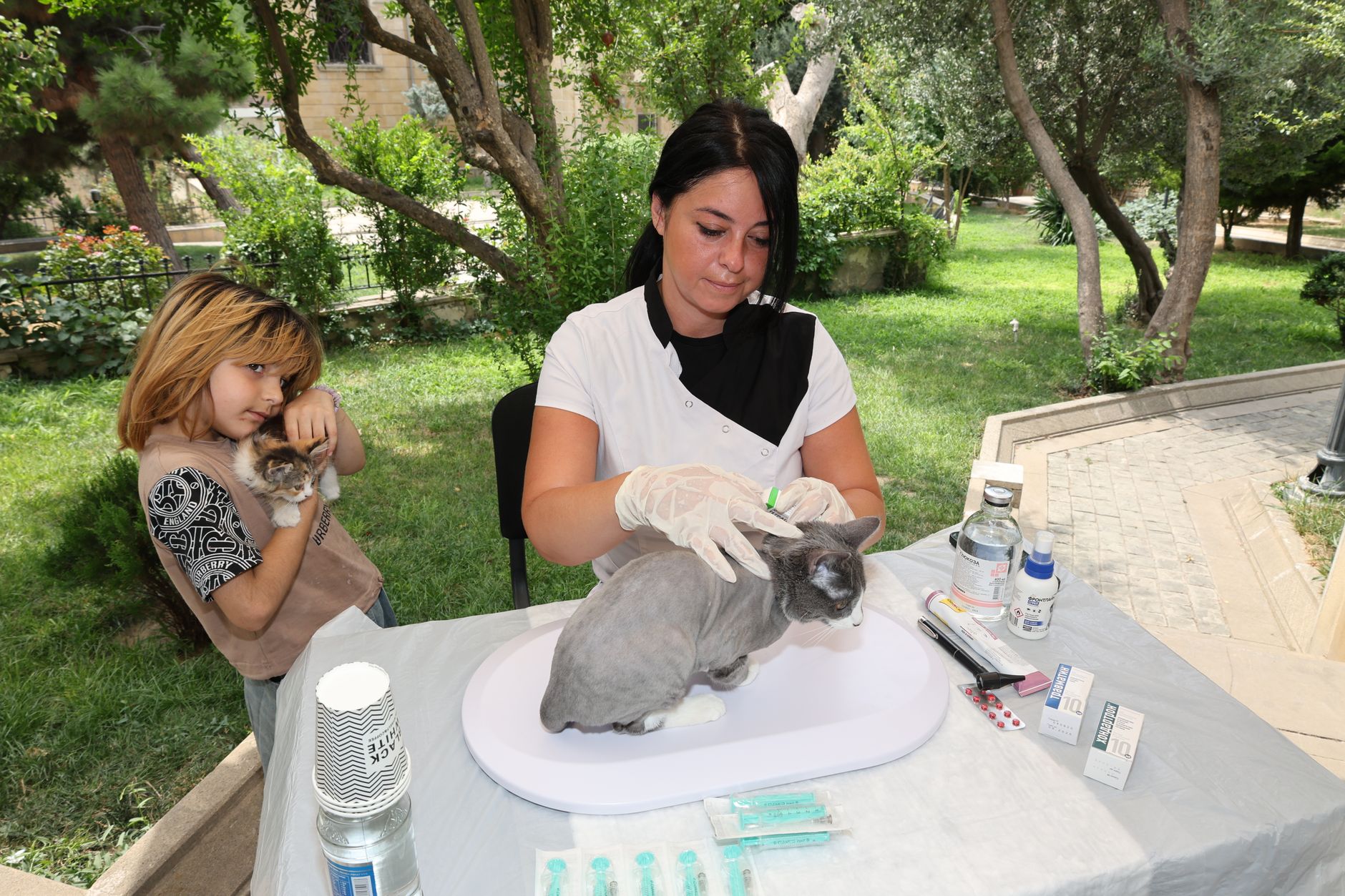
Rabies is the only cat vaccine that U.S. states require by law. Everything else your veterinarian recommends — including the FVRCP combination shot and the feline leukemia vaccine — is a medical recommendation, not a legal mandate.
The Cornell Feline Health Center classifies FVRCP (protecting against feline herpesvirus/rhinotracheitis, calicivirus, and panleukopenia) as a "core" vaccine and feline leukemia as risk-based — strongly advised, but not written into statute. The practical question for most owners is not *which* vaccine but *when* and *what proof*. States set their own age thresholds, booster schedules, and penalties, and roughly ten states leave the matter entirely to counties and cities. Below is what the laws actually say, where they differ, and what you need in your file cabinet.
Table of Contents
- Why rabies is the only legally mandated cat vaccine
- The age threshold varies by state — usually three to four months
- Boosters, not just the first shot
- Where state law goes silent
- Medical exemptions and the proof you must produce
- Frequently Asked Questions
Why rabies is the only legally mandated cat vaccine
Rabies sits alone in the law because it is a fatal disease transmissible to humans. A cat that bites someone becomes a public health matter, not just a veterinary one, which is why legislatures regulate this one vaccine and leave the rest to the exam room. There is no federal cat-vaccination mandate.
As the CDC's rabies program documentation reflects, requirements come from state statute, state health regulation, or local ordinance; federal authority covers the importation of dogs and cats rather than pets already living here. If you are trying to find out what applies to you, the answer is in your state code or your county's animal control ordinance — not in a national rule. FVRCP and feline leukemia vaccines are genuinely important, particularly panleukopenia, which is often lethal in kittens. Their absence from the statute books reflects that they protect the cat rather than the public, not that they are optional in any medical sense.
The age threshold varies by state — usually three to four months
Most states set the first required rabies shot somewhere between three and six months of age, which is why no single national age exists. Connecticut requires vaccination of all cats three months of age and older, according to the Animal Legal & Historical Center's table of state rabies laws concerning cats at Michigan State University College of Law. Four months is the more common line. New York State Public Health Law requires every dog, cat, and domestic ferret to receive an initial rabies vaccination upon reaching four months of age.
Maryland regulation requires owners to have a dog, cat, or ferret adequately vaccinated by the time the animal turns four months old. Florida sets the same threshold, requiring all dogs, cats, and ferrets four months or older to be vaccinated by a licensed veterinarian with a USDA-licensed vaccine. Pennsylvania frames it differently again: vaccination within four weeks of a cat reaching twelve weeks old. The deadline, not just the age, is written into the rule — which matters if you adopt a kitten that is already eleven weeks old.
Boosters, not just the first shot
The initial vaccination is only half the legal obligation. Florida law requires revaccination twelve months after the first dose, then at the interval stated by the vaccine manufacturer — which may be one year or three, depending on the product your veterinarian uses. Fla. Stat. § 828.30 treats a violation as a civil infraction.
Illinois follows the same two-step pattern. The University of Illinois College of Veterinary Medicine explains that the state extended its dog rabies requirement to cats, mandating vaccination at four months with a booster within one year. Maine requires vaccination of cats over three months with a booster one year later. The manufacturer's stated interval is the detail owners most often miss. A three-year vaccine and a one-year vaccine both satisfy the law on the day they are given; only one of them keeps you compliant into year two.
Where state law goes silent
"Most states" is not all states. Roughly ten impose no statewide rabies vaccination requirement at all, leaving the decision to counties and cities, per the Animal Legal & Historical Center's table of rabies vaccination laws. The result is a patchwork that can change when you move across a county line. Kansas is the clearest example: only 10 of its 105 counties mandate vaccination for dogs, cats, and ferrets.
Ohio has no state requirement for cats, but counties including Franklin and Delaware do require it. An owner in one Ohio county may be legally obligated while a neighbor twenty miles away is not. If you live in a state with no statewide rule, check with your county health department or animal control office rather than assuming you are exempt. Local ordinances carry real penalties, and a bite incident involving an unvaccinated cat can trigger quarantine requirements regardless of what the vaccination statute says.
Medical exemptions and the proof you must produce
Statutes commonly allow a veterinary medical exemption for cats that cannot safely be vaccinated. Maine's rule, at Me. Rev. Stat. tit.
7, § 3916, exempts an owner whose cat has a documented medical reason precluding vaccination — documented being the operative word. This is a written veterinary finding, not an owner's judgment call. Feral cats are handled separately in some states. Illinois exempts them unless they are brought to a veterinarian for sterilization, at which point vaccination is required — a rule shaped around trap-neuter-return programs. Keep the certificate accessible, not filed away. Practical steps:.
- Ask for the rabies certificate at the appointment and photograph it; Florida requires the certificate in NASPHV (National Association of State Public Health Veterinarians) format.
- Note the expiration date, which depends on the product used, not on a standard three-year assumption.
- Know your local response window: Pennsylvania requires production of the certificate within 48 hours of a request by a police officer or dog warden.
- Carry or scan a copy before boarding, travel, or a move to a new county.
- If your cat has a medical exemption, get it in writing from the veterinarian and keep it with the vaccination records.
Frequently Asked Questions
Does my indoor-only cat still legally need a rabies vaccine?
In states and localities with a mandate, yes — the laws apply to cats by age, not by whether they go outdoors. Florida, New York, and Maryland all write the requirement around the animal reaching four months old, with no indoor exception.
Is the FVRCP shot ever required by law?
No. Cornell's Feline Health Center classifies FVRCP as a core veterinary recommendation rather than a legal requirement, and no state mandates it.
Can a groomer, boarding facility, or landlord require more vaccines than the law does?
Yes. Private requirements are separate from statute, and many facilities ask for FVRCP records even though no state compels the vaccine.
What happens if I miss the booster deadline?
Penalties are set by state and local law — Florida, for example, treats a violation of its rabies vaccination statute as a civil infraction. A lapsed vaccination can also change how authorities handle quarantine after a bite.