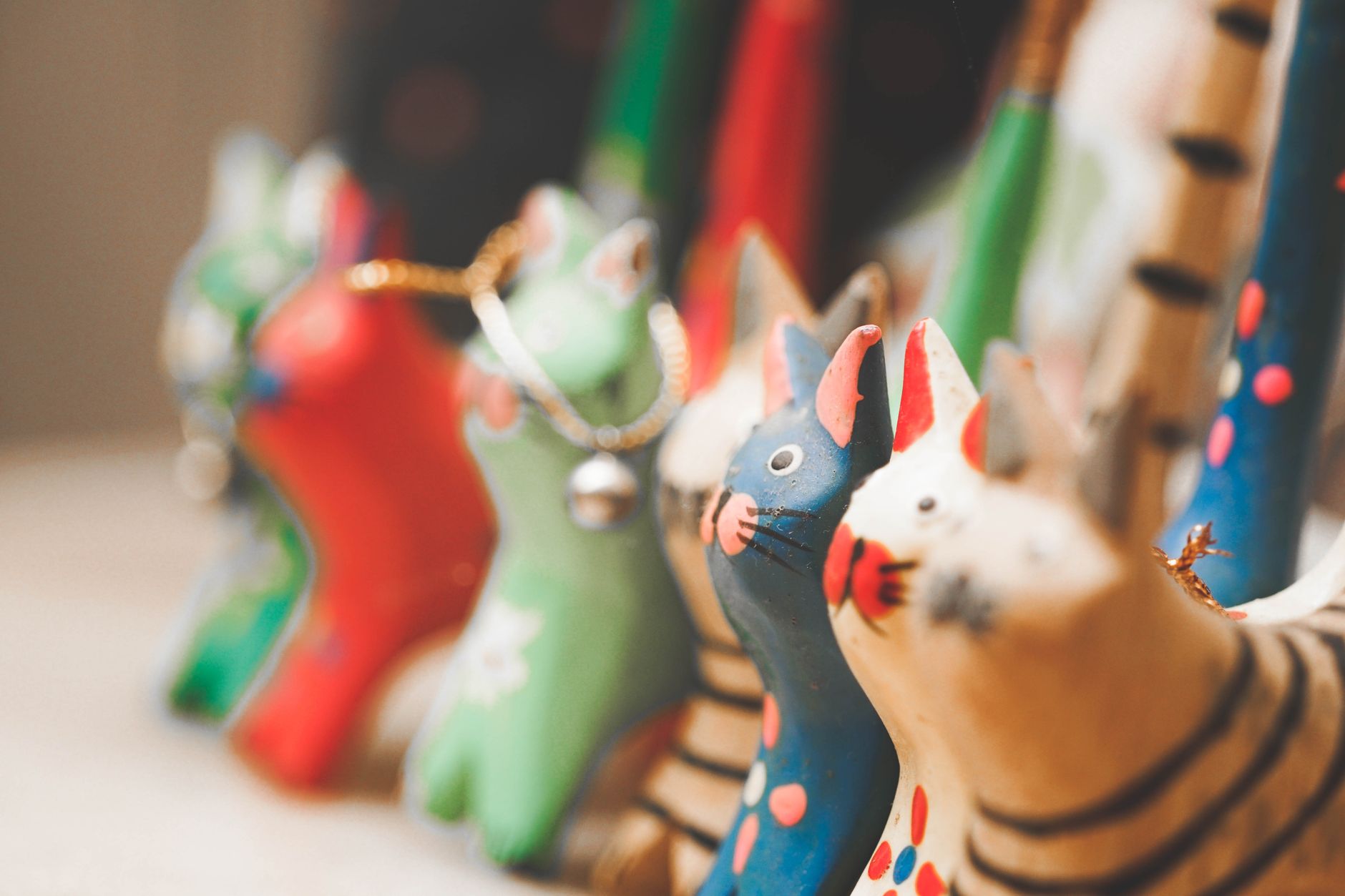
Cat toys in 2026 are a bigger business, a better-studied welfare tool, and a newer safety concern than most owners realize. The evidence says three things: play is linked to better cat quality of life, the biggest risks come from button batteries and string rather than the toys' play value, and the main obstacle to cats getting enough play is the owner's routine, not the toy box.
This affects anyone who buys for a cat — which is a large group, since the American Pet Products Association puts the supplies segment that includes toys at $34.4 billion of a $158 billion U.S. pet industry, according to its 2026 State of the Industry announcement. Here is what the research and recall record actually establish, and what to do with it.
Table of Contents
- Why toys matter: the welfare evidence
- The 2026 recall problem: button batteries in cheap toys
- String and wand toys: fun under supervision, dangerous in a drawer left open
- Which toys cats actually engage with
- The limiting factor is usually you, not the toy
- Frequently Asked Questions
Why toys matter: the welfare evidence
Play is not decoration on a cat's day. A survey of 1,591 cat guardians across 55 countries, published by Henning and colleagues in *Animal Welfare*, found that cats with higher playfulness scores, and cats whose guardians played more distinct games with them, scored higher on quality-of-life measures. Guardians in the same study reported distress-linked behavior changes when play was absent.
One honest limit: this evidence is largely correlational owner-survey data. It shows an association between play and welfare, not proof that adding toys causes better welfare, and researchers reviewing the field call for controlled studies before anyone issues dosage-style play prescriptions. That caveat cuts one way in practice. Play is cheap, low-risk, and consistently associated with better outcomes, so the sensible reading is to do it — while ignoring any product that promises a specific behavioral result the science has not established.
The 2026 recall problem: button batteries in cheap toys
The most concrete toy risk of the past year is not to cats but to children in the same household. In 2026, JC Sales of Los Angeles recalled about 51,160 "Lil' Buddies" Pet Laser Toys — a roughly $1 item sold from February 2023 through November 2025 — because their unsecured button-cell battery compartments violate Reese's Law and pose an ingestion risk of serious injury or death, per the CPSC recall notice. Owners of model 24496 get a full refund.
This is a pattern, not a one-off. In August 2025, Petmate recalled 15,000 Pet Zone Laser Pointer & LED Ball toys sold at Menards for the same button-cell violation, and the CPSC separately warned consumers to stop using Petgravity smart interactive cat toys sold on Amazon over an accessible lithium coin battery. The pattern makes sense: pet toys are electronic now, they are often priced at a dollar or two, and pet products historically got less battery-compartment scrutiny than children's toys. Before buying any light-up or laser toy, check that the battery compartment needs a tool or two independent motions to open — and if a swallowed button battery is even suspected in a child or a cat, treat it as an emergency, because these batteries can burn through tissue within hours.
String and wand toys: fun under supervision, dangerous in a drawer left open
The classic cat-side emergency is the linear foreign body. When a cat swallows string, yarn, or ribbon, one end can anchor under the tongue or in the stomach while the intestines bunch — accordion-style — along the rest of the length.
VCA Animal Hospitals describes the result: obstruction, perforation, or intussusception that requires emergency surgery and can be fatal. This is why the standard veterinary advice is not "avoid wand toys" but "supervise them." Wand and string toys are among the best tools for interactive play; they simply should only come out when you are playing, and go back somewhere the cat cannot reach afterward. Warning signs worth acting on:.
- Vomiting or gagging, especially repeated
- Refusing food, or a hunched, painful posture
- String visible under the tongue or protruding from the mouth or anus — never pull it; go to a vet
Which toys cats actually engage with
A 2025 study of 31 pet cats by Webberson and colleagues in *Applied Animal Behaviour Science* offers a practical rule of thumb. Cats preferred catnip and silver vine odors over a commercial feline pheromone, and adding a cat's preferred scent to stationary toys increased interaction.
Adding scent to moving toys did not — movement alone already drove engagement. Translated into shopping decisions: motion is the strongest draw, so a wand toy you actually move beats almost anything passive. For toys that sit still between play sessions — kickers, stuffed mice, puzzle toys — scent is the lever, and it is worth testing both catnip and silver vine, since individual cats prefer one or the other.
The limiting factor is usually you, not the toy
A 2025 intervention study by Delgado and colleagues tested a campaign encouraging daily interactive play and found the main obstacles were owner-side: lack of time, and the perception that the cat wasn't interested. The toy aisle cannot fix either one. That reframes the "what should I buy" question.
A cat with one wand toy and a daily five-minute session is likely better served than a cat with a basket of untouched purchases. Perceived disinterest often reflects the wrong toy motion or a bored cat facing the same object daily — rotating toys and varying the prey-like movement (darting, hiding, pausing) is free. A workable routine for 2026:.
- Schedule one or two short interactive sessions daily, tied to an existing habit such as before a meal
- Rotate stationary toys weekly, and refresh them with catnip or silver vine
- Store string and wand toys out of reach between sessions
- Check any battery-powered toy against the CPSC recalls above, and discard the JC Sales model 24496 for a full refund
Frequently Asked Questions
Are laser toys safe for cats?
The recent recalls target battery compartments, not the laser play itself. Choose one with a secured, tool-opened battery compartment, and confirm the model is not on the CPSC's recall list.
Catnip or silver vine?
The 2025 preference study found cats favored both over a commercial pheromone, and individual cats differ — offer each and keep the one your cat responds to on stationary toys, where scent measurably increases interaction.
How much play does a cat need?
The research shows an association between more games and higher quality of life but no proven daily dose. Short daily interactive sessions are the practical target, since owner time — not toy count — is the usual limiting factor.