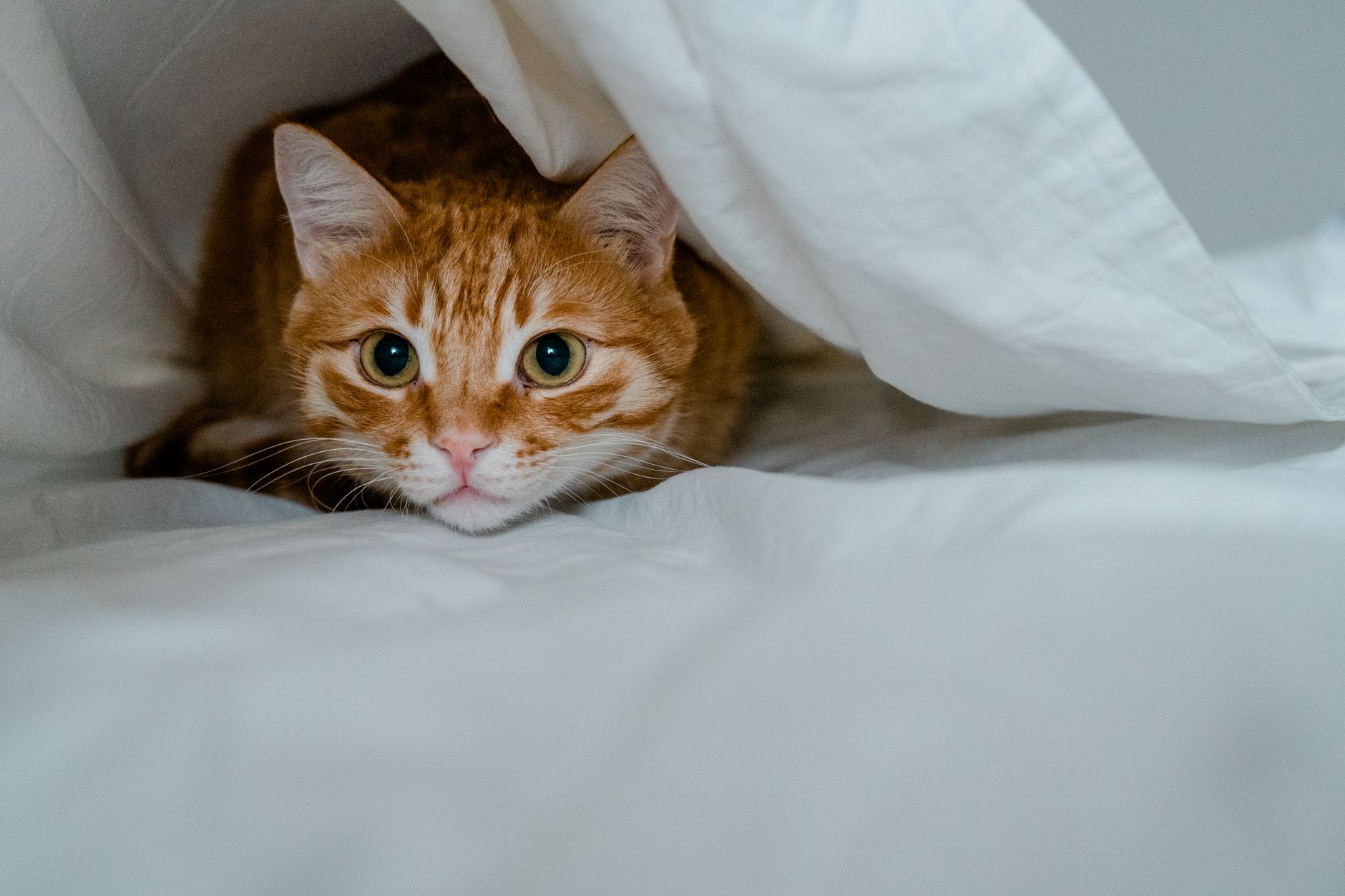
Most cats do like being covered — when they choose the covering themselves. Sliding under a duvet, tunnelling into a folded throw, or flattening out beneath a bedsheet satisfies two things a cat is built to want at the same time: heat and a hiding place. Being tucked in by a person is a different question, and the answer depends entirely on whether your cat can still get out without help. This guide covers why the behaviour happens, how to read whether your cat is enjoying it, the situations where a covered cat is genuinely at risk, and how to build a covered spot that is safe to leave unattended.
Table of Contents
- The Short Answer
- Why Cats Burrow Under Blankets, Sheets and Duvets
- Do Cats Like Being Covered by You?
- How to Tell If Your Cat Actually Wants to Be Covered
- Is It Safe for a Cat to Sleep Under the Covers?
- Cats That Should Not Be Covered
- How to Build a Covered Spot That Is Safe Unattended
- When Blanket Hiding Is a Warning Sign
- Frequently Asked Questions
The Short Answer
Cats like being covered on their own terms. A cat that walks under a blanket, turns around, and settles is doing something entirely normal and self-regulated — it can leave the moment it gets too warm, too enclosed, or hears something worth investigating. A cat that has a blanket draped over it by a person has lost the control that made the space appealing in the first place. That single difference — self-covering versus being covered — explains why the same cat can burrow into your duvet every night and bolt the instant you pull the same duvet over its back.
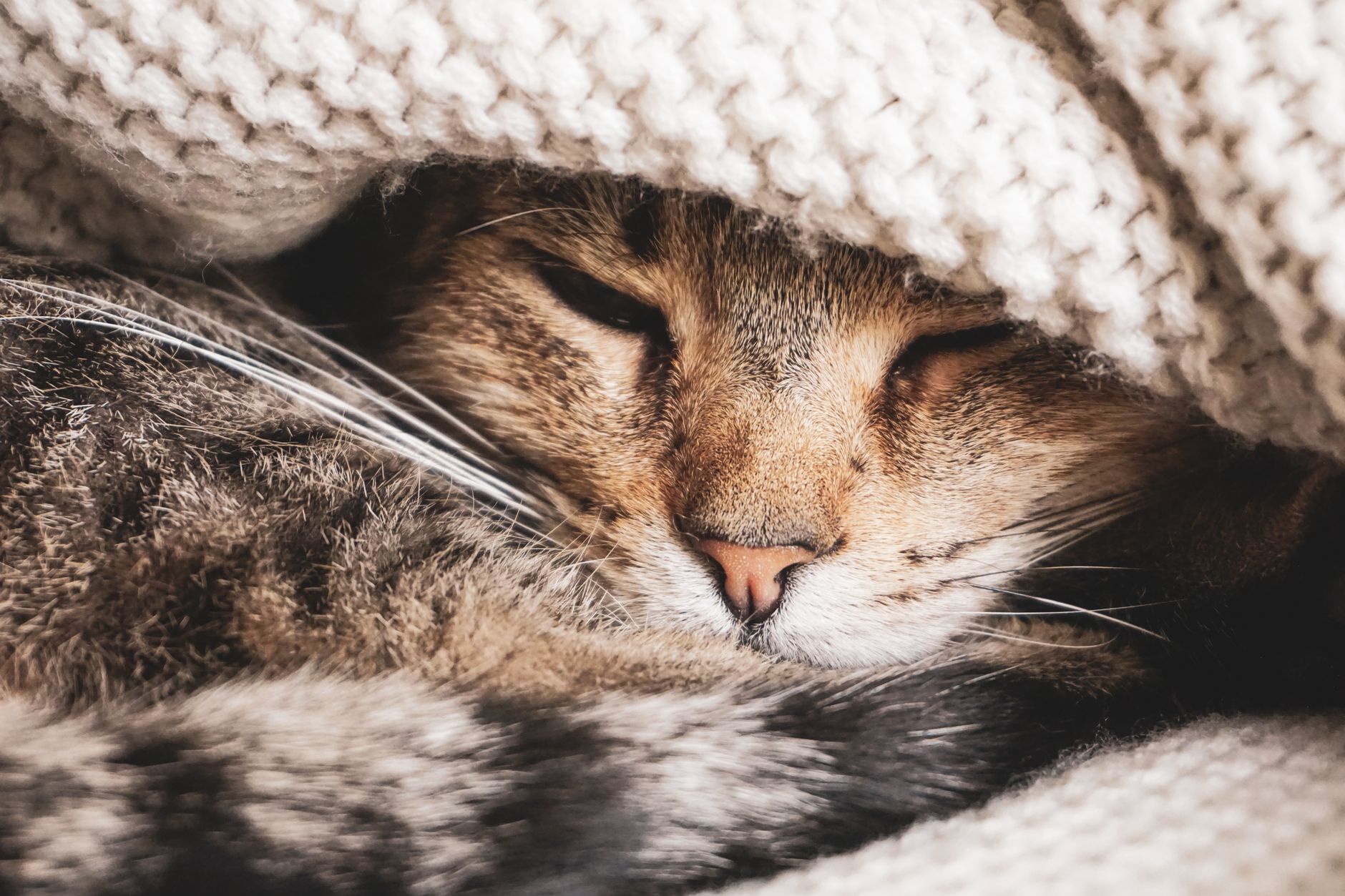
Why Cats Burrow Under Blankets, Sheets and Duvets
Your house is colder than your cat wants it
The thermoneutral zone is the ambient temperature range in which an animal does not have to spend energy warming or cooling itself. For cats, the National Research Council puts that range at roughly 30–38°C (86–100°F) — far above the 18–22°C most homes are heated to, and well above the 20–30°C range typical of dogs, as summarised in this Veterinary Ireland Journal review of the feline TNZ. Your living room is comfortable for you and mildly cold for your cat, every hour of every day. A folded duvet traps body heat in a small pocket of air and closes the gap. It is the same instinct behind the sunny windowsill, the laptop keyboard, the airing cupboard and the radiator shelf — the blanket is just the version that is available at 3am.
A covered space is a “safe place”
Hiding is a cat’s primary coping strategy, not a symptom in itself. The AAFP and ISFM Feline Environmental Needs Guidelines (Journal of Feline Medicine and Surgery, 2013) make a private, enclosed refuge the first of five environmental pillars — a space with sides and a roof where the cat can withdraw and monitor the room without being approached from every direction.
The measurable effect is well documented in shelters. Vinke, Godijn and van der Leij (Applied Animal Behaviour Science, 2014, 160:86–93) gave newly arrived shelter cats a hiding box and recorded lower Cat-Stress-Scores through the critical first week compared with cats housed without one. A later randomised controlled trial, published in PLOS One in 2019, found that 12 cats given a hiding box reached a stable, low stress score by day 2, while the 11 control cats without one took until day 9 — a full week’s difference in how fast they settled. Body weight loss and adoption rates did not differ significantly between the groups; the effect that showed up clearly was speed of recovery.
A duvet is a hiding box that happens to be warm and smells like you. That is a strong combination, and it is why the behaviour tends to intensify after a house move, a new pet, building work, or fireworks.
Pressure, texture and scent
Three smaller factors stack on top of warmth and security. Light, even pressure across the back and flanks mimics the contact of a littermate pile. Loose-weave knit and fleece hold heat and give the paws something to knead. And bedding you have slept in is saturated with your scent, which for a socially bonded cat is a familiarity cue — the reason so many cats pick the side of the bed you just left rather than the empty side.
Do Cats Like Being Covered by You?
Some do, most tolerate it briefly, and a minority hate it immediately. The deciding factor is escape, not affection. Test it this way: lay the blanket loosely over your cat so that the head and at least one shoulder stay clear, then stop touching it. If the cat resettles, kneads, or closes its eyes, it has accepted the covering. If it freezes, flattens its ears, or shoves its way out, that is a refusal — and repeating it teaches the cat to avoid the bed rather than to enjoy the blanket.
Never tuck a blanket in around a cat, wrap it, or weight the edges. A cat that cannot reverse out of a covering is restrained, and restraint is one of the fastest routes to a defensive bite or scratch from an otherwise placid animal. The “purrito” wrap has a legitimate use in brief veterinary restraint for nail trims and medication, supervised and measured in seconds — it is not a sleeping arrangement.
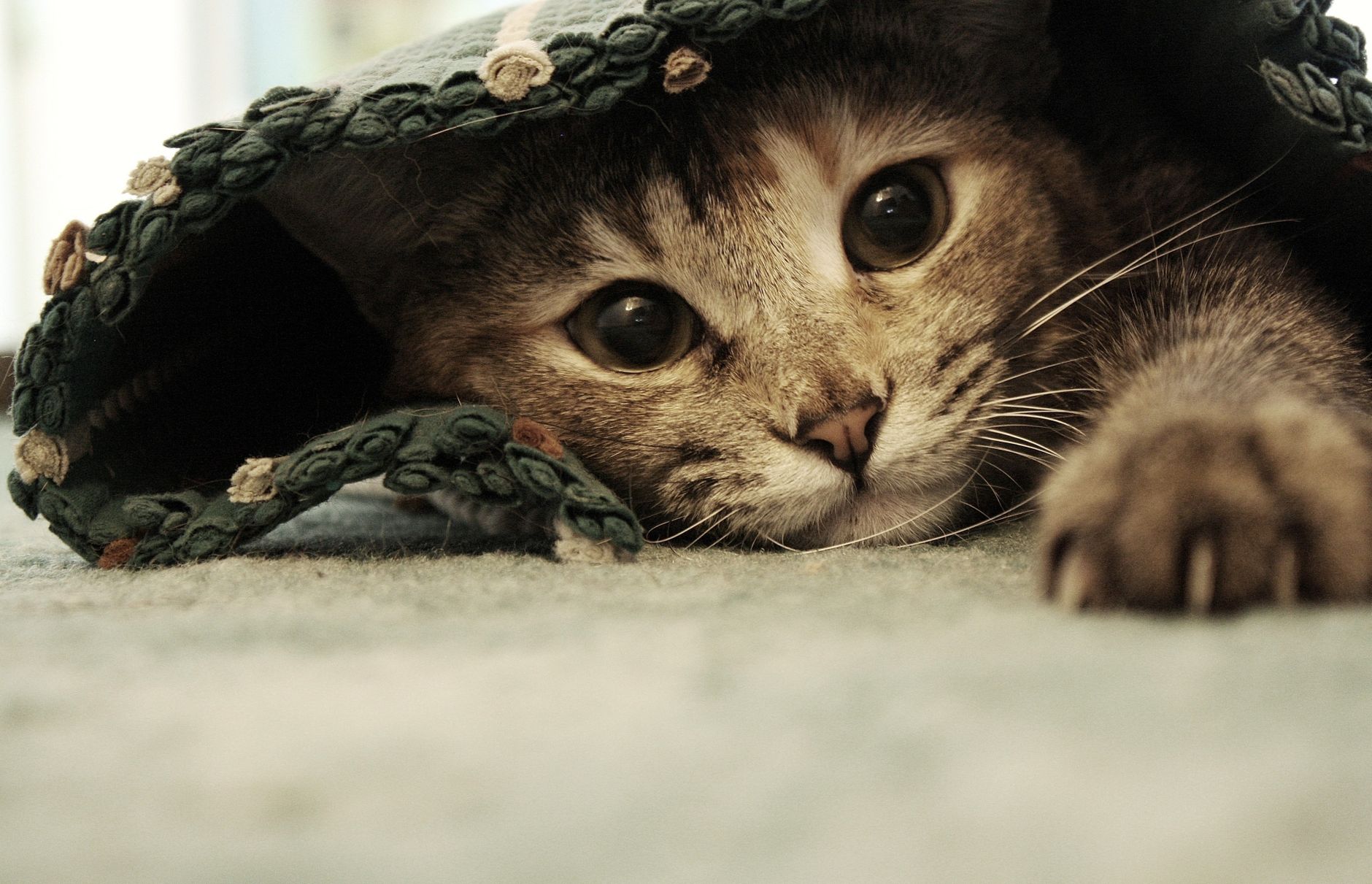
How to Tell If Your Cat Actually Wants to Be Covered
Read the whole cat, not just the fact that it stayed put. Cats freeze when they are unhappy, so stillness on its own is not consent. Our guide to reading a cat’s tail, ears and eyes covers the full vocabulary; these are the signals that matter under a blanket.
| Enjoying it | Tolerating it | Get it off now |
|---|---|---|
| Slow blinking, eyes half or fully closed | Eyes open, watching you | Pupils wide, hard stare |
| Ears neutral and forward | Ears rotating to track sound | Ears flat or turned back |
| Purring, kneading, rolling onto one side | Body still, muscles slightly tense | Tail thumping, skin twitching along the back |
| Settles deeper without being touched | Shifts position repeatedly | Low growl, hiss, or a hard shove outward |
| Chooses the spot again the next night | Leaves as soon as you stand up | Starts avoiding the room or the bed |
The most reliable single test costs nothing: cover the cat, walk away, and see whether it is still there in ten minutes. Cats do not stay in places they dislike when the exit is open.
Is It Safe for a Cat to Sleep Under the Covers?
For a healthy adult cat under ordinary household bedding, yes. Household duvets, sheets and throws are air-permeable, and a cat that gets warm or short of air will move — the same self-regulation that made it go under in the first place. The real risks are specific and avoidable.
- Being sat, rolled or knelt on. This is the most common way a cat is actually hurt under bedding, and it is a risk to the cat’s ribs and to your own reflexes. Check the shape of the duvet before you sit down on a bed, a sofa, or a pile of laundry, every single time.
- Weighted and heated bedding. A weighted blanket is designed to apply pressure a cat cannot lift. Electric blankets and heat pads without a thermostat can cause contact burns on a cat that will not move away from a heat source it likes. If you use a pet heat pad, use one with a regulated maximum temperature and a surface the cat can step off.
- Zipped, sealed and enclosed fabric. Duvet covers with the opening unbuttoned, sleeping bags, suitcases, laundry-machine drums and tumble dryers are not blankets — they are traps with no second exit. Close them, and check the drum before every load.
- Plastic and foil “blankets”. Emergency foil blankets, dry-cleaning film and bin liners are non-permeable and can seal against the face. Keep them out of reach entirely.
- Overheating in warm weather. A cat that burrows during a heatwave, pants, or lies out flat on tile afterwards is thermoregulating badly. Panting in a resting cat is not normal and warrants a vet call.
Cats That Should Not Be Covered
Self-regulation is the safety mechanism. Any cat whose ability to feel heat, move freely, or breathe easily is compromised should not be left under bedding unsupervised.
- Neonatal kittens and very young kittens. Kittens cannot regulate their own body temperature reliably in the first weeks of life and are not strong enough to push a duvet off. They need a controlled, thermostatically managed heat source, not a household blanket.
- Flat-faced (brachycephalic) breeds. Persians, Exotic Shorthairs and Himalayans commonly have stenotic nares, narrowed nasal passages and an overlong soft palate, and International Cat Care notes that in some cases the breathing difficulties can be severe. A cat already working hard to move air has no reserve for warm, still air under a duvet.
- Cats with heart or respiratory disease. Diagnosed heart disease, asthma or chronic bronchitis means the same problem for the same reason. Ask your vet before encouraging any enclosed sleeping setup.
- Frail seniors and arthritic cats. A cat that struggles to stand up on a soft surface may not get out from under heavy bedding promptly. Use one light layer they can walk out of on the flat, not a pile.
- Post-surgical cats and cats in a cone. A recovery collar catches on fabric, and a sedated or recovering cat is not fully self-regulating. Keep them on open bedding where you can see the incision.
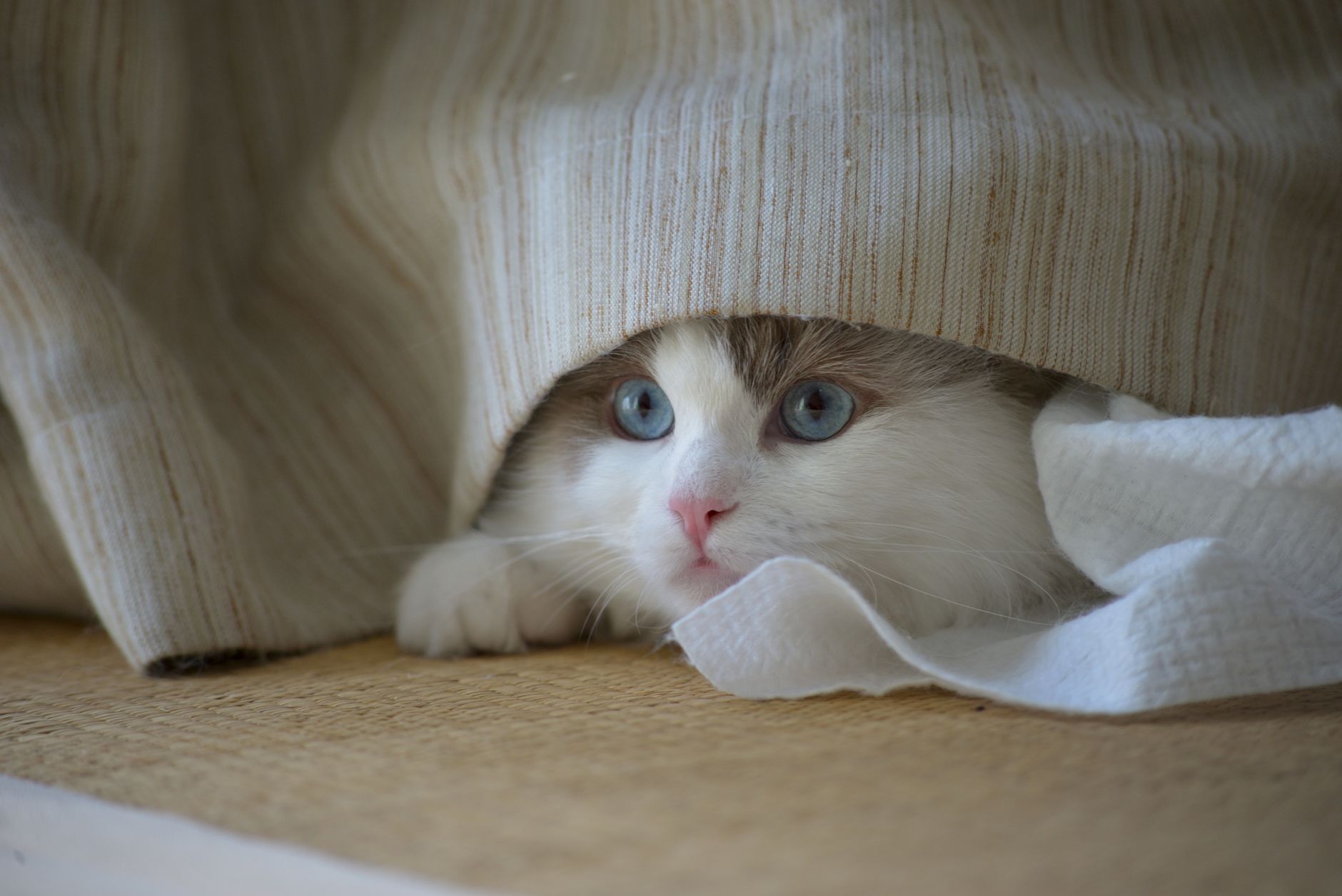
How to Build a Covered Spot That Is Safe Unattended
If your cat clearly wants to be covered, give it a version that is always available and does not depend on you being awake.
- Fold, do not drape. Fold a light fleece throw in half on the bed or sofa so it forms an open-ended pocket with two exits. The cat walks in; nothing is resting on its head.
- Use one breathable layer. Cotton, fleece or a loose knit. One layer of ordinary bedding, not three, and nothing weighted.
- Add a cave bed or a box on its side. A covered donut bed, a cat tent, or a cardboard box turned on its side with a towel inside gives the same enclosure with a fixed, permanent opening — this is the household version of the hiding box used in the shelter studies above.
- Put it high, or against a wall. A refuge with its back covered and a view of the doorway gets used far more than one in open floor space.
- Give a choice of at least two. One warm and enclosed, one open and cool, in different rooms. Which one the cat picks tells you what it needs that day.
- Wash it, but not all at once. Familiar scent is part of the appeal. Rotate two covers so one always smells lived-in.
If your cat sleeps in your bed, the safety habit matters more than the bedding: a cat under a duvet is invisible, and our notes on whether it is safe for cats to share beds with humans cover the rest of the co-sleeping trade-offs.
When Blanket Hiding Is a Warning Sign
Wanting to be covered is normal. A change in how much your cat wants to be covered is information. Cats conceal illness, and withdrawing into a dark, enclosed space is one of the few outward signs you get. Treat it as a veterinary question, not a behaviour question, when the burrowing is new and comes with any of the following:
- Eating or drinking noticeably less, or drinking much more
- Not coming out for food, litter tray or company
- Litter tray changes — straining, going outside the box, or nothing at all
- Weight loss you can feel along the spine and hips
- Reluctance to jump, or missing jumps it used to make
- Panting, open-mouth breathing, or fast shallow breathing at rest
- Flinching or growling when you touch a specific area
- Hiding somewhere new and inaccessible rather than its usual spot
Sudden hiding in an otherwise settled cat is worth a phone call the same week. If the new hiding started when something in the house changed, our write-up on a cat that suddenly started hiding behind the washing machine walks through separating an environmental trigger from a medical one, and household setup and stress reduction covers the environmental fixes.
Frequently Asked Questions
Can cats breathe under a blanket?
Yes. Ordinary cotton, fleece and duvet fabric is air-permeable, and a healthy adult cat that feels short of air or too warm simply walks out. The exceptions are non-permeable materials such as plastic sheeting or foil emergency blankets, sealed spaces such as a zipped bag or an unbuttoned duvet cover the cat gets inside, and cats with compromised breathing — flat-faced breeds, asthmatics, and cats with heart disease.
Why does my cat sleep under the covers with me but hate being picked up?
Because both are about control, not affection. Going under the duvet is the cat’s decision and it can end at any moment. Being lifted removes the cat’s footing and its exit simultaneously. Plenty of cats want close contact on the ground and refuse it in the air, and that combination is entirely normal.
Should I cover my cat at night to keep it warm?
Don’t drape a blanket over a sleeping cat. Instead, leave a folded throw, a covered bed or a box with a towel in a warm draught-free spot and let the cat put itself under. An indoor adult cat in a heated home does not need to be covered to stay safe; it burrows because it prefers a warmer microclimate than the room provides, not because it is at risk.
Do kittens like being covered?
Kittens seek warmth intensely, which is exactly why loose bedding is the wrong way to give it to them. Very young kittens cannot regulate their body temperature or reliably push fabric off themselves. Use a thermostatically controlled pet heat pad with room to move off it, and keep loose blankets out of the nest area.
Why does my cat knead the blanket before settling under it?
Kneading is a retained kittenhood behaviour associated with nursing and comfort, and it is also how a cat tests and shapes a surface before lying on it. Kneading immediately before burrowing is one of the clearer signs that your cat is relaxed about the spot rather than merely tolerating it.
My cat suddenly wants to be under blankets all day. Is that bad?
A sudden increase is worth investigating. If it started alongside a change in the house — a move, a visitor, a new pet, building noise — it is most likely stress, and it should ease within days as the cat re-establishes a routine. If there is no obvious trigger, or it comes with appetite, litter tray, breathing or mobility changes, book a veterinary appointment rather than waiting it out.
Sources
- Ellis SLH, Rodan I, Carney HC, et al. AAFP and ISFM Feline Environmental Needs Guidelines. Journal of Feline Medicine and Surgery, 2013;15(3):219–230. PMID 23422366.
- Vinke CM, Godijn LM, van der Leij WJR. Will a hiding box provide stress reduction for shelter cats? Applied Animal Behaviour Science, 2014;160:86–93.
- van der Leij WJR, Selman LDAM, Vernooij JCM, Vinke CM. The effect of a hiding box on stress levels and body weight in Dutch shelter cats: a randomized controlled trial. PLOS One, 2019;14(10):e0223492. PMID 31609987.
- The heat is on: the feline thermoneutral zone. Veterinary Ireland Journal, citing National Research Council figures of 30–38°C.
- Persian cats and brachycephaly. International Cat Care.
This article is general information, not veterinary advice. If your cat’s behaviour has changed, speak to your own vet.