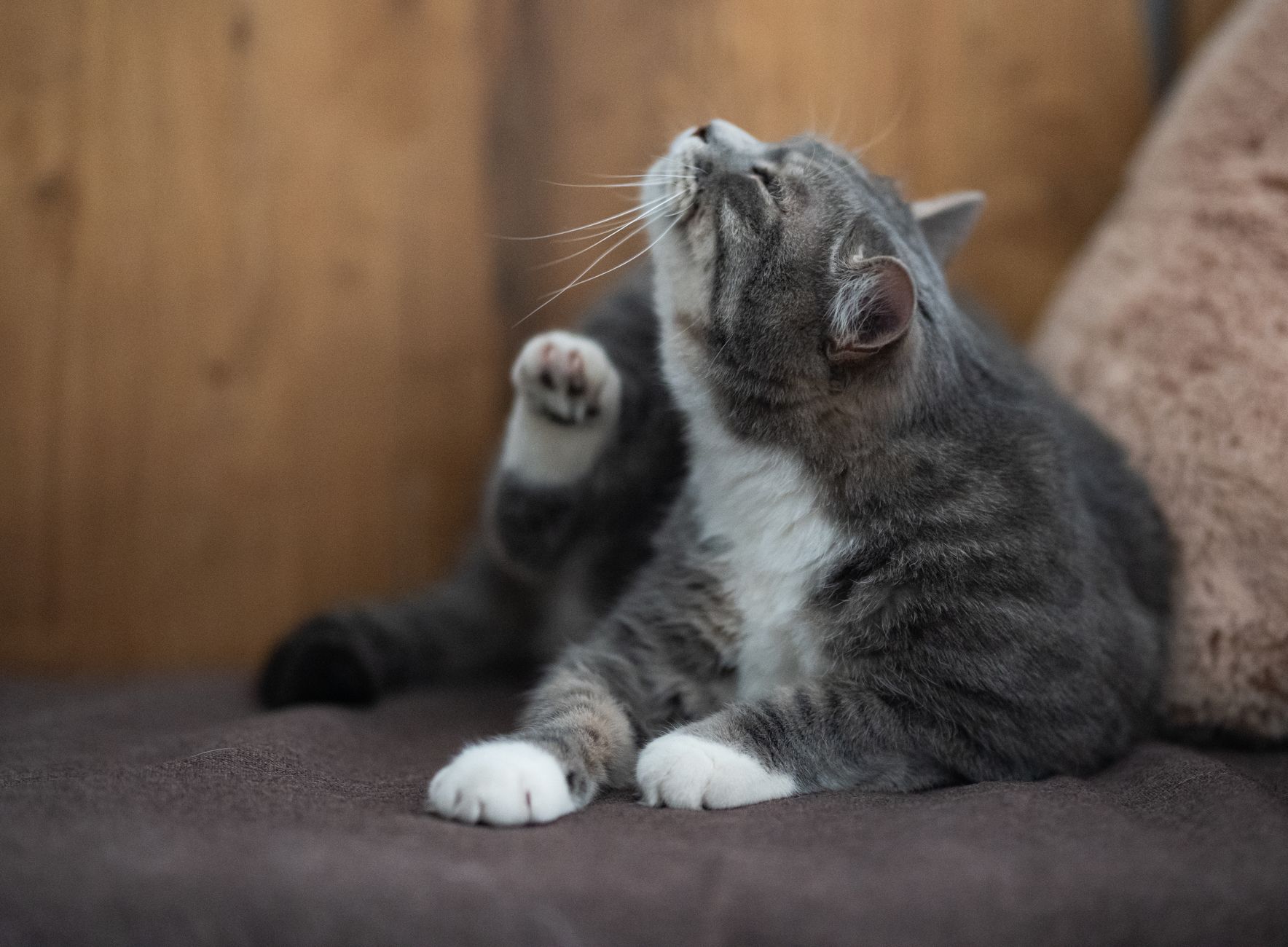
No, scratching alone does not mean your cat is stressed. Scratching is normal feline behavior for communication, claw care, and confidence.
The Cornell Feline Health Center describes scratching as innate behavior that deposits scent from paw glands, removes claw sheaths, and leaves visible marks Cornell guidance on destructive scratching. Daily use of a post is therefore expected. A sudden start or sharp rise in furniture scratching deserves closer attention.
Table of Contents
- Why calm cats still scratch
- When scratching points to stress
- What else drives furniture scratching?
- How to redirect scratching calmly
Why calm cats still scratch
A relaxed cat scratches to maintain its claws. Each scratch sheds a worn outer sheath. Paw glands leave scent on the surface. Visible marks add a visual signal.
Confidence also plays a role. A cat may choose a prominent chair leg or entryway post. That choice advertises presence rather than fear. A tall, stable post near a favorite nap spot gets more use than a short, wobbly one in a hallway. Texture matters too, so sisal, wood, and cardboard appeal to different cats.
When scratching points to stress
Change is the clue, not scratching itself. A cat that ignored the sofa for years and now rakes it daily has changed its pattern. Cats Protection lists newly started or increased furniture scratching as a possible stress response, alongside hiding, withdrawal, toileting outside the tray, reduced activity, and appetite changes Cats Protection advice on cat stress. The same source notes a new behavior change can mean the cat is stressed, scared, or sick.
Scratching alone therefore does not prove stress. Look at timing. A move, new pet, new baby, loud work, or changed routine before the increase points toward stress. Illness remains possible, so pair behavior clues with a health check when appetite, thirst, litter habits, or energy also shift.
What else drives furniture scratching?
Busy homes see more couch damage. A 2024 Ankara University study of 1,211 cats, published in Frontiers in Veterinary Science, found stress was a leading reason for unwanted furniture scratching and linked higher scratching with children in the home, high play activity, nocturnal activity, aggression, and disruptiveness Frontiers study on unwanted scratching. An active young cat may simply scratch more often.
Scratching people follows a different pattern. RSPCA Victoria states scratching directed at people usually reflects frustration or over-boisterous play, often preceded by a stiff body, swishing tail, and ears moved back. Stop petting, stay still, then redirect to a toy once the cat settles.
How to redirect scratching calmly
Punishment backfires. The Cornell Feline Health Center advises placing suitable posts beside favored spots because punishment does not work, since cats see no link between punishment and scratching and learn only fear Cornell guidance on destructive scratching.
Keep the post where the cat already scratches. Place the post against the damaged chair arm tonight and reward the first use.
- Put a sturdy post directly against the scratched sofa arm.
- Reward sniffing, rubbing, or scratching the post with praise or a treat.
- Cover the furniture spot temporarily while the new habit forms.
- Trim tips carefully and offer daily play to burn restless energy.