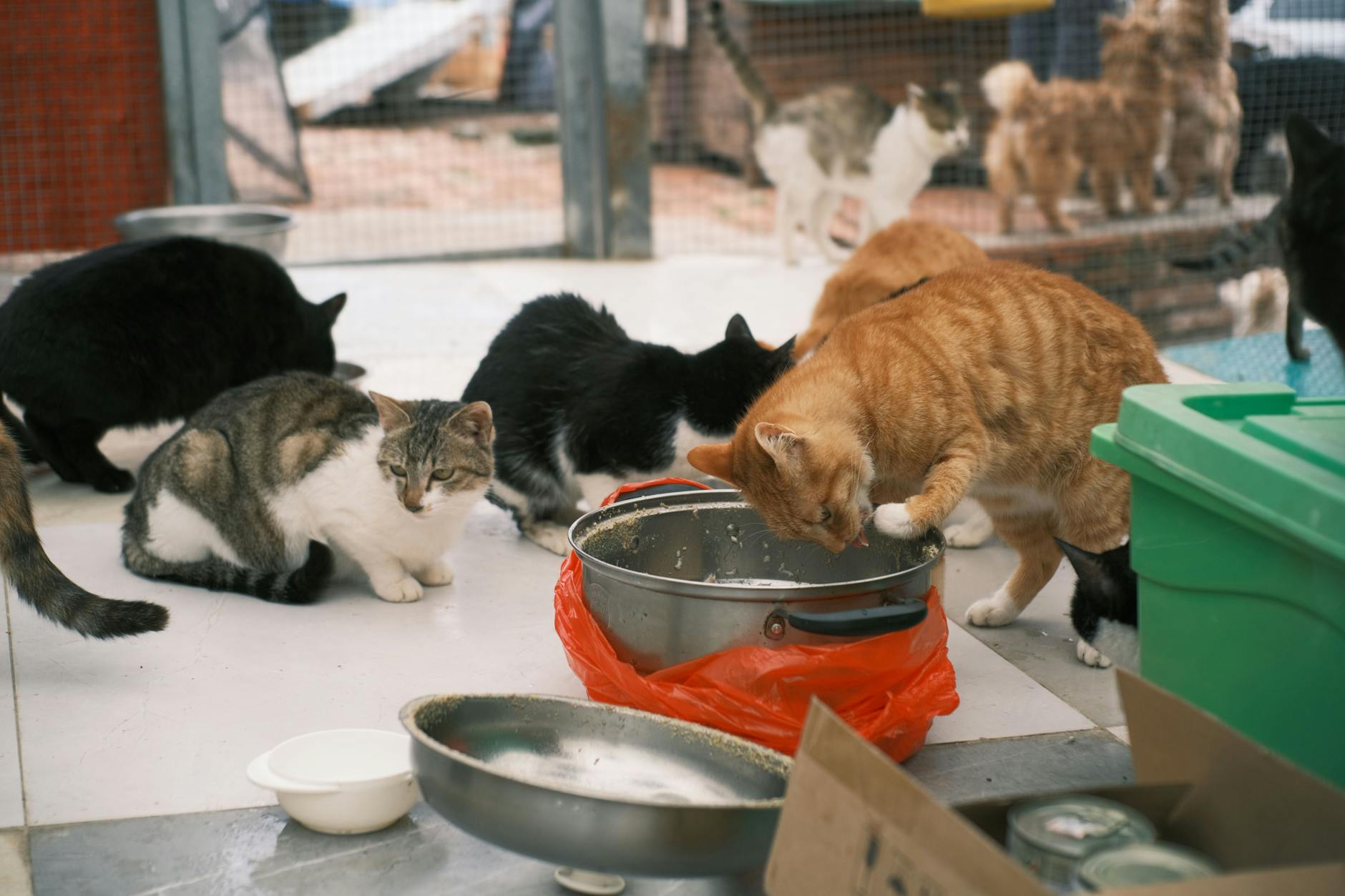
Sharing dishware with your cat is not recommended, even if—or perhaps especially if—you work in healthcare. The primary concern isn’t whether it happens occasionally, but rather the consistent risk of bacterial and pathogenic contamination that accumulates on shared dishes over time. Healthcare workers face elevated occupational exposure to pathogens and may have compromised immune systems, making them particularly vulnerable to zoonotic diseases that cats can transmit through saliva and fecal matter on food contact surfaces. While the risk of serious illness from a single shared meal is relatively low for most people, healthcare workers operate in a different risk calculus.
You’re already exposed to resistant pathogens in your professional environment, which may compromise your immune response. Adding cats’ oral bacteria to your food preparation ecosystem—even occasionally—increases your cumulative infection risk unnecessarily. The solution isn’t complicated: maintaining separate dishware for your cat takes minimal effort but substantially reduces your exposure to pathogens you’ve already encountered at work. Research shows that cat mouths harbor numerous bacteria capable of causing human infection, and cat food bowls develop biofilms containing bacteria and fecal matter. For someone in healthcare, this is a risk profile worth avoiding through simple, practical measures.
Table of Contents
- What Bacteria Do Cats Carry in Their Saliva and Oral Cavities?
- How Cat Food Bowls Develop Dangerous Biofilm Contamination
- Why Healthcare Workers Face Elevated Risk From Zoonotic Diseases
- Practical Prevention—Separate Dishware and Daily Cleaning Protocols
- The Risk of Asymptomatic Shedding and Carrier Status
- Example Scenario—What Cross-Contamination Looks Like in Practice
- Future Outlook—Growing Recognition of Zoonotic Risk in Healthcare Settings
- Conclusion
What Bacteria Do Cats Carry in Their Saliva and Oral Cavities?
cat saliva contains multiple pathogens that can infect humans under the right conditions. Bartonella henselae, the bacterium responsible for cat scratch disease, is present in approximately 10.9% of domestic cat saliva samples according to clinical research. More commonly, cats carry Capnocytophaga bacteria in their mouths—organisms the CDC specifically identifies as capable of causing serious infections if they enter open wounds or sores. Neither of these bacteria is dramatically virulent, but they represent a baseline microbial burden that a healthcare worker might reasonably minimize. Beyond these named pathogens, cats’ oral microbiota includes numerous other bacteria capable of causing infection in humans. The specific risk level depends partly on your individual immune status and partly on whether any bacteria actually reach your bloodstream or mucous membranes.
For a healthy person, casual exposure might never cause illness. But healthcare workers frequently have small cuts, dermatitis from repetitive hand washing, and immune function altered by occupational pathogen exposure. A tiny cut on your finger from food preparation, combined with cat saliva on a shared fork, creates the precise pathway for infection. The cumulative exposure matters more than any single incident. Every shared meal adds bacteria to your personal pathogenic load. Over a year of occasional dishware sharing, the aggregate risk compounds—not dramatically, but measurably more than necessary.

How Cat Food Bowls Develop Dangerous Biofilm Contamination
Cat food and water bowls don’t remain clean-looking once they’ve been used for a few days, even with regular washing. They develop what’s often called “pink slime”—a biofilm containing bacteria and fungi that accumulates despite apparent cleanliness. This biofilm may also contain fecal matter and food particles, particularly in water bowls where cats drink repeatedly. These biofilms harbor concentrated populations of microorganisms, and some organisms in them can cause infections in immunocompromised or occupationally exposed individuals. The problem is that standard hand washing between meals doesn’t prevent cross-contamination when you’re handling cat dishes. If you wash your cat’s bowl in your kitchen sink without thorough disinfection, bacteria from that bowl remain on your hands, sink surfaces, and potentially on shared dishware.
Plastic bowls are particularly problematic because bacterial biofilms adhere more readily to plastic surfaces than to glass or ceramic. A healthcare worker using plastic bowls for a cat is essentially creating an ideal growth environment for bacteria that could then spread to human dishes stored in the same cabinet. Research on raw cat foods revealed additional concern: commercial raw diets intended for cats can contain Salmonella, Cronobacter, and E. coli. If your cat eats raw food, that risk is transferred directly to the bowl, and then potentially to any dishware sharing cabinet space or washing space. Cats can also shed Salmonella bacteria in their feces, which then transfers to their fur and to surfaces they touch—including food bowls.
Why Healthcare Workers Face Elevated Risk From Zoonotic Diseases
Healthcare workers occupy a unique risk category for zoonotic disease transmission. Your occupational exposure to resistant pathogens and hospital environments means your immune system is continuously primed and potentially fatigued. Studies from veterinary health centers indicate that healthcare workers have greater susceptibility to zoonotic diseases transmitted from animals—not because they’re immunocompromised in the clinical sense, but because their occupational context amplifies risk in ways that don’t apply to non-healthcare populations. Additionally, healthcare workers often have small cuts and abrasions from frequent hand washing, frequent glove use, and exposure to harsh soaps and sanitizers.
These tiny breaches in skin integrity create perfect entry points for bacteria from cat saliva. A nurse with dermatitis from wearing latex gloves, who then handles both cat dishes and food preparation, is substantially more at risk than someone without occupational hand trauma. The occupational risk compounds over time. If you work in healthcare and share dishware with your cat for five years, your cumulative exposure to pathogens transmitted through that route may eventually exceed your immune system’s capacity to suppress them. Even if you don’t develop obvious cat scratch disease or Capnocytophaga infection, you might experience recurrent skin infections, persistent low-grade inflammation, or other health effects that healthcare workers don’t always attribute to their pets.

Practical Prevention—Separate Dishware and Daily Cleaning Protocols
The simplest solution is maintaining completely separate dishware for your cat. This means a distinct set of food and water bowls that never appear in your kitchen sink alongside human dishes. Store cat dishware in a separate cabinet, or at minimum on a separate shelf with clear visual separation. This eliminates the primary cross-contamination pathway and takes perhaps thirty seconds more effort per day than shared dishware would require. When selecting materials, choose glass or ceramic bowls for your cat rather than plastic. Plastic harbors bacterial biofilms more readily and is harder to disinfect effectively.
Glass and ceramic can be washed thoroughly with hot soapy water, and biofilm formation is slower. If you must use plastic, replace bowls every few months as they deteriorate and become more porous. Daily cleaning is non-negotiable. Wash cat food and water bowls with hot soapy water before each refilling. If possible, use a separate dish brush for cat dishes—or better yet, wash them by hand using the hottest water you can tolerate and a dedicated sponge. Weekly, consider running cat dishes through a dishwasher if you have one, as the heat cycle provides better disinfection than hand washing. Hand hygiene after handling cat dishes is equally important: wash your hands thoroughly before food preparation, especially if you have any cuts or skin damage.
The Risk of Asymptomatic Shedding and Carrier Status
Cats can shed dangerous bacteria without showing any symptoms themselves. A healthy-appearing cat might be shedding Salmonella, Capnocytophaga, or Bartonella at any given time. You can’t visually assess a cat’s microbiological status, and you can’t predict whether your cat is currently carrying a pathogen that could infect you. This asymptomaticity is the critical limitation of any risk assessment—you’re essentially defending against an invisible threat. For healthcare workers, this hidden risk is particularly concerning because you already accumulate pathogenic exposure at work.
You might be colonized with multiple organisms that your immune system is barely controlling. Adding another source of potential infection, even if it seems benign, tips the balance. Some healthcare workers develop infections that medical providers attribute to occupational exposure when the true source was actually their cat. The warning here is straightforward: don’t rationalize shared dishware by assuming your cat is “clean” or “healthy.” Apparent health tells you nothing about bacterial carriage. The only rational approach is to assume all cats carry pathogens and to implement barrier measures accordingly.

Example Scenario—What Cross-Contamination Looks Like in Practice
Consider a realistic scenario: You work a twelve-hour shift in a hospital, expose yourself to various pathogens, and come home with small cuts on your hands from frequent hand washing and glove use. You rinse your cat’s water bowl, set it on the counter next to your coffee mug, and wash both in the sink. You wash your hands, but you skip the scrub because you’re tired, and you proceed to prepare dinner. Three days later, you notice a small infection developing on one of your hand cuts.
It responds slowly to basic first aid, and you eventually take antibiotics. You probably attribute this to work exposure, which is partially true—but the bacteria might equally well have come from your cat’s water bowl. The infection is minor and resolves, but it represents your immune system managing a zoonotic disease transmission that didn’t need to happen. Scale this up over years, and you’re accumulating unnecessary infections, immune challenges, and potential for more serious illness. Healthcare workers don’t need additional pathogenic exposure on top of their occupational burden.
Future Outlook—Growing Recognition of Zoonotic Risk in Healthcare Settings
The emerging understanding of zoonotic disease transmission is shifting how occupational health officials view healthcare workers’ pet exposure. As antibiotic resistance increases and pathogens become harder to treat, the burden of preventing unnecessary infections grows.
Veterinary and occupational health literature increasingly emphasizes that healthcare workers should be particularly cautious about pathogenic transmission from pets. Healthcare workers concerned about infection risk should view pet dishware separation not as an excessive precaution but as a basic occupational health measure—comparable to handwashing or using personal protective equipment at work. As research continues to clarify the microbiology of pet-to-human transmission, the recommendations will likely solidify further around strict separation of pet and human food contact surfaces.
Conclusion
Sharing dishware with your cat is not safe, particularly if you work in healthcare. The presence of Bartonella henselae, Capnocytophaga, and other oral pathogens in cat saliva, combined with biofilm contamination in cat bowls and your elevated occupational risk, creates a disease transmission pathway that’s entirely avoidable. Your cat doesn’t need to share your dishes, and you don’t need the infection risk that sharing would introduce.
Implement simple measures: maintain separate dishware stored distinctly from your own, choose glass or ceramic bowls, wash cat dishes daily with hot water, practice thorough hand hygiene after handling cat dishware, and never allow cat bowls to contact your kitchen workspace or your dishes. These straightforward steps eliminate the primary risk while allowing you to maintain a safe, hygienic relationship with your cat. For healthcare workers especially, the effort involved is minimal compared to the cumulative infection risk you avoid.