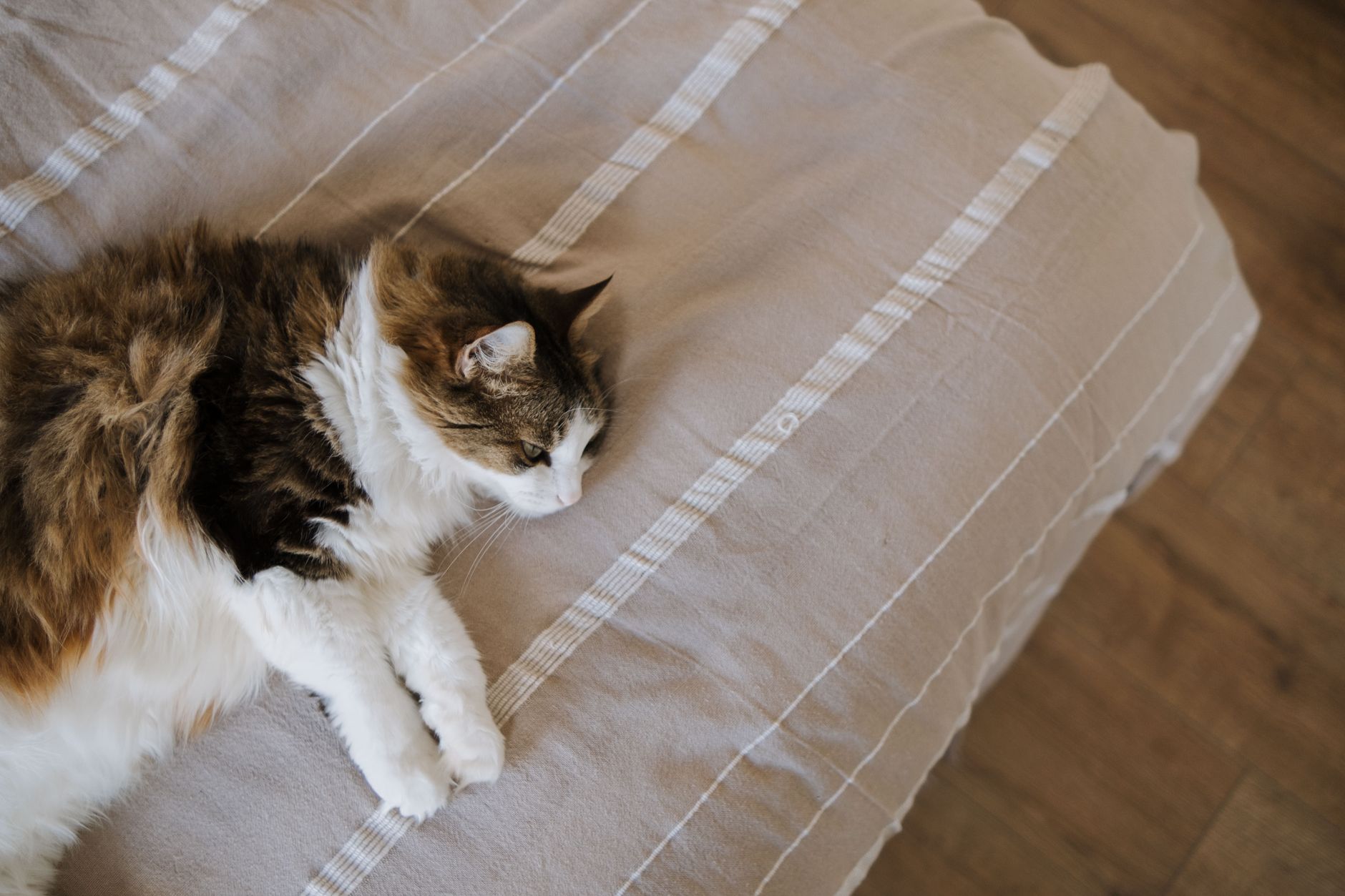
Long-distance car travel with a cat is a drive of several hours with the cat secured in a carrier. It works best with training, the right gear, planned stops, and current vet records. A carrier is a hard-sided, ventilated box that confines the cat during the ride. Long trips add stress, motion sickness, and refusal to eat or use litter, so owners need a calm setup and a clear routine.
Table of Contents
- How Should Your Cat Ride?
- How Do You Prepare Your Cat?
- What Vet Visit and Papers Do You Need?
- What Do You Pack and How Do Stops Work?
How Should Your Cat Ride?
According to Marcello Veterinary Hospital, cats should ride in a sturdy, ventilated carrier secured with a seatbelt in the back seat carrier safety guidance. Never let the cat ride loose or in the front seat, where an airbag can injure it. Feline-handling guidance from the American Association of Feline Practitioners and the International Society of Feline Medicine covers calm transport.
It recommends spraying synthetic feline facial pheromone in the carrier at least 30 minutes before travel. Pheromone means a lab-made version of the scent cats leave when they rub their cheeks. Cover the carrier with a light blanket to reduce fear.
How Do You Prepare Your Cat?
Ohio State University veterinarians advise acclimating cats by feeding treats in the carrier at home practice-drive guidance. They also advise short practice drives around the block several times weekly before a long trip.
Keep each step brief and calm. Use this sequence: End each drive with a treat and quiet time at home. Increase drive length only if the cat stays fairly calm.
- Leave the carrier open at home with treats and bedding inside.
- Feed meals or treats in the carrier so it feels safe.
- Take short drives around the block several times each week.
What Vet Visit and Papers Do You Need?
Schedule a pre-trip veterinary exam to confirm rabies vaccination. According to the Florida Department of Agriculture and Consumer Services, obtain an Official Certificate of Veterinary Inspection within 30 days when required Florida movement requirements. That certificate is a signed vet health form for animal movement.
The same Florida guidance notes a private-owner exemption for pets traveling with owners in Florida. Loyal Family Veterinary Hospital advises checking the destination state animal-health official because requirements vary. Use a licensed or accredited veterinarian for the exam and certificate.
What Do You Pack and How Do Stops Work?
On long drives, pack water, food, medications, and a portable litter box. The International Cat Association also advises a harness, leash, and updated microchip and collar ID. Offer water and the litter box only during stops inside the closed vehicle. Keep doors and windows shut at stops to prevent escape. Never leave a cat alone in a parked vehicle.
According to the Michigan Department of Agriculture and Rural Development, interior heat can rise almost 20°F in 10 minutes and almost 30°F in 20 minutes hot-vehicle warning. That heat can cause heatstroke or death, even with windows cracked. Ohio State guidance and Marcello Veterinary Hospital note that many cats refuse to eat, drink, or use litter in a moving car. They also note motion sickness or severe anxiety, so plan breaks every 2-3 hours. Ask your veterinarian about feeding timing or anti-anxiety options rather than sedating without direction.