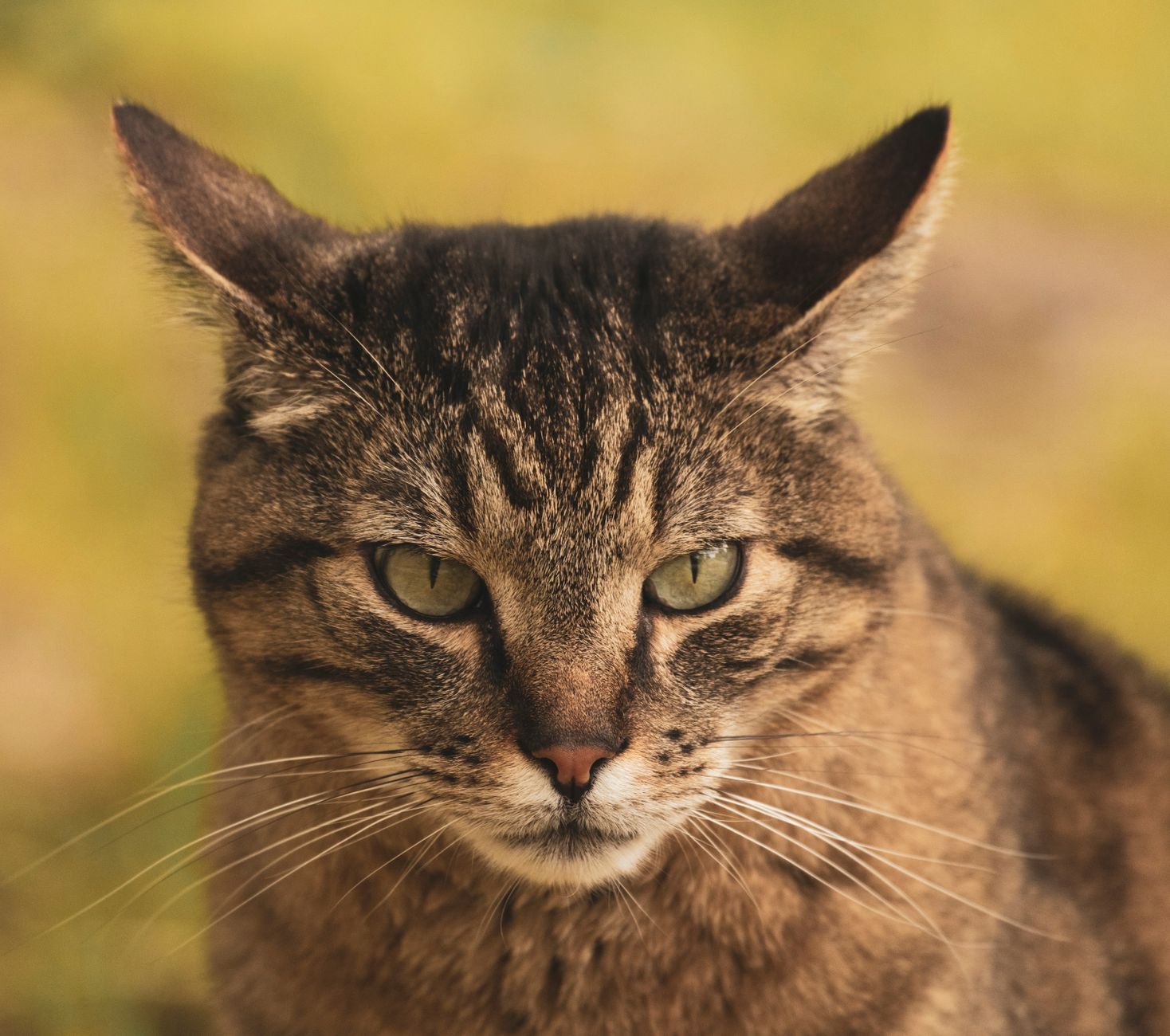
Watch for intense itching, small crusty bumps, and patches of missing fur around the head, neck, and rear body. These signs point to flea allergy dermatitis, a hypersensitivity reaction to proteins in flea saliva. Cornell University College of Veterinary Medicine explains that a few bites can trigger severe skin disease, as described in the Cornell flea-allergy resource. Tabby refers to a coat pattern, not a breed, so any tabby-pattern cat can develop this reaction.
Table of Contents
- What does the itch look like?
- What bumps and sores appear?
- Where does hair loss show up?
- Can a cat have it with no visible fleas?
- What should tabby owners do next?
What does the itch look like?
Intense itching is the main warning sign. The Merck Veterinary Manual describes persistent scratching, licking, chewing, and biting in affected cats in its Merck Veterinary Manual guide to fleas in cats.
Affected cats may also rub against furniture, seem restless, and develop brown saliva staining on the fur. Watch for these day-to-day behaviors:.
- repeated scratching around the head and neck
- licking, chewing, or biting the back, belly, or legs
- rubbing the face or body against objects
- restlessness, trouble settling, or interrupted sleep
What bumps and sores appear?
Many cats develop miliary dermatitis. This means numerous small raised crusty bumps that feel like millet seeds, often spread over the back, neck, and face.
Repeated scratching and biting injure the skin. Redness, scabs, sores, bleeding spots, and crusts can follow, sometimes with secondary bacterial skin infection. Cats most often show this damage near the neck and face.
Where does hair loss show up?
Hair loss often comes from overgrooming, not from fleas removing the hair. Cats lick and pull fur to soothe the itch.
Look for thinning or bald patches around the tail base, head, neck, legs, belly, and rear half of the body. Striped or spotted tabby markings can make early thinning harder to notice, so part the fur and check the skin.
Can a cat have it with no visible fleas?
Yes. Absence of visible fleas or flea dirt does not rule out flea allergy.
PetMD notes that itchy cats efficiently groom fleas away and hypersensitive cats react to very few bites, as explained in this PetMD overview of flea allergy dermatitis. Do not wait to find live fleas before acting. A clean-looking coat with ongoing itch, bumps, or overgrooming still warrants prompt veterinary attention.
What should tabby owners do next?
Remember that tabby is a coat pattern found in many breeds and mixed-breed cats. Tabby cats face the same flea-allergy signs as other cats and need the same careful approach.
Ask a veterinarian for diagnosis and a flea-control plan for the affected cat. Include strict flea control for all household pets, because one untreated animal can keep triggering the allergic cat.