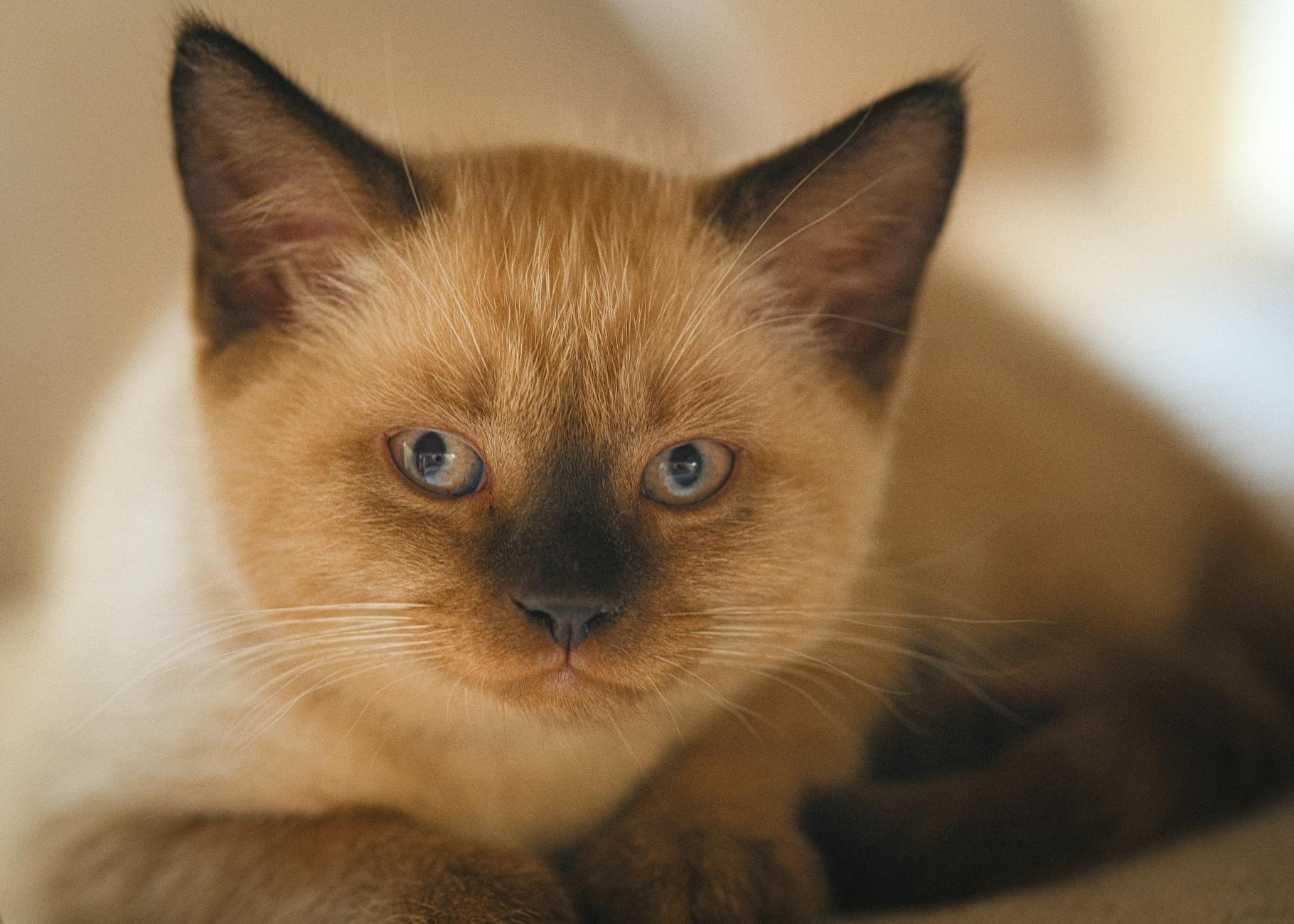
The most well-known small to medium cat breed with blue eyes is the Siamese, a sleek, vocal breed with striking almond-shaped sapphire eyes and a distinctive colorpoint coat pattern. However, the Siamese is not the only blue-eyed breed available. The Ragdoll, a larger and more docile breed, also possesses bright blue eyes as a breed standard, while smaller breeds like the Snowshoe and Tonkinese offer variations on the blue-eyed feline ideal.
If you’re considering a blue-eyed cat, understanding the different breeds, their size ranges, and their specific characteristics will help you find the right match for your household. The blue eye color in cats is determined by genetics, often linked to coat color patterns and other breed traits. Some breeds, like the Ragdoll, guarantee blue eyes in all purebred individuals, while others, like the Siamese, consistently produce blue-eyed offspring. The intensity of the blue can range from pale ice to deep sapphire, depending on the cat’s age, breed, and individual genetics.
Table of Contents
- Which Small and Medium Cat Breeds Have Blue Eyes?
- Understanding Blue Eye Color Genetics in Cat Breeds
- Siamese Cats: The Classic Blue-Eyed Breed
- Ragdolls vs. Siamese: Comparing Blue-Eyed Breeds
- Health Considerations for Blue-Eyed Cat Breeds
- Rare and Extinct Blue-Eyed Breeds
- Choosing a Blue-Eyed Breed: What to Know
- Conclusion
Which Small and Medium Cat Breeds Have Blue Eyes?
Several recognized cat breeds are known for their blue eyes, though not all are small. The Siamese remains the quintessential blue-eyed breed, with males typically weighing 10 to 15 pounds and females 8 to 12 pounds, making them a small-to-medium option. They reach full size in approximately one year and feature a distinctive tubular body shape with a triangular head, along with their signature almond-shaped blue eyes. The Ragdoll, by contrast, is a larger breed—females weigh 8 to 15 pounds while males reach 12 to 20 pounds—and is notable for the fact that all purebred Ragdolls have blue eyes as a breed standard across all six color variations.
Ragdolls take considerably longer to mature, reaching full adult size by four years of age. Beyond these two main breeds, the Tonkinese offers a smaller, more playful alternative, created by crossing Siamese and Burmese cats. The Snowshoe is another option, developed from Siamese and American Shorthair crosses, offering a more compact frame than the traditional Siamese. The Turkish Angora rounds out the list as a small-to-medium breed with a silky long coat and large ears, though blue eyes in this breed may be less consistent than in Siamese or Ragdolls. Each breed brings different energy levels, size ranges, and personality traits alongside their blue-eyed appearance.

Understanding Blue Eye Color Genetics in Cat Breeds
Blue eyes in cats result from a lack of pigment in the iris, which causes light to scatter and reflect, creating the blue appearance. In many breeds, blue eye color is linked to specific coat color patterns, particularly the colorpoint pattern seen in Siamese and related breeds. The colorpoint pattern is caused by a temperature-sensitive form of albinism that affects pigmentation in the cooler parts of the body—the ears, face, paws, and tail—while the body remains lighter. This genetic connection means that cats with colorpoint patterns are almost certain to have blue eyes.
However, not all blue eyes follow this rule. The now-extinct Ojos Azules breed, which emerged in the 1980s from feral cat populations in New Mexico, carried a dominant blue eye (DBE) genetic mutation that was independent of coat color. This means Ojos Azules could have blue eyes regardless of their coat pattern, a unique trait among cat breeds. Unfortunately, this mutation was linked to genetic complications that led breeders to cease working with the line, and the breed is no longer actively bred as of 2026. The Ragdoll presents another consistent case: all purebred Ragdolls are guaranteed to have blue eyes across all color patterns, making blue eyes a defining breed characteristic rather than a variable trait.
Siamese Cats: The Classic Blue-Eyed Breed
The Siamese cat is arguably the most iconic blue-eyed breed and remains one of the most popular choices for anyone seeking a feline companion with striking azure eyes. Siamese cats have a short, glossy coat with no undercoat, a sleek muscular body, and a distinctly triangular head shape. Their eyes are large and almond-shaped, ranging from light to bright blue, and their intense gaze is one of their defining characteristics. A typical example would be a seal-point Siamese, which features a cream-colored body with darker brown (seal) points on the face, ears, paws, and tail, creating a dramatic contrast that makes their blue eyes even more striking.
Siamese cats are highly vocal and interactive, often described as dog-like in their loyalty and their desire to be involved in their owner’s activities. They reach full maturity quickly—within about one year—making them a relatively fast-growing breed compared to other varieties. One important consideration is that Siamese cats require significant mental and physical stimulation; without adequate engagement, they can become destructive or develop behavioral issues. Their vocal nature also means they will communicate frequently with their owners, which some find charming and others find exhausting. Prospective owners should be prepared for an active, talkative companion that demands attention and interaction.
Ragdolls vs. Siamese: Comparing Blue-Eyed Breeds
When comparing the two most prominent blue-eyed breeds, several key differences emerge that should influence your choice. Ragdolls are significantly larger than Siamese cats—with males often reaching 12 to 20 pounds compared to Siamese males at 10 to 15 pounds—and they mature much more slowly, taking up to four years to reach full adult size. This extended growth period means that Ragdoll kittens remain playful and kitten-like far longer than their Siamese counterparts. Ragdolls are also generally quieter and more laid-back than Siamese, making them a better choice for households that prefer a calmer, less vocal pet.
Additionally, all Ragdolls have blue eyes as a breed standard, whereas Siamese consistently produce blue-eyed kittens due to their genetic makeup. The trade-off is that Ragdolls require more space due to their larger size and may be less independent than Siamese cats. Siamese are better suited to smaller living spaces and are more likely to keep themselves entertained, though they demand more interactive engagement from their owners. If you want a compact, energetic, and highly communicative blue-eyed cat, the Siamese is the superior choice; if you prefer a larger, gentler breed that bonds strongly with its family and doesn’t mind being handled more frequently, the Ragdoll may be the better match. Your living situation, lifestyle, and preferences for feline personality should drive this decision.
Health Considerations for Blue-Eyed Cat Breeds
Blue-eyed cats, particularly those with colorpoint patterns, may be at a slightly higher risk for certain health conditions. Some studies suggest that the genes responsible for colorpoint patterns and blue eyes can be linked to a higher incidence of deafness, especially in cats that are entirely white with blue eyes. Siamese and Ragdolls are not pure white breeds, so this risk is lower than in white cats with blue eyes, but it remains worth monitoring. If you adopt a blue-eyed kitten, have their hearing tested by a veterinarian, particularly if you notice they don’t respond to sounds or seem unaware of their surroundings.
Another consideration is that blue-eyed breeds tend to be more prone to eye sensitivity and require careful monitoring for conditions like progressive retinal atrophy (PRA) and other hereditary eye diseases. Both Siamese and Ragdolls have been documented to experience these issues in some lines, though responsible breeders screen for genetic predispositions. It’s crucial to obtain your blue-eyed cat from a reputable breeder who conducts health testing and can provide documentation of their breeding cats’ eye health. Additionally, the intensity of light can sometimes cause discomfort in blue-eyed cats more readily than in other felines, so providing shaded areas in your home is a considerate practice. Regular veterinary eye exams should be part of routine care for any blue-eyed breed.
Rare and Extinct Blue-Eyed Breeds
The Ojos Azules represents a fascinating chapter in blue-eyed cat breed history. First recorded in 1984 when a tortoiseshell cat named Cornflower was discovered in New Mexico, the Ojos Azules breed developed around a unique genetic mutation that produced blue eyes independently of coat color. This meant that Ojos Azules cats could have blue eyes whether they had a colorpoint pattern, a solid coat, or any other color variation—a trait that distinguished them from Siamese and Ragdolls. The breed gained recognition from TICA (The International Cat Association) in 1991 and attracted interest from breeders who saw the potential for a truly novel blue-eyed cat.
However, the same genetic mutation that gave Ojos Azules their distinctive eyes was linked to lethal genetic complications that affected breeding success and kitten survival. Breeders gradually ceased working with the line as these challenges became apparent, and as of 2026, the Ojos Azules breed is officially extinct. While some individual cats with the Ojos Azules heritage may still exist, they are no longer actively bred, and the breed exists only in historical records and breed registries. This example illustrates an important reality: not all unique genetic traits are worth preserving if they carry significant health risks to the animals themselves.
Choosing a Blue-Eyed Breed: What to Know
If you’re drawn to blue-eyed cats, your decision should be based on more than just eye color. Consider the size of the cat you want, the space available in your home, your tolerance for vocal communication, and the amount of time you can dedicate to interactive play and bonding. If you live in a small apartment and prefer a quiet companion, a Ragdoll’s larger size and laid-back temperament might not be ideal, whereas a Siamese’s compact frame and willingness to entertain themselves could work better. Conversely, if you want a cat that won’t exhaust you with constant meowing and can adapt to slower-paced routines, a Ragdoll’s calm nature is advantageous.
Always source your blue-eyed cat from a reputable breeder who can provide health testing results, genetic screening documentation, and honest information about the breed’s typical behavior and needs. Ask whether hearing and vision screening have been performed on both parents, and request references from previous buyers. The initial investment in finding the right breeder is far less costly than dealing with unexpected health issues later. Finally, remember that while blue eyes are visually stunning, they are just one aspect of a cat’s personality and health—choose your feline companion based on compatibility with your lifestyle and home environment first and foremost.
Conclusion
The Siamese cat is the most iconic small-to-medium blue-eyed breed, known for its striking almond-shaped sapphire eyes, distinctive colorpoint coat, and highly vocal personality. The Ragdoll offers a larger, gentler alternative with guaranteed blue eyes across all color variations, though it requires more space and time for maturation. Beyond these two primary options, breeds like the Tonkinese, Snowshoe, and Turkish Angora provide additional alternatives, each with distinct size, temperament, and coat characteristics.
When selecting a blue-eyed cat, prioritize compatibility with your home environment and lifestyle over eye color alone. Work with reputable breeders who conduct health testing, and be prepared to provide the attention, space, and veterinary care that blue-eyed breeds require. Whether you choose a Siamese’s energetic companionship or a Ragdoll’s calm affection, a blue-eyed cat can be a rewarding and visually striking addition to your family.