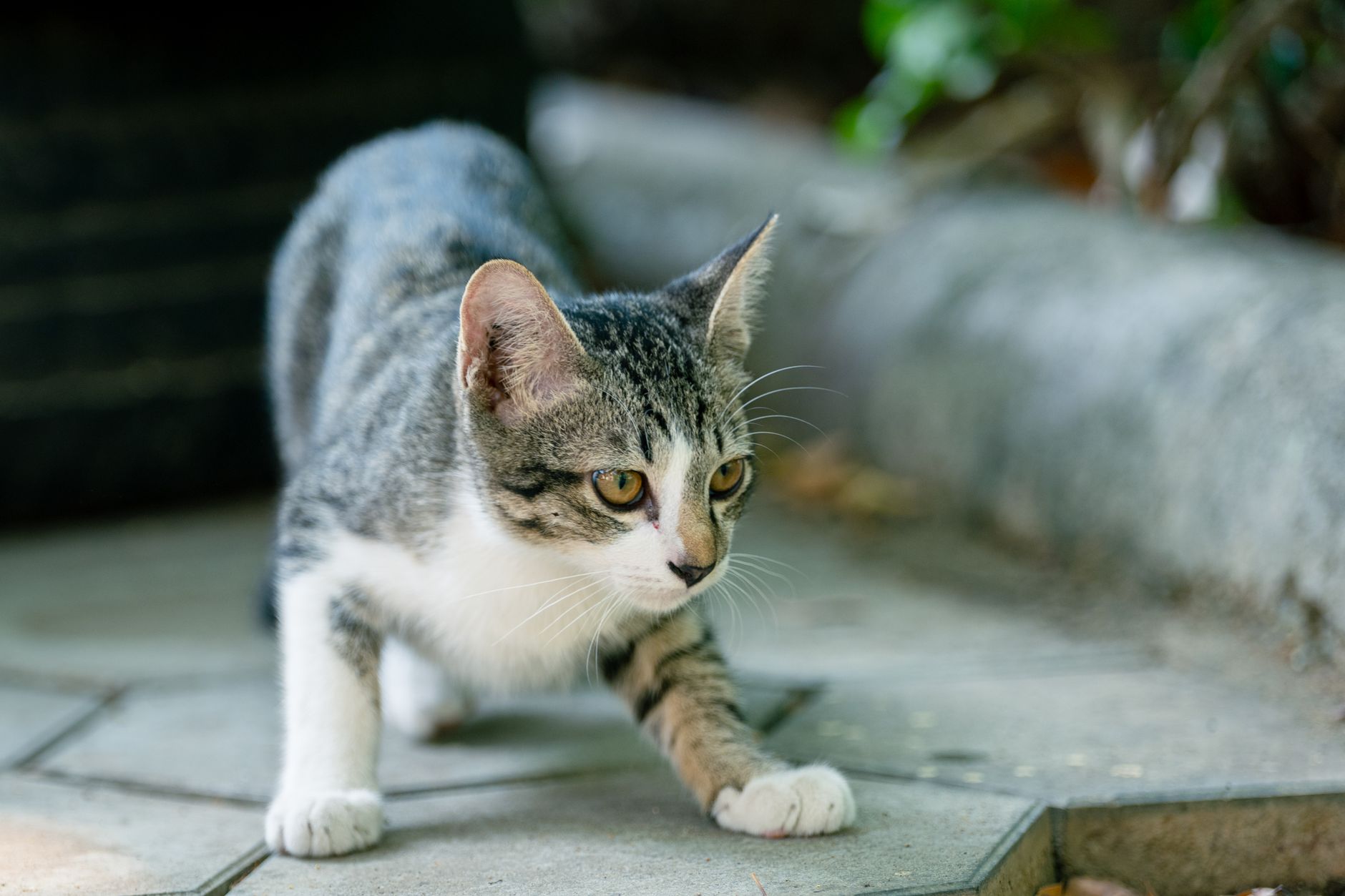
Your cat attacks your feet at night because wiggling toes look like prey during its peak hunting hours. The ASPCA identifies this stalking, pouncing, and biting as play aggression, the most common aggression cats direct toward owners, as described in its guide to play aggression. Play aggression means hunting behavior aimed at people, not anger or spite. Cornell Feline Health Center notes that biting and scratching during play are typical of this pattern and most common in young cats and kittens.
Table of Contents
- Why feet become targets after dark
- How to tell it is play
- Habits that make night pouncing worse
- How can evening play reduce attacks?
- When should you call the veterinarian?
Why feet become targets after dark
Domestic cats are crepuscular hunters, most alert and active around dawn and dusk. VCA Animal Hospitals explains that bedtime movement falls inside this natural hunting window, according to its guide to nocturnal activity. Toes shifting under sheets supply exactly the motion that wakes up that system.
Sudden movement makes the urge stronger. Veterinary teaching source WikiVet states that innate hunting responses fire after sudden movements or shrill noises, with misdirected attacks peaking in early morning and evening, as explained in its review of misdirected predatory behavior. A foot twitch, turn, or blanket rustle can trigger a chase.
How to tell it is play
Play attacks follow a hunting sequence. The cat stalks, chases, ambushes, bats, grasps, pounces, and nips. Legs, feet, and moving hands draw most of this attention because cats lock onto moving objects.
VCA Animal Hospitals lists toe and ear nibbling in bed, walking across sleepers, vocalizing, and wild overnight runs across furniture and people as typical night-activity complaints. The cat often looks loose and bouncy, then rests after the burst. Fear or pain looks stiffer, with hissing, flattened ears, or avoidance.
Habits that make night pouncing worse
Boredom builds pressure. The ASPCA reports that long hours alone without play chances raise later play aggression. Kittens taught to chase hands and feet often keep doing it as stronger adults, when the habit is harder to change.
Reward keeps it going. Cats repeat meowing, scratching, pillow walking, and foot attacks after owners talk, pet, shift, get up, or feed them at 4 a.m. Even scolding can act as attention. Consistency matters because any payoff teaches the cat to try again tomorrow.
How can evening play reduce attacks?
VCA Animal Hospitals advises spreading play, feeding, and interaction through afternoon and evening and keeping the cat active before bed. An evening play session, then a meal, helps align the cat's schedule with the household.
Tired, fed cats settle better than cats waking up ready to hunt. At night, make feet boring and toys rewarding.
- Stop moving your feet when grabbed, then redirect calmly to a wand toy or tossed ball.
- Never wrestle with hands or feet or wiggle toes to tease.
- Offer puzzle feeders and solo toys during the day for cats home alone.
- Keep bedroom doors, earplugs, or a separate sleep space if attacks persist during retraining.
When should you call the veterinarian?
Most foot ambushes are play, but new, intense, or escalating aggression deserves a medical check. Cornell Feline Health Center cautions that pain, such as arthritic pain, can drive aggression and that sudden or serious cases need an exam and diagnostic tests first. Tell the clinic when it started, what the bite looks like, and whether touch, limping, hiding, or appetite change appeared.
Treat every bite that breaks skin seriously. Bites can carry infection and pose extra risk to children. Wash the wound promptly and seek medical advice for punctures, swelling, redness, or fever.