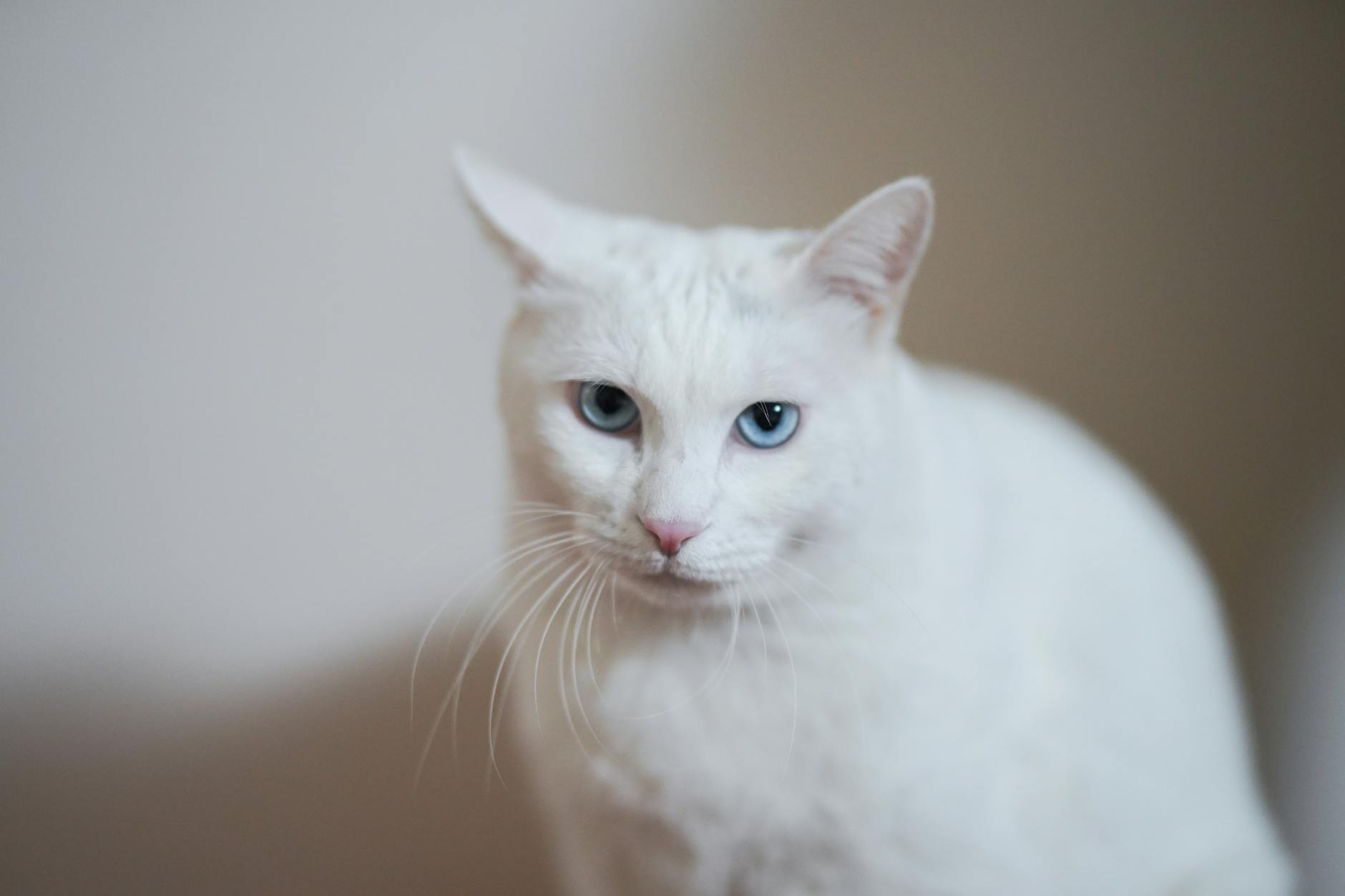
The white fluffy cat breed with blue eyes most commonly refers to the Persian, Ragdoll, or Himalayan—each representing distinct variations on this striking appearance. However, there’s no single “white fluffy cat breed” since multiple cat breeds display this combination of traits. The Persian, with its iconic snowy white coat and piercing blue eyes, stands as perhaps the most recognizable example. The Ragdoll, though often featuring color-point patterns, produces blue-eyed whites as well.
The Himalayan, which shares Persian ancestry, showcases similar characteristics with its heavy bone structure and luxurious white coat. If you’re drawn to white fluffy cats with blue eyes, you’re attracted to one of the most visually striking combinations in the feline world. These breeds share common characteristics: substantial bone structure, long flowing coats that demand regular grooming, and the distinctive feature of blue eyes that can range from pale icy blue to deeper sapphire shades. However, this particular combination carries an important health consideration that every potential owner must understand before bringing one of these cats home.
Table of Contents
- Which White Fluffy Cat Breeds Have Blue Eyes?
- The Physical Characteristics of White Fluffy Blue-Eyed Cats
- Understanding the Specific White Fluffy Breeds in Detail
- Grooming and Care Requirements for White Fluffy Blue-Eyed Cats
- The Deafness Connection in White Cats With Blue Eyes
- Living With a Deaf or Hard-of-Hearing Cat
- Making the Right Choice for Your Household
- Conclusion
Which White Fluffy Cat Breeds Have Blue Eyes?
Several established cat breeds fit the description of white, fluffy cats with blue eyes. The Persian remains the most iconic, recognized by cat associations worldwide and bred specifically to achieve that snowy coat and deep blue gaze. The Himalayan, developed by crossing Persians with Siamese cats, produces similar aesthetics with stockier proportions. Ragdolls, though often featuring pointed coloration on their extremities, can appear predominantly white with their signature striking blue eyes. The Balinese offers a more slender silhouette than Persians but maintains the flowing white coat and brilliant blue eye color.
The Turkish Angora, originating from the Ankara region, provides another option with its silky white coat and variable eye colors that can be blue or green. Each breed brings distinct personality and maintenance requirements alongside their appearance. Persians are known for their calm, gentle nature and lap-cat tendencies, while Ragdolls tend to be more interactive and playful. Turkish Angoras are often more energetic and intelligent. The primary factor distinguishing these breeds isn’t just eye color or coat color, but their body structure, temperament, and specific care needs that come with maintaining their luxurious coats.

The Physical Characteristics of White Fluffy Blue-Eyed Cats
White fluffy cats with blue eyes typically possess substantial weight and bone density compared to average domestic cats. Persians, for example, weigh between eight to thirteen pounds and feature distinctly flat faces with compact bodies built close to the ground. Their coats are exceptionally dense, with fine fur reaching lengths that can exceed three inches, creating that characteristic fluffy appearance. The blue eyes in white cats display various intensities—some appear almost translucent pale blue, while others show deep, saturated blue pigmentation that intensifies with maturity.
A critical limitation of breeding for white coats and blue eyes is the genetic link to congenital deafness. This isn’t a minor concern to overlook; it’s a documented hereditary condition directly associated with this color combination. The specific genetic mechanism involves the W gene (white coat gene) and its interaction with eye pigmentation. Understanding this tradeoff is essential because it affects not just the cat’s quality of life, but also their safety, trainability, and veterinary care requirements throughout their lifespan.
Understanding the Specific White Fluffy Breeds in Detail
The Persian represents the quintessential white fluffy blue-eyed cat, with breeding standards that specifically emphasize coat density and eye color. A white Persian’s coat requires brushing multiple times weekly—ideally daily—to prevent matting and tangles that can become painful for the cat. Himalayans, which share much of the Persian’s genetic background, demand similarly intensive grooming but often prove slightly more robust in temperament.
Ragdolls bring blue eyes that appear almost luminous against their cream and white coloring, though their coat, while fluffy, requires less intensive grooming than Persians. Turkish Angoras offer an interesting example of how blue eyes don’t always accompany white coats—many white Turkish Angoras display green or amber eyes instead. The breed’s silky (rather than densely fluffy) coat requires regular brushing but proves more manageable than Persian coats. Balinese cats, with their slender elegant frames and long silky coats, produce stunning white individuals with striking blue eyes, though they’re often more active and demanding of interactive play than other breeds in this category.
Grooming and Care Requirements for White Fluffy Blue-Eyed Cats
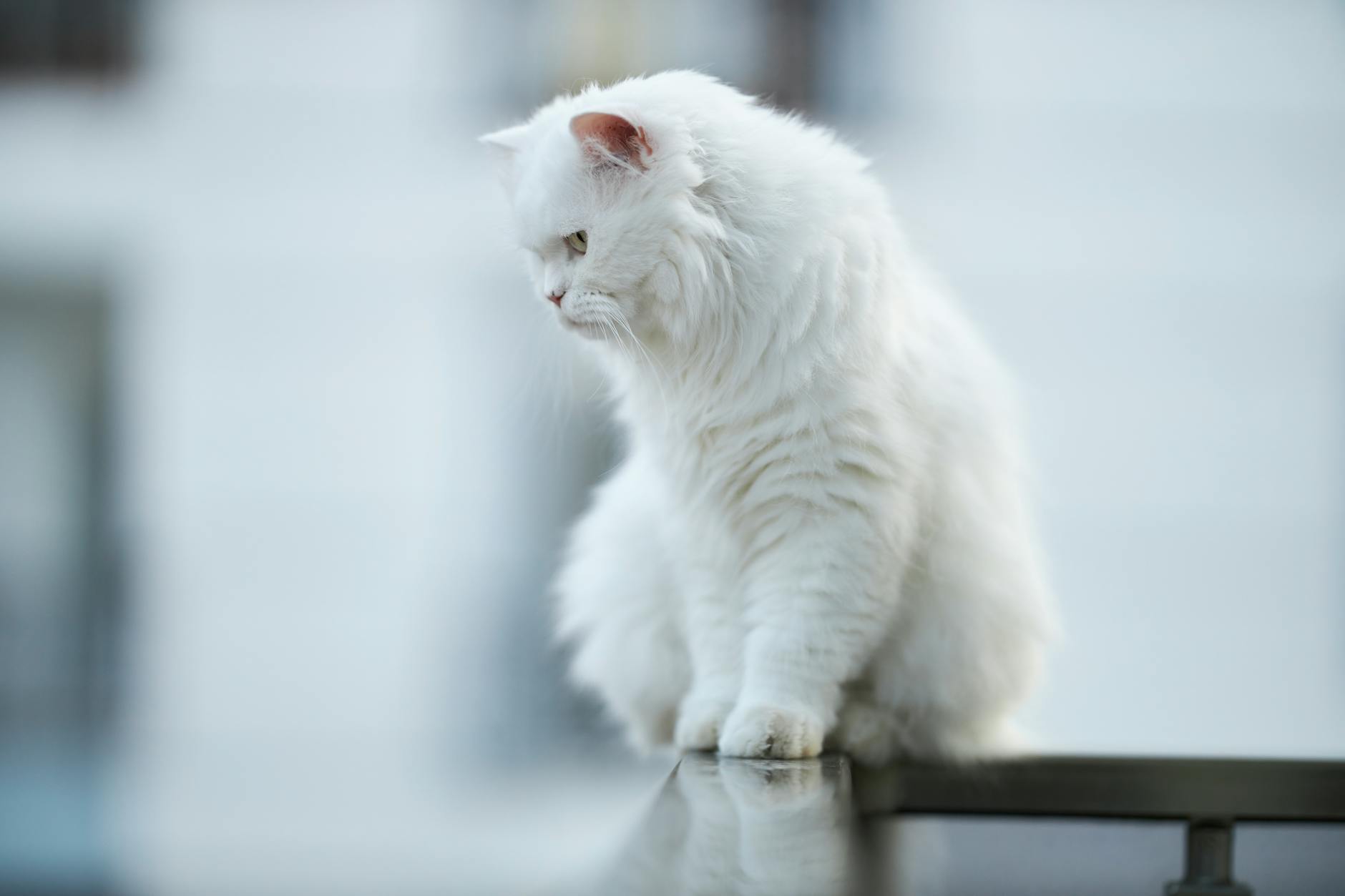
White fluffy cats with blue eyes demand exceptional grooming commitment that extends beyond typical cat care. A Persian or Himalayan requires daily brushing to maintain coat health, prevent matting, and reduce shedding throughout your home. For comparison, most shorthair cats need weekly brushing at best; white fluffy breeds double or triple that commitment. Without proper grooming, mats develop within days and can eventually require veterinary intervention or painful removal.
Additionally, the white coat shows every speck of dirt, requiring occasional professional grooming and bathing—something many cats resist but white cats make necessary. The trade-off for owning a white fluffy blue-eyed cat is clear: stunning visual appeal in exchange for substantial time investment. Owners must purchase quality grooming tools, budget for professional grooming appointments (typically $50-150 per session), and dedicate personal time regularly. This makes these breeds unsuitable for owners with limited time or those seeking a low-maintenance pet. However, if grooming becomes part of your bonding routine with your cat, many owners find this maintenance deeply rewarding rather than burdensome.
The Deafness Connection in White Cats With Blue Eyes
White cats with blue eyes face a significant health challenge: congenital deafness occurs at dramatically higher rates than in any other cat color combination. Approximately 40% of white cats with one blue eye are born deaf, while nearly 85% of white cats with two blue eyes are deaf. This represents a critical fact that many people purchasing these breeds don’t understand until after bringing their cat home. The genetic link is well-documented and relates to how the white coat gene affects melanocyte development in the inner ear.
This means that before acquiring a white fluffy blue-eyed kitten, having a veterinary hearing test performed is essential. Some kittens are completely deaf; others have partial hearing loss in one or both ears. Deaf cats can live perfectly happy lives with proper accommodation—they become dependent on visual cues and vibration signals—but it requires adjustment to your home and training methods. Warning: never adopt a white blue-eyed cat without first having your veterinarian perform a hearing assessment using the BAER (Brainstem Auditory Evoked Response) test, the only definitive method to determine deafness in young kittens.
Living With a Deaf or Hard-of-Hearing Cat
Deaf white cats adapt remarkably well to home environments once owners adjust expectations and create appropriate accommodations. Flashlights or porch lights can replace verbal calls. Vibration signals—stomping on the floor, tapping surfaces—communicate effectively with deaf cats who rely on visual and tactile awareness. Indoor environments actually suit deaf cats better since outdoor hazards like traffic cannot be heard as a warning.
A specific example: many owners report that deaf cats actually prove easier to train than hearing cats in some respects, since these cats develop heightened attentiveness to visual signals and hand gestures. The emotional impact on owners varies considerably. Some consider it a nonissue once they adjust their communication style; others find it challenging. The key is approaching deafness as a different way of living rather than a disability that diminishes the cat’s quality of life. Deaf cats show no apparent distress from their deafness itself and demonstrate normal playfulness, affection, and social engagement with their human families and other household pets.
Making the Right Choice for Your Household
If you’re considering a white fluffy blue-eyed cat, the decision requires honest assessment of your situation. These cats offer extraordinary visual beauty and, in breeds like the Persian, genuinely calm and gentle companionship. However, they demand significant grooming commitment and carry a high probability of hearing impairment. This combination makes them unsuitable for busy households, first-time cat owners, or anyone unprepared for daily grooming or potential hearing loss accommodation.
The future of breeding these stunning cats increasingly involves ethical responsibility discussions within cat show communities and breed clubs. More breeders now discuss deafness rates openly and encourage hearing testing before adoption. If you proceed with acquiring a white blue-eyed kitten, working with responsible breeders who test parents for genetic health issues and who perform BAER testing on kittens becomes crucial. This approach supports ethical breeding practices while allowing you to make informed decisions about what to expect.
Conclusion
White fluffy cats with blue eyes represent some of the most visually striking felines available, with Persians, Himalayans, Ragdolls, Balinese, and Turkish Angoras offering various options within this category. These breeds share a distinctive appearance defined by substantial coats, blue eye coloration, and gentle temperament in many cases. However, the same genetic factors that produce these stunning aesthetics carry a significant tradeoff: a high incidence of congenital deafness, particularly in cats with two blue eyes.
Before pursuing ownership of a white fluffy blue-eyed cat, honestly evaluate your lifestyle, time availability for grooming, and ability to accommodate a potentially deaf cat. If you proceed, prioritize working with ethical breeders, obtaining a pre-purchase hearing assessment via BAER testing, and preparing for the grooming commitment these beautiful cats require. With proper understanding and preparation, a white fluffy blue-eyed cat can provide years of companionship and visual joy to the right household.