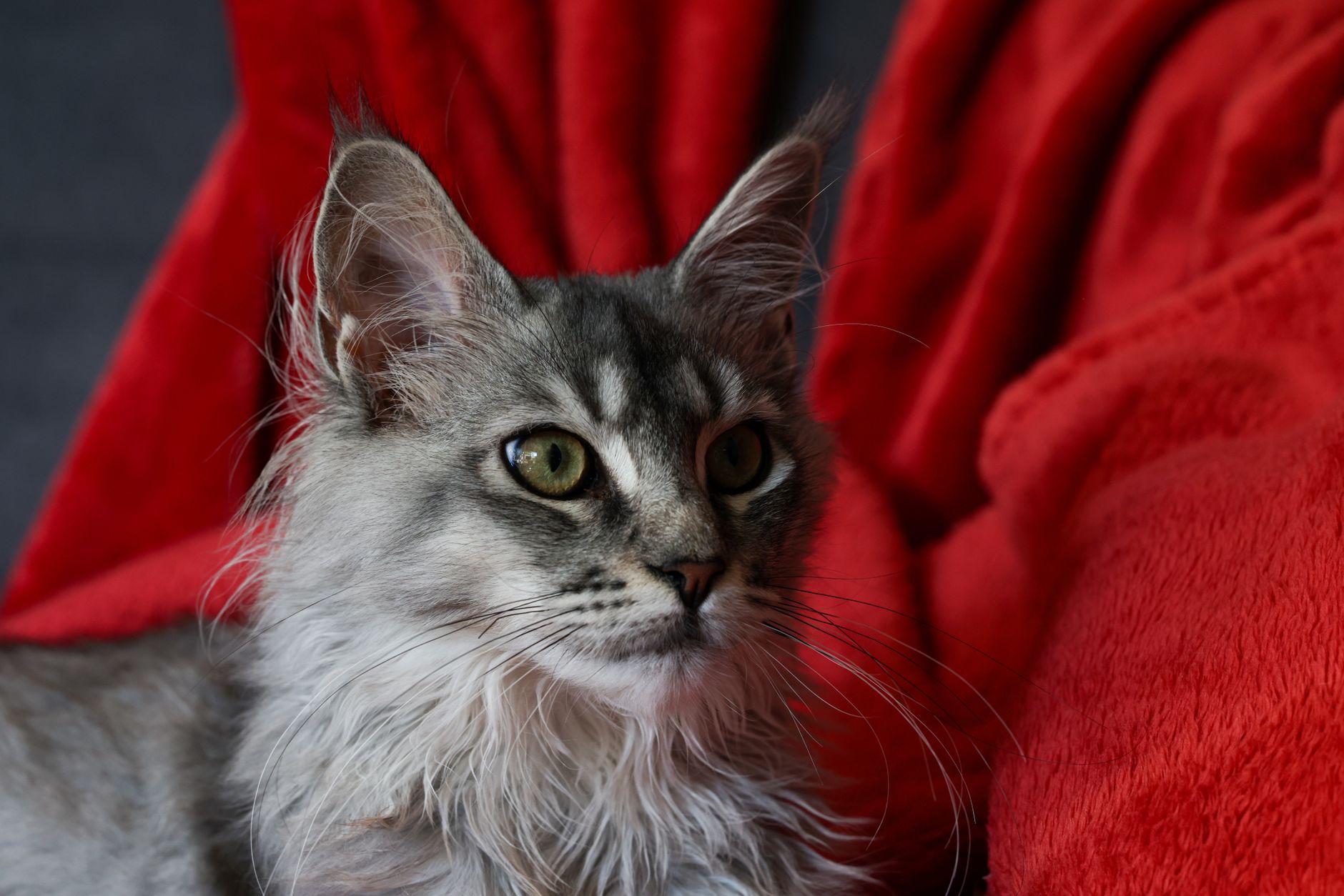
Maine Coon kittens grow remarkably fast in their first weeks of life, with dramatic physical changes occurring almost daily during the first seven days. A kitten born weighing 3 to 4 ounces can gain half an ounce or more per day in the first week if properly fed and healthy, leading to visible changes in size, strength, and coordination that are noticeable from one day to the next. This rapid early growth is nature’s way of preparing the kittens for independence, though it places significant demands on the mother cat and requires careful monitoring to ensure all kittens are thriving.
Maine Coon kittens follow a predictable growth pattern, but individual variation is considerable. Some kittens in a litter may gain weight faster than their siblings, while others develop motor skills at different rates. Understanding what to expect during those crucial first seven days—and beyond—helps breeders and new owners identify problems early and ensure the kittens reach their full potential size and health.
Table of Contents
- The First Week Growth Spurt—What Happens in Seven Days
- Physical Development and Visible Changes in the First Seven Days
- Developmental Milestones Beyond Day Seven
- Nutrition and Caloric Demands During Rapid Growth
- Common Growth Concerns and Potential Health Issues
- Comparing Maine Coon Growth to Other Cat Breeds
- When the Rapid Growth Phase Begins to Level Off
- Frequently Asked Questions
The First Week Growth Spurt—What Happens in Seven Days
During the first seven days of life, maine Coon kittens enter one of the most dramatic growth phases of their entire lives. Newborns typically weigh between 3 and 4 ounces, but by day seven, healthy kittens often weigh 5 to 6 ounces or slightly more—effectively gaining 25 to 50 percent of their birth weight in just one week. This explosive growth is driven by frequent nursing, sometimes occurring every two to three hours. The kittens’ eyes remain closed during this period, and their ears are folded, but their bodies are rapidly building muscle and bone tissue beneath their soft kitten fur. The rate of weight gain during the first week is not uniform.
The first 48 hours tend to be the slowest, as newborns adjust to nursing and their digestive systems activate. By day three or four, healthy kittens typically show more consistent daily gains. A kitten that does not gain weight for 12 hours, or that loses weight, is a concern requiring immediate veterinary attention, as this can signal inadequate milk transfer, illness, or failure to thrive. Environmental factors affect how quickly the first-week transformation happens. Kittens kept in a warm nest (around 85 to 90 degrees Fahrenheit initially) have an easier time maintaining body temperature and directing energy toward growth, while cold exposure forces kittens to burn calories just to stay warm, slowing their weight gain. Litter size also matters: a kitten in a litter of two has access to more milk per nursing session than a kitten in a litter of six, and may therefore gain weight more quickly during this critical first week.
Physical Development and Visible Changes in the First Seven Days
Beyond the numbers on a scale, the first seven days bring visible developmental changes that a careful observer can see and feel. Newborn Maine Coon kittens are born with sealed eyes and ears, weighing only ounces, but their skeletal structure is developing so rapidly that their proportions begin to shift noticeably. By day seven, kittens often have noticeably stronger neck muscles and can briefly hold their heads up, though they still cannot walk or stand. Their paw pads darken and toughen slightly, preparing them for the movement that will come in weeks two and three. The umbilical cord falls off typically between day three and day five, and the kitten’s abdomen becomes less visibly distended as the navel heals. Fur begins to show more definition, and the kitten’s coat becomes slightly less slicked-down and matted.
For breeders tracking litter progress, the first week also reveals which kittens are alert and responsive during brief handling and which ones may be developing slower. A kitten that does not root for milk or respond to temperature changes is a warning sign that veterinary evaluation is needed. One often-overlooked aspect of the first-week transformation is the development of the kitten’s nervous system. Though outwardly the kitten appears mostly static, the connections forming in the brain and nervous system during these seven days are foundational. Poor nutrition, stress, or illness during this window can have lasting developmental consequences that affect the kitten’s growth trajectory for months. This is why even small deviations from normal feeding patterns warrant close monitoring; the stakes for proper development during this period are high.
Developmental Milestones Beyond Day Seven
While the first seven days bring the most dramatic weight gain, the growth curve continues steeply through weeks two and three. By the end of week two, Maine Coon kittens typically weigh 8 to 10 ounces—roughly double their birth weight. During week two, the kittens’ eyes begin to open (usually by day seven to ten), though vision is initially blurry and light-sensitive. Their ears also begin to unfold around day three to five, and hearing develops over the following week. Week three marks the emergence of the kitten’s first teeth, beginning with the incisors.
The kittens become noticeably more coordinated, beginning to crawl and then to walk with increasing confidence. This is when Maine Coon kittens begin to display their breed’s characteristic intelligence and curiosity, venturing beyond the nest to explore their immediate surroundings. Growth remains rapid—kittens can double their weight again by the end of week four. A limitation to remember is that these timelines are averages, and Maine Coon kittens can develop at slightly different paces. A kitten that opens its eyes a day or two later than littermates is not necessarily of lower quality or health status; individual variation is normal. However, significant delays—a kitten still blind and non-ambulatory at week four—warrant veterinary investigation, as it may indicate neurological issues or inadequate nutrition.
Nutrition and Caloric Demands During Rapid Growth
The rapid growth of Maine Coon kittens during the first month is fueled entirely by mother’s milk, and the queen’s nutrition directly impacts how well she can support her litter. A nursing mother needs approximately 1.5 to 2 times her normal caloric intake, especially if she is nursing a large litter. If the mother is not adequately fed—particularly in protein, fat, and certain minerals like calcium—the kittens’ growth will slow, and her own body will be depleted to supply them. The composition of cat milk changes over the first weeks of lactation, becoming richer in calories and nutrients as the kittens’ demand for growth fuel increases. Around week three to four, kittens begin to show interest in solid food, though they will continue nursing for several more weeks.
Introducing high-quality kitten food gradually, beginning at week three or four, supports the continued explosive growth phase. A Maine Coon kitten growing normally at week four may eat small amounts of kitten wet food or specialized kitten formula in addition to nursing. The trade-off in early feeding is between the stability and complete nutrition of mother’s milk and the gradual introduction of solid food that prepares kittens for independence. Starting kitten food too early can disrupt the mother’s milk supply and the kittens’ preferred nutrition source, while starting too late may slow growth once the mother’s milk supply begins to naturally decline around week four. Breeders often use a gradual transition approach, introducing moistened high-quality kitten food in small amounts around week three, increasing frequency through week eight as the kittens nurse less frequently.
Common Growth Concerns and Potential Health Issues
A kitten that fails to gain weight during the first week, or that loses weight after an initial gain, requires immediate veterinary assessment. Failure to thrive in newborn kittens can stem from inadequate milk transfer due to poor latching, maternal health issues, a kitten’s inability to nurse effectively, or serious infections. Hypothermia—a dangerously low body temperature—can slow growth and, if severe, cause a kitten to cease nursing entirely, creating a downward spiral that is life-threatening. Feline infectious peritonitis (FIP) and other viral infections can cause growth delays or sudden reversal of weight gain in young kittens. Parasites, including intestinal worms, are less common in very young nursing kittens but can appear early if the mother was heavily infected.
Any sign of diarrhea, vomiting, or lethargy in a kitten under one month old warrants immediate veterinary examination. These symptoms may seem minor in older cats but are serious red flags in a neonate whose survival margin is slim. A warning specific to Maine Coons is that some breeders may selectively breed for larger-than-normal growth rates, prioritizing early size over long-term health and joint development. Kittens pushed to grow too quickly via excessive supplementation or nutritional imbalance can develop orthopedic problems, including hip dysplasia, later in life. Healthy Maine Coon growth should be steady and consistent, not frantic. A normal growth rate at eight weeks is superior to excessive early growth that creates structural problems in a rapidly developing skeleton.
Comparing Maine Coon Growth to Other Cat Breeds
Maine Coons are significantly larger at maturity than most other domestic cat breeds, and their growth rate reflects this. A typical domestic shorthair kitten at one week old may weigh 4 to 5 ounces, similar to a Maine Coon, but by eight weeks a shorthair kitten typically weighs 2 to 3 pounds, while a Maine Coon kitten often weighs 3 to 5 pounds or more. The gap widens as the kittens approach adulthood; by one year, a Maine Coon may weigh 8 to 12 pounds, while most other breeds plateau at 7 to 10 pounds by that age.
Persians and Ragdolls, which are also larger breeds, grow at a rate more comparable to Maine Coons during the first month, but their ultimate adult size is typically still smaller. Siamese and other Oriental breeds grow more slowly during the early weeks, reflecting their eventual lean, smaller stature at maturity. A Maine Coon’s rapid early growth is partly a function of genetics and partly a result of careful breeding for size over many generations. This does not make Maine Coons “superior”—it is simply a reflection of what breeders have selected for in the breed.
When the Rapid Growth Phase Begins to Level Off
The explosive growth rate of the first seven days does not persist indefinitely. By week four to six, the rate of weight gain begins to slow as a percentage of body weight, though absolute weight gain per week remains substantial. A kitten that gained 25 percent of its birth weight in week one gains perhaps 50 to 75 percent of its current weight by week six, which sounds impressive but represents a measurable slowing of the growth curve.
By three months of age, most Maine Coon kittens have entered a more moderate growth phase, gaining roughly 1 pound per month. The rapid period of development continues through the first year, with major growth occurring through six months and then continuing at a slower pace until the cat reaches full maturity. Male Maine Coons may not reach their full adult size until 18 months to 2 years old, making them one of the slowest-maturing domestic cat breeds. This prolonged growth period means that proper nutrition remains critical throughout the entire first year, not just in those dramatic first seven days.
Frequently Asked Questions
How often should a newborn Maine Coon kitten nurse?
Healthy newborn kittens typically nurse every two to three hours, around 8 to 12 times per day, continuing through the night. Frequent nursing ensures they receive consistent nutrition and remain warm against the mother.
What is a normal weight at birth for a Maine Coon kitten?
Maine Coon kittens are typically born weighing 3 to 4 ounces, with some variation depending on litter size and individual genetics. Kittens significantly lighter than 3 ounces at birth may require supplemental care.
At what age can Maine Coon kittens eat solid food?
Most Maine Coon kittens begin to show interest in solid food around week three to four, though they continue nursing as their primary nutrition source until week eight or later. Introducing moistened kitten food gradually during week three or four supports their ongoing rapid growth.
How can I tell if a kitten is growing at a normal rate?
Healthy kittens gain weight consistently each day and show progressive development of their senses and motor skills. Weighing kittens at the same time each day on a scale accurate to 0.1 ounce helps track growth; a kitten that does not gain weight for 12 hours or loses weight requires veterinary attention.
Do all kittens in a litter grow at the same rate?
No, individual variation is normal. Kittens in a smaller litter often gain weight faster than those in a large litter because they have greater access to milk per nursing session. The runt of a litter may grow at a slower rate but can still develop into a healthy adult.
Why is keeping newborn kittens warm so important for growth?
Kittens cannot regulate their body temperature effectively for the first few weeks. Cold exposure forces them to burn calories maintaining warmth, diverting energy away from growth. A proper nesting environment at 85 to 90 degrees Fahrenheit in the first week supports optimal growth.