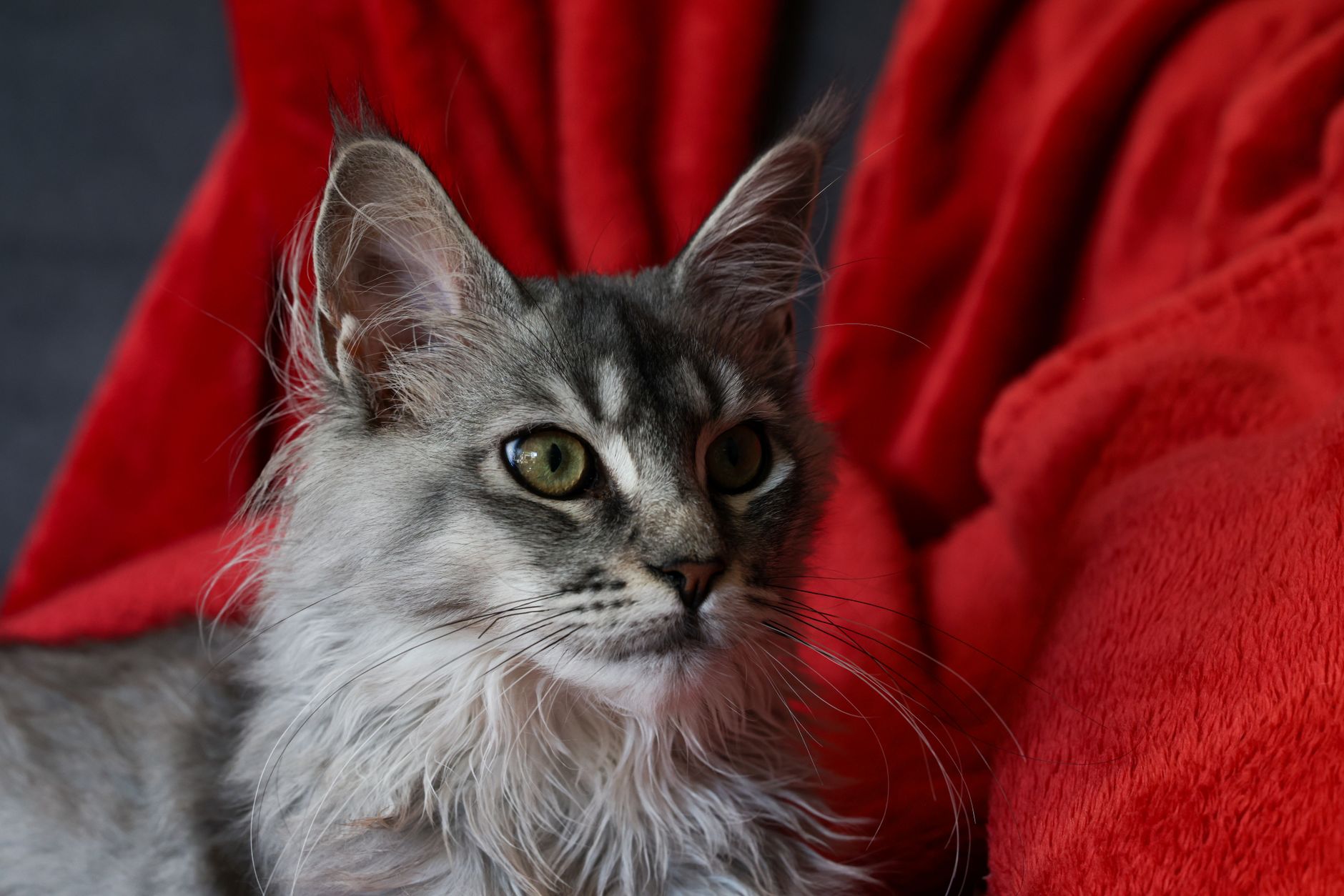
A Maine Coon kitten demonstrating nurturing behavior toward a newborn chick isn’t merely cute footage—it reveals genuine maternal instinct at work. Maine Coons, one of the largest domestic cat breeds, are known for their gentle temperament and strong caretaking behaviors that often extend far beyond their own species. Video evidence of a Maine Coon kitten lying protectively near a chick, grooming it, or allowing it to rest against the kitten’s body shows the breed’s distinctive combination of size, patience, and social flexibility in ways that smaller, more solitary cat breeds rarely exhibit. This behavior, while charming on video, emerges from deeply rooted feline biology. The nursing and maternal instincts that drive mother cats to care for their kittens can, under the right circumstances, extend to other young animals.
Maine Coons in particular seem predisposed to this cross-species bonding because of their history as working cats on farms and ships, where they lived alongside multiple species and developed a reputation for tolerance and even protectiveness. The kitten caring for the chick is doing what its breed was selected to do over centuries: coexist peacefully with other creatures in shared spaces. The specific footage circulating online typically shows a Maine Coon kitten that has assumed a guardian role, often initiated when the chick is very young and vulnerable. The kitten may groom the chick with its tongue, allow the chick to huddle against its warm body, or lie nearby in a protective stance. This isn’t accidental behavior—it’s a direct expression of the breed’s social structure and its unusually high tolerance for interacting with non-feline animals.
Table of Contents
- Why Maine Coon Kittens Bond With Chicks and Other Young Animals
- The Breed Characteristics That Enable This Nurturing Behavior
- How Maternal Instinct Works in Young Cats and Cross-Species Scenarios
- Creating Safe Conditions for Cross-Species Bonding Between Cats and Chicks
- Health, Behavioral, and Safety Concerns in Cross-Species Household Arrangements
- Understanding Maine Coon Temperament Beyond the Cute Factor
- Long-Term Outcomes and Reality of Cross-Species Relationships in Household Settings
Why Maine Coon Kittens Bond With Chicks and Other Young Animals
maine Coons have an exceptionally low prey drive compared to other cat breeds, a trait that developed over generations of coexisting with farm animals rather than hunting them for survival. A kitten that might view a moving chick as prey in a typical scenario instead sees a young, vulnerable creature in need of care—a role the kitten’s hormones and socialization are primed to fill. This shift in perception often happens during a critical socialization window when kittens are most moldable in their attitudes toward other species. The presence of early socialization amplifies this tendency dramatically. A Maine Coon kitten raised around birds, small mammals, or other young animals from an early age builds neural pathways that categorize these creatures as companions rather than threats.
When a chick arrives while the kitten is in this receptive developmental phase, the kitten’s brain may process the chick similarly to how it would process a sibling or a human infant. The result is genuine protective behavior, not learned performance or human projection—the kitten experiences something akin to an instinct to nurture. Size plays an unexpected role here. Because Maine Coons are large and powerful, they may feel secure and confident enough around smaller creatures to exhibit care rather than predatory behavior. A smaller, more anxious cat breed might feel threatened by an unpredictable young animal and respond with defensive aggression. A Maine Coon kitten, even while young, carries an inherent physical confidence that allows it to relax into a caretaking role.
The Breed Characteristics That Enable This Nurturing Behavior
Maine Coons evolved in the harsh environment of Maine’s maritime culture, where they served as essential mousers on ships and in working households. Unlike cat breeds developed purely through selective breeding for appearance or extreme independence, Maine Coons were shaped by functional requirements. They needed to work cooperatively with humans, adapt to crowded living spaces, and coexist with farm animals. These practical demands shaped a breed with unusual emotional flexibility and a surprisingly strong parental drive that persists even in young kittens. The breed’s genetic predisposition toward extended nursing behaviors is notable. Domestic cats typically transition out of maternal instincts within weeks of weaning, but Maine Coons often retain caregiving impulses throughout their lives.
Anecdotal evidence from Maine Coon owners worldwide includes stories of neutered males showing protective behavior toward kittens, puppies, or other vulnerable animals—behavior that shouldn’t theoretically occur but does with startling regularity in this breed. This suggests something deeper than simple learned behavior: a breed-level inclination toward caretaking that hormones don’t fully suppress. However, this nurturing tendency carries limitations and risks. A Maine coon kitten may become too enthusiastic in its caregiving, inadvertently injuring a delicate chick through overly rough grooming or excessive body contact. The chick, conversely, might peck at or stress the kitten if frightened or in pain. Unlike actual cross-species nursing seen in nature—where an adult’s hormonal systems are fully engaged—a young kitten’s caregiving is based on behavioral impulse and socialization rather than complete biological readiness. Injuries can occur, and this situation requires constant supervision.
How Maternal Instinct Works in Young Cats and Cross-Species Scenarios
Maternal instinct in cats isn’t binary—it exists on a spectrum and can be triggered by multiple different signals. A kitten encountering a very young, helpless chick experiences a cascade of stimuli: small size, vulnerability, unfamiliar sounds, and perhaps the smell of another species’ young. These signals bypass the kitten’s learned predatory responses and activate the caregiving circuits instead. In cats with strong nurturing predispositions—like Maine Coons—this activation happens more readily and more completely than in other breeds. The specific age of both animals matters significantly. A Maine Coon kitten caring for a chick is most likely to be successful when both are in early developmental stages. A very young chick (hours to days old) triggers maximum protective responses because it appears maximally helpless.
The kitten, if young itself, may have fewer ingrained predatory habits and a more fluid social understanding. As the chick grows and becomes more active, autonomous, and potentially threatening (through pecking or sudden movements), the kitten’s protective response may wane or shift. Similarly, as a kitten matures and its predatory instincts sharpen with age, cross-species care becomes less reliable. Real examples of this dynamic appear regularly on farms where Maine Coons or similar gentle breeds are kept. A kitten may spend weeks or months peacefully caring for young poultry, lying with them, grooming them, and defending them from other farm cats. Once the birds reach adolescence and become more independent and unpredictable, the relationship often shifts—the cat may still tolerate the bird, but the protective nursing behavior fades. Some owners report that reintroducing older birds creates conflict, whereas the original cross-species bond never fully breaks.
Creating Safe Conditions for Cross-Species Bonding Between Cats and Chicks
If a household wants to safely facilitate bonding between a Maine Coon kitten and chicks, several structural requirements must be met. First, both animals must be present during critical socialization windows—the kitten from around 3-9 weeks and the chick from hatching. The kitten needs exposure to the chick’s sounds, movements, and scent before any predatory associations solidify. The chick, meanwhile, needs early exposure to the kitten so it doesn’t perceive the cat as a threat and respond with panic or aggression. Supervision is non-negotiable. Even well-bonded pairs of kitten and chick must never be left unsupervised during early interactions or growth stages.
The kitten might accidentally injure the chick through overzealous grooming—a cat’s rough tongue and sharp nails, used gently on other kittens, can cause serious harm to bird skin and feathers. The chick might panic and injure itself fleeing from the kitten, or peck the kitten’s eyes if frightened. Responsible owners maintain separate, secure spaces where each animal can retreat, eat, and rest without access to the other when supervision isn’t possible. Environment design is also critical. The shared space should offer perches, hiding spots, and barriers that allow the chick to escape if needed and the kitten to disengage if the chick becomes overstimulating. Proper nutrition must be maintained for both animals—the chick requires specific poultry nutrition and warmth, while the kitten needs complete feline diet and appropriate enrichment. Some owners find that structured, supervised interaction sessions several times daily work better than constant cohabitation, allowing both animals to bond while maintaining safety and mental health.
Health, Behavioral, and Safety Concerns in Cross-Species Household Arrangements
Disease transmission between species is a real but often underestimated risk. Cats and birds can share certain parasites and pathogens; a seemingly minor scratch or the sharing of food and water areas can transmit illness. A chick housed near a litter box faces fecal contamination risks specific to feline pathogens. Regular veterinary oversight of both animals, including testing for cross-species parasites and illnesses, is essential. Most avian veterinarians have limited experience with feline-avian cohabitation and may not immediately consider the unusual aspects of the situation, so proactive communication with veterinarians is necessary. Stress-related behavioral changes can emerge suddenly, even in a kitten that seemed well-bonded to a chick. As the kitten reaches adolescence (around 6-9 months), surges in testosterone and play drive may overwhelm earlier caretaking impulses. A kitten that peacefully groomed a chick as an 8-week-old may view the same chick as an exciting prey item by 5 months old.
Female kittens may also experience behavioral shifts during their heat cycles, becoming more aggressive or unpredictable. Owners frequently report that perfectly stable cross-species bonds deteriorate quickly when hormonal changes arrive, catching them off guard. Spaying or neutering can help stabilize behavior, but it doesn’t guarantee the bond will remain unchanged. The chick, too, faces developmental risks. As chicks grow into adult chickens, they often become territorial and aggressive, particularly roosters. A chicken that tolerated a kitten’s companionship as a chick might peck or attack that same cat as an adult. The power dynamics shift; a full-grown rooster can seriously injure a cat. Additionally, adult chickens have different spatial and social needs than chicks, including outdoor ranging, dust bathing, and flock interaction with other birds. The intimate bonding dynamic that exists between a kitten and chick often cannot translate to adult relationships, and owners may find themselves managing two animals that no longer get along.
Understanding Maine Coon Temperament Beyond the Cute Factor
The Maine Coon’s reputation as a “dog-like” cat emerges partly from their genuine social flexibility and low reactivity to environmental change. Anecdotal reports from Maine Coon owners describe cats that greet visitors, follow owners around the house, play fetch, and show minimal territorial aggression. This behavioral profile is distinct from breeds like Siamese or Russian Blue, which tend toward greater independence and selectivity in their social bonds. A Maine Coon’s willingness to befriend a chick fits within this broader personality pattern rather than representing an anomalous or trained response.
The breed’s size contributes to psychological resilience that smaller breeds lack. A 15-pound Maine Coon kitten, even at a young age, has body mass and strength that make it less vulnerable to minor injuries or unexpected movements from smaller creatures. This physical security translates to emotional security—the kitten is less likely to feel threatened by a chick’s pecking or sudden movements because those actions pose negligible risk. A 4-pound Siamese kitten, by contrast, might interpret identical chick behaviors as a genuine threat, triggering defensive or predatory responses.
Long-Term Outcomes and Reality of Cross-Species Relationships in Household Settings
Video footage of a Maine Coon kitten caring for a chick captures a moment in time, but the long-term trajectory of such relationships often diverges sharply from what the footage suggests. Owners who attempt to maintain cross-species bonds as both animals mature report that the relationship rarely remains as close or affectionate as it was during early weeks. The chick grows into a chicken with different environmental needs—space, outdoor access, flock socialization—while the kitten matures into an adult cat with its own territorial and reproductive drives. Practical logistics shift as animals grow.
A chick might initially share the kitten’s living space and sleep in the same enclosure, but an adult chicken requires a coop, outdoor run, and protection from predators that a house cat cannot provide. The kitten, meanwhile, develops adult feline behaviors including hunting expeditions, territory patrolling, and social structures that don’t accommodate a large bird. Owners who maintain successful long-term cross-species relationships typically do so by accepting that the nature of the bond will change and by creating separate-but-connected living arrangements where the animals can see and interact but have independent spaces and routines. The quiet companionship and protective grooming of early weeks often becomes cordial coexistence or indifferent tolerance by adulthood.