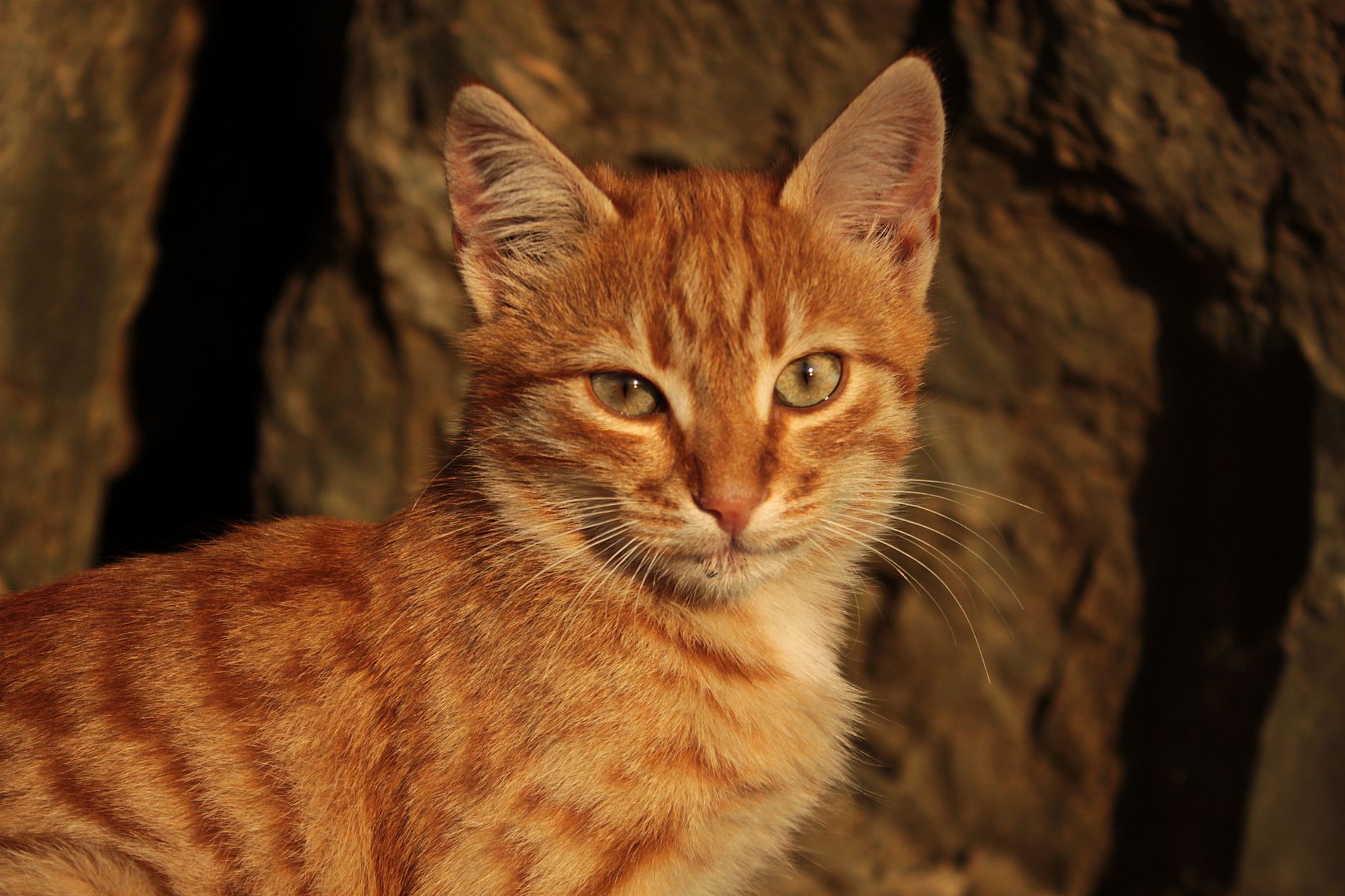
Identical twin kittens from a single tabby mother represent one of nature’s rarest feline occurrences. While the vast majority of litters contain fraternal twins or multiple kittens of varying genetic backgrounds, identical twins result from a single fertilized egg spontaneously splitting during early embryonic development. When this happens in cats, the result is two kittens with nearly identical DNA, nearly identical appearances, and strikingly similar behavioral patterns—a phenomenon so uncommon that many breeders and veterinarians may never witness it in their lifetimes. The rarity of identical twinning in cats stands in sharp contrast to the frequency of fraternal twins, which are far more common because cats often release multiple eggs during ovulation.
Identical twins require an extraordinarily precise biological event: the embryo must split at exactly the right developmental stage, the split must be complete enough to form two separate kittens, and both embryos must survive to full gestation without complications. This convergence of conditions makes true identical twins a remarkable and scientifically fascinating event in feline reproduction. A tabby mother giving birth to identical twins would display certain visual markers that distinguish them from fraternal twins. The kittens would share the same striped coat patterns, the same eye color, the same ear shape, and typically the same sex—characteristics that would become increasingly apparent as they matured. Beyond appearance, their behavior, energy levels, and even personality quirks would show striking similarities, though environmental factors and individual experiences would still shape their development.
Table of Contents
- What Causes Identical Twinning in Cats?
- Why Are Identical Twins Extraordinarily Rare in Cats?
- How Can You Identify Truly Identical Twin Kittens?
- Caring for Twin Kittens: Practical Considerations for the Litter
- Health Risks Specific to Twin Pregnancies and Births
- Behavioral Patterns and Bonding in Identical Twin Kittens
- Genetic Transmission and Breeding Implications
- Frequently Asked Questions
What Causes Identical Twinning in Cats?
Identical twins in cats form through a process called monozygotic twinning, where a single embryo divides into two separate organisms during the earliest stages of development. This division must occur within the first two weeks after conception, typically within days one through fourteen. If the split happens during the first few days, the result is two embryos that develop entirely separately, each with their own placenta and amniotic sac. If the division occurs slightly later, the kittens may share a placenta but have separate amniotic sacs, or in rare cases, they may share both structures entirely. The exact biological trigger that causes an embryo to spontaneously split remains incompletely understood in feline reproduction. Unlike fraternal twinning, which results from the predictable release of multiple eggs, identical twinning appears to involve a developmental accident or anomaly during cell division.
Researchers have identified several theories: mechanical stress on the embryo, uterine contractions at critical moments, or genetic factors that predispose the embryo to splitting. However, no single factor has been identified as the definitive cause in cats. Some evidence suggests that identical twinning may occur at a baseline rate of less than 1 percent of all feline pregnancies—far rarer than the 15 to 20 percent rate of fraternal twins. A mother cat carrying identical twins would experience a pregnancy nearly indistinguishable from a normal singleton pregnancy, at least until the final stages. The uterus would expand to accommodate the twins, but because they share more placental resources than fraternal twins, the total metabolic demand might be less than a litter of three or four unrelated kittens. However, identical twins that share a placenta face a unique complication called twin-to-twin transfusion syndrome, where blood flow between the twins becomes unequal, causing one kitten to be smaller or weaker than the other—a genuine medical risk that occurs only with identical twins.
Why Are Identical Twins Extraordinarily Rare in Cats?
Identical twinning is rare in cats for several interconnected biological reasons. First, the spontaneous splitting of an embryo is fundamentally a random developmental accident, not a selected trait. Evolution has not favored identical twinning in cats the way it has favored sexual reproduction or even fraternal twinning. From a reproductive strategy standpoint, a mother cat benefits more from producing multiple genetically diverse offspring than from producing two genetic clones; genetic diversity increases the likelihood that at least some offspring will carry advantageous traits for their environment. Second, the window for embryo splitting is narrow and precise. The splitting must occur early enough that two separate developmental programs can establish themselves, but not so early that the embryonic tissues cannot differentiate properly.
If splitting occurs too late, conjoined twins may result—a lethal or severely compromised outcome. This tight developmental window means that the vast majority of embryos simply continue developing as single organisms rather than splitting. Even when splitting begins, many embryos fail to complete the process successfully or one of the resulting twins fails to implant or develop properly. Third, identical twins face higher intrauterine mortality rates than their fraternal counterparts. If they share a placenta and amniotic sac, the risk of umbilical cord entanglement, nutrient imbalance, and vascular complications increases substantially. A pregnant tabby carrying truly identical twins would actually face a higher probability of losing one or both kittens during pregnancy compared to a mother carrying fraternal twins. This natural selection pressure has kept identical twinning rare in wild feline populations and contributed to its scarcity in domestic cats.
How Can You Identify Truly Identical Twin Kittens?
The most reliable method for identifying identical twins begins with careful visual observation at birth and during early development. Identical twins will display nearly perfect symmetry in coat pattern, stripe alignment, markings, eye color, and ear shape. In a tabby kitten, the “M” marking on the forehead, the stripes along the spine, and the ring patterns on the tail would align almost identically between the two kittens. Fraternal twins, by contrast, can show vastly different coat colors, pattern variations, and markings—one might be a brown tabby while the other is orange or gray. Beyond appearance, behavioral observation provides another clue. Identical twins typically show similar activity levels, feeding intensity, and sleep patterns from birth onward.
They tend to groom each other more frequently and show stronger bonding behaviors than fraternal twins. However, behavioral similarity alone cannot prove identical twinning, as fraternal twins raised together often develop similar habits. The only definitive confirmation of identical twinning comes through genetic testing, specifically DNA analysis that identifies identical or near-identical genetic profiles between the two kittens. A practical limitation exists in domestic cat ownership: most cat owners never pursue genetic testing to confirm identical twinning. The cost and complexity of DNA analysis means that many cases of suspected identical twins never receive scientific confirmation. Veterinarians might suspect identical twinning based on appearance and behavior but would hesitate to declare it with certainty without genetic evidence. This uncertainty means that many tabby mothers who gave birth to visually identical kittens may have actually produced fraternal twins with coincidentally matching appearances—a reminder that even obvious visual similarity cannot replace genetic confirmation.
Caring for Twin Kittens: Practical Considerations for the Litter
Whether fraternal or identical, twin kittens require careful monitoring during nursing and early development. The mother cat must produce sufficient milk to nourish both kittens adequately. A litter of just two kittens actually poses a unique challenge: the mother may produce less milk than she would for a larger litter, and each kitten must consume enough to grow at a normal rate. Caretakers should monitor the kittens’ weight gain daily during the first weeks of life, expecting them to gain approximately 10 grams per day. If either kitten falls behind, supplemental feeding becomes necessary. Identical twins that share a placenta may show a size discrepancy at birth, with one kitten noticeably smaller than the other—the result of unequal blood flow during pregnancy.
The smaller twin, sometimes called the “runt” of the pair, may require extra attention during nursing to ensure it receives adequate milk and competes successfully with its larger sibling. Hand-feeding or bottle-feeding the smaller kitten for a few extra meals per day can accelerate its growth and prevent failure to thrive. This intervention is not needed in every case, but the smaller kitten of an identical twin pair faces a higher risk of inadequate nutrition without active management. Weaning twin kittens follows the standard timeline of eight to twelve weeks but may require adjustments based on individual kitten size and development. Offering kitten food starting at three to four weeks allows both kittens to supplement their diet with solid nutrition. Feeding them in separate bowls prevents competition and allows the smaller twin to eat at its own pace without being dominated by its larger sibling. During this transition, observing each kitten’s appetite and growth rate helps identify any feeding issues before they become serious.
Health Risks Specific to Twin Pregnancies and Births
A tabby mother carrying identical twins faces elevated risks compared to a singleton or fraternal-twin pregnancy. Twin-to-twin transfusion syndrome (TTTS) represents the most significant complication in shared-placenta identical twins. In TTTS, blood flow through the connecting vessels of the placenta becomes unbalanced, causing one twin (the donor) to lose blood volume to the other (the recipient). The donor twin becomes anemic, growth-restricted, and pale; the recipient becomes over-enlarged and polycythemic (having excess red blood cells). Both conditions cause problems: the donor twin may be stillborn or severely compromised at birth, and the recipient may suffer cardiac strain from excess blood volume. Fetal or newborn mortality rates are higher in identical-twin pregnancies than in singleton or fraternal-twin pregnancies.
Studies in human identical-twin pregnancies show that shared-placenta twins have a higher risk of intrauterine death, and this translates to feline reproduction as well. A tabby mother might give birth to three kittens—two alive and one stillborn—when carrying identical twins, though this outcome is not universal. Some identical twins survive to birth without complications, but caretakers should be prepared for the possibility of losing one twin during late pregnancy or immediately after birth. After birth, identical twins that survived fetal complications may require intensive care. Hypothermia (low body temperature), hypoglycemia (low blood sugar), and difficulty nursing are more common in twins born after a complicated pregnancy. A veterinarian’s involvement in monitoring newborn twin kittens is prudent, particularly if there are visible size discrepancies or signs of weakness in either kitten. Antibiotics may be needed if infection developed in the uterus, and supplemental heat and hand-feeding often become necessary for survival.
Behavioral Patterns and Bonding in Identical Twin Kittens
Identical twin kittens show behavioral mirror-imaging that can be striking to observe. They tend to play at the same intensity level, sleep simultaneously, and exhibit similar responses to environmental stimuli—a phenomenon that some researchers attribute to their identical genetic predisposition and others to their unique developmental experience sharing a womb. An owner might notice that when one kitten pounces, the other does so within seconds; when one naps, both settle down together within minutes. This synchronized behavior persists into adulthood in many cases, though individual experiences and environmental factors increasingly differentiate their personalities.
The bond between identical twin kittens is typically stronger than that between fraternal twins. They spend more time grooming each other, sleeping in direct contact, and playing together. This intense bonding can actually create challenges for owners who want to separate the kittens—for adoption, breeding, or other purposes—because each twin may display signs of separation anxiety when apart from its sibling. A tabby owner who has raised identical twins may find it nearly impossible to adopt one out because the remaining kitten becomes distressed, vocal, and shows behavioral changes indicating genuine emotional distress at the separation.
Genetic Transmission and Breeding Implications
Identical twins complicate breeding considerations in ways that fraternal twins do not. Because identical twins carry the same genetic material, breeding one from an identical pair produces the same genetic outcome as breeding the other—there is no genetic diversity benefit to keeping both individuals for breeding purposes. From a conservation standpoint, an identical twin pair represents a single genetic individual duplicated, not two distinct genetic contributions to a breeding program. A breeder who selects an exceptional tabby kitten for breeding gains no additional genetic diversity by also breeding its identical twin; the offspring would carry the same genes regardless of which twin was chosen as a parent.
The phenomenon of identical twinning does not appear to be heritable in cats the way it might be in other species. A mother cat who produces identical twins shows no increased likelihood of producing identical twins in future litters. The event appears genuinely random and non-repeatable within individual females. This means that a tabby mother who gave birth to perfectly identical twins in one litter would revert to normal fraternal or singleton pregnancies in subsequent pregnancies—there is no “identical-twinning bloodline” in cats.
- —
Frequently Asked Questions
Can cats give birth to identical twins?
Yes, identical twins can occur in cats through spontaneous embryo splitting, though the occurrence is exceptionally rare—less than 1 percent of all feline pregnancies produce true identical twins.
How do you know if kittens are identical twins?
Visual observation of nearly perfect coat pattern symmetry, stripe alignment, and eye color provides strong evidence, but genetic DNA testing is the only definitive confirmation of identical twinning.
Are identical twins more dangerous for the mother cat during pregnancy?
Identical twins that share a placenta carry higher risks of complications like twin-to-twin transfusion syndrome and intrauterine mortality compared to fraternal twins, though shared-placenta situations do not occur in all identical twin pregnancies.
Do identical twin kittens have the same personality?
Identical twins typically show similar activity levels and behavioral patterns due to genetic similarity, though individual experiences and environmental factors shape personality differences over time.
Is it safe to separate identical twin kittens for adoption?
Identical twins often show strong bonding and separation anxiety when parted, and many owners find it practically difficult or emotionally challenging to separate them; this should be carefully considered before adoption.