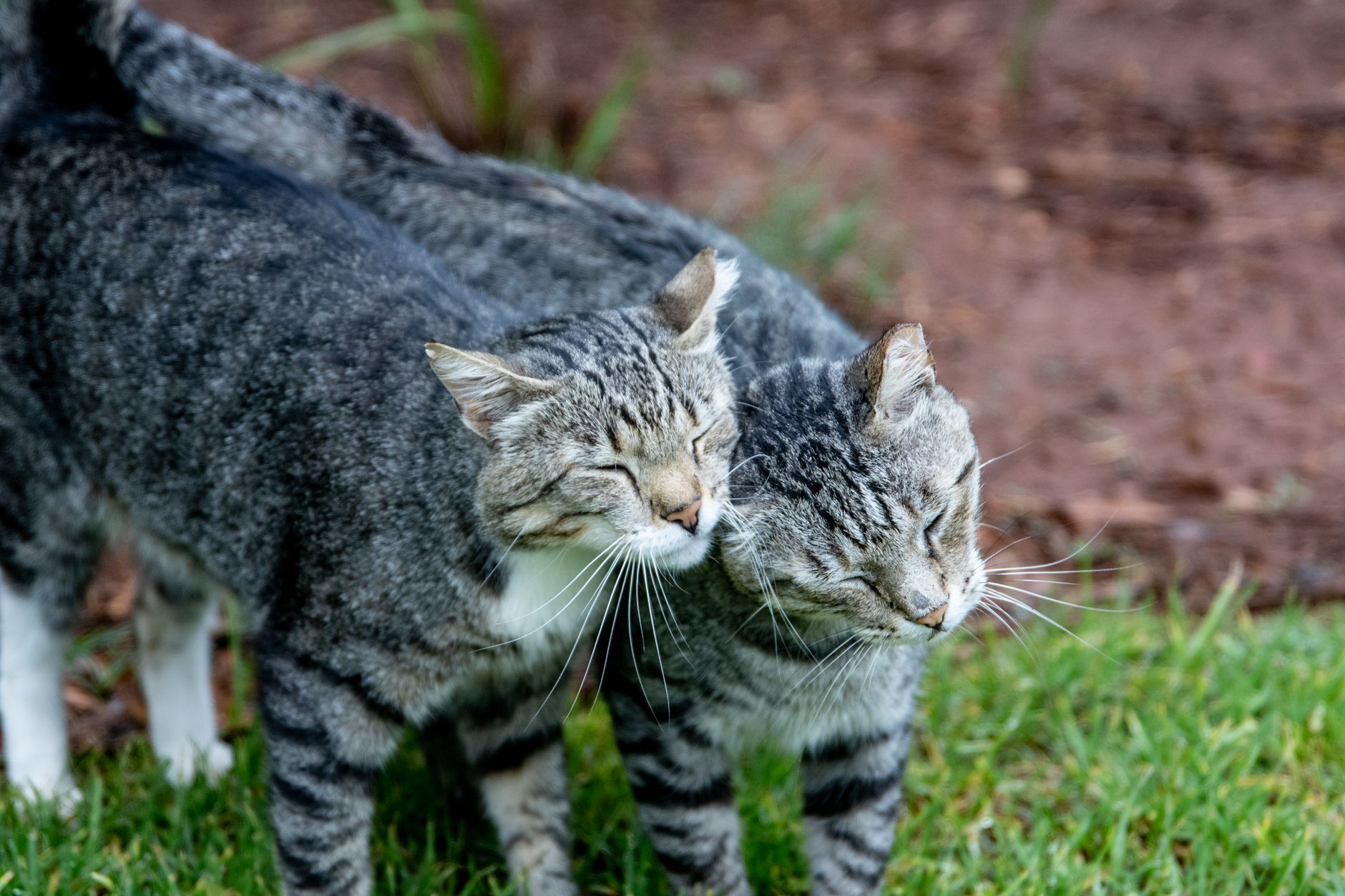
Anxious cats can form genuine, protective bonds with recovering birds, a phenomenon driven by each animal’s need for comfort and familiarity rather than predatory instinct or scripted behavior. When a nervous tabby encounters an injured or recuperating bird—particularly during the cat’s own period of stress or adjustment—the shared vulnerability creates conditions for an unexpected connection. One documented case involved a shelter cat named Shadow, diagnosed with separation anxiety, who became a constant companion to an orphaned fledgling being hand-reared by a caretaker; the cat would sit quietly beside the bird’s enclosure during recovery, their mutual need for security overriding the centuries-old predator-prey dynamic.
This bonding occurs not despite the cat’s nature, but alongside it. Cats are fundamentally social animals beneath their solitary reputation, and an anxious cat often seeks reassurance from any living presence that offers consistency and shared vulnerability. The bird, meanwhile, imprints on moving beings during recovery—and a calm, attentive cat provides precisely the kind of quiet companionship a traumatized animal needs.
Table of Contents
- Why Do Anxious Cats Bond With Recovering Birds?
- The Neurobiology of Cross-Species Comfort and Its Limits
- How Cats Recognize and Respond to Vulnerability
- Setting Up Safe Conditions for Such Bonding
- When Bonding Becomes Unsafe and How to Recognize the Signs
- The Bird’s Perspective on the Bond
- Post-Recovery: What Happens When the Bird Becomes Independent
- Frequently Asked Questions
Why Do Anxious Cats Bond With Recovering Birds?
Anxiety in domestic cats triggers an unexpected behavioral shift: instead of hunting, an anxious cat often seeks social anchoring—a companion who shares its state of heightened vigilance. A cat experiencing stress due to environmental changes, past trauma, or neurochemical imbalance is in a heightened emotional state that mirrors, in some ways, what a recovering bird experiences. Both animals are hyperaware of threats, both are in need of a reassuring presence, and both benefit from a companion who understands threat-detection. The bird’s vulnerability is paradoxically what draws the anxious cat’s protective instincts rather than predatory ones. An injured or recuperating bird cannot flee effectively, which removes the “chase trigger” that normally activates a cat’s predatory sequence.
Instead, the cat recognizes a fragile creature and, in cases of anxious cats especially, becomes its guardian. Cats are equipped with sophisticated social hierarchies and caregiving behaviors—they show these toward kittens, humans, and even other species when conditions align. An anxious cat, lacking confidence in its own safety, often finds purpose and reduced anxiety in caring for something even more vulnerable. Comparison matters here: a confident, well-adjusted cat will tolerate a bird but rarely seek its company; an anxious cat often initiates contact, settles near the bird’s enclosure, and exhibits signs of distress when separated. The difference lies in emotional need rather than prey drive dormancy.
The Neurobiology of Cross-Species Comfort and Its Limits
The mechanism behind this bonding involves oxytocin and cortisol reduction—the same neurochemicals that cement human-cat bonds. When a cat sits beside a recuperating bird and both animals experience a period of safety together, oxytocin levels rise in both species, creating a feedback loop of reassurance. The cat’s purring (inaudible frequencies and tactile vibrations) has demonstrated calming effects on various animals, and a recovering bird may respond to this as a sign of non-threat. However, this bonding has critical limits that owners must respect. The cat’s predatory instincts are suppressed, not eliminated—they are inhibited by circumstance and emotional state.
A sudden movement, a loud noise, or a shift in the cat’s arousal level can reactivate predatory behavior instantaneously. This is not the cat “turning on” the bird; it is the cat reverting to its neurological baseline when the conditions that suppressed predatory behavior are removed. A cat that has bonded with a vulnerable bird may still hunt other birds, other small animals, or even the same bird if the bird recovers fully and regains the ability to flee. The warning here is clear: such a bond cannot be trusted as permanent insurance against predation. It exists in a specific context of mutual vulnerability and must be actively managed throughout the bird’s recovery and beyond.
How Cats Recognize and Respond to Vulnerability
Cats possess an extraordinary ability to detect physiological markers of distress and injury—scent compounds released under stress, irregular movement, and postural cues. A cat approaching a recovering bird is reading a sophisticated array of signals: the bird’s inability to fly, its slowness, its increased vocalizations of distress (or absence thereof). The cat’s own response will vary based on whether it perceives the bird as a threat, a prey item, or a creature in need. An anxious cat often defaults to the third category because anxiety heightens its own sensitivity to distress signals and makes it more attuned to suffering rather than exploitation.
This neurological tendency—sometimes called the “tend-and-befriend” response—is present in many social mammals and is particularly pronounced in already-stressed animals. The anxious cat may even seek out the bird’s presence more actively during the cat’s own periods of heightened stress, using the bird as an emotional anchor. A specific example: a tabby recovering from a move or loss of a bonded human often becomes unusually attentive to small creatures during the adjustment period. If a bird is introduced during this window of heightened social need, the cat’s attention will be protective rather than predatory in most cases.
Setting Up Safe Conditions for Such Bonding
If a household has both an anxious cat and a recovering bird, the relationship can be facilitated thoughtfully, but it requires structural safeguards. The bird must have an enclosure—never free-roam—that the cat can observe and approach but cannot access. This allows the cat to experience the reassuring presence of the bird without risk. The enclosure should be elevated, giving the bird a psychological advantage and the cat a clear view without the ability to reach. Feeding both animals on a schedule near each other (but in separate spaces) can reinforce positive association.
The tradeoff here is between allowing the bond to develop and maintaining constant supervision. A cat-bird bond cannot be unsupervised during the bird’s recovery phase; the owner must be present during all interactions, ready to redirect the cat if its arousal level rises. Some cats can manage this; others cannot. An anxious cat that exhibits stalking behavior, intense focus, or chattering vocalizations (the “hunting chirp” cats make at prey) should be separated from the bird, as these indicate predatory arousal is beginning to override the social bond. A practical comparison: keeping a recovering bird safe from an anxious cat is more labor-intensive than managing a confident cat, which will largely ignore the bird. The investment in separate spaces, supervision time, and behavioral monitoring is significant and necessary for the bird’s welfare.
When Bonding Becomes Unsafe and How to Recognize the Signs
Not all anxious cats will bond with birds, and recognizing when a specific cat poses too much risk is essential. A cat that fixates on the bird’s enclosure, attempts repeated escapes or break-ins, exhibits dilated pupils and raised hackles, or becomes aggressive toward the owner when separated from the bird is showing signs that the bond has become obsessive rather than protective. This is particularly true if the bird’s recovery includes periods of increased mobility or fluttering—stimuli that can trigger predatory sequences even in a bonded cat.
The limitation here is that some cats are fundamentally incompatible with bird recovery, regardless of anxiety level. A cat with a particularly high prey drive, previous successful bird-hunting experience, or a lack of social flexibility may never bond with a bird in a safe way. Owners sometimes mistake the cat’s fascination with the bird for bonding; fascination without genuine protectiveness is predatory interest, not companionship. The warning is stark: false confidence in a “bonded” pair has resulted in deaths when owners left the cat and bird together unsupervised.
The Bird’s Perspective on the Bond
The recovering bird experiences the cat as a living shelter—a moving, warm, predictable presence. Birds in recovery from injury or illness exhibit reduced fear responses to stationary objects but often startle at sudden movements. A calm, slowly-moving cat provides environmental consistency that a recovering bird needs. The bird may associate the cat with safety simply because the cat is present during the recovery phase, when the bird is receiving food, water, and care.
This imprinting is real but species-specific; the bird is not experiencing “love” as humans understand it, but rather a neurological association between the cat’s presence and safety. When the bird recovers and begins to regain mobility and flight capability, this imprinting typically fades. The bird will no longer need the cat’s reassurance and may become alarmed by the cat’s continued proximity. This is not a sign of betrayal or broken bonding; it is a natural progression of recovery.
Post-Recovery: What Happens When the Bird Becomes Independent
As a recovering bird regains strength and begins to fly or move with normal capability, the dynamic shifts entirely. The cat’s protective instinct may persist, but the bird’s vulnerability—the original driver of the bond—decreases. A fully recovered bird in the same household as a previously bonded cat will likely trigger prey drive; the bird now displays the movement, speed, and autonomy that activate hunting behavior. The bond that existed during recovery does not persist into independence in most cases.
For this reason, a recovered bird should not remain in a shared living space with the cat indefinitely. Outdoor release or transfer to a flight enclosure separate from the cat’s access is the appropriate endpoint. Some owners witness this transition and interpret it as the cat “turning on” the bird; in reality, the conditions that supported the bond have changed, and the cat’s baseline predatory nature has reemerged. The safest outcome is planned separation after recovery, acknowledging that the bond existed within a specific, time-limited context rather than as a permanent relationship.
Frequently Asked Questions
Can an anxious cat harm a bird it’s bonded with?
Yes. The bond suppresses predatory behavior temporarily, but it does not eliminate it. A sudden movement, loud noise, or change in the cat’s emotional state can reactivate predatory instincts instantly. Unsupervised time is never safe.
How long does a cat-bird bond typically last?
The bond typically persists only during the bird’s active recovery phase. Once the bird regains mobility and independence, the bond dissolves and predatory behavior often returns.
Is it cruel to separate a bonded cat and bird?
No. Separation is necessary for the bird’s safety and represents the natural progression of recovery. The bond itself is context-dependent, not a permanent emotional attachment comparable to human relationships.
Can I tell if my cat is truly bonded or just stalking the bird?
A bonded cat shows relaxed body posture near the bird, may groom or sit quietly beside the enclosure, and exhibits distress only when separated. A stalking cat shows dilated pupils, raised hackles, chattering vocalizations, and intense focus. These are distinct behaviors.
Should I encourage this bonding?
Only if you can maintain constant supervision and have a clear plan for the bird’s eventual relocation. The setup requires dedicated effort and carries inherent risks that owners must accept consciously.
What if my anxious cat shows no interest in bonding with a recovering bird?
This is normal and common. Not all anxious cats bond with birds. Forced proximity will not create a bond and may stress both animals. Respect the cat’s natural response.