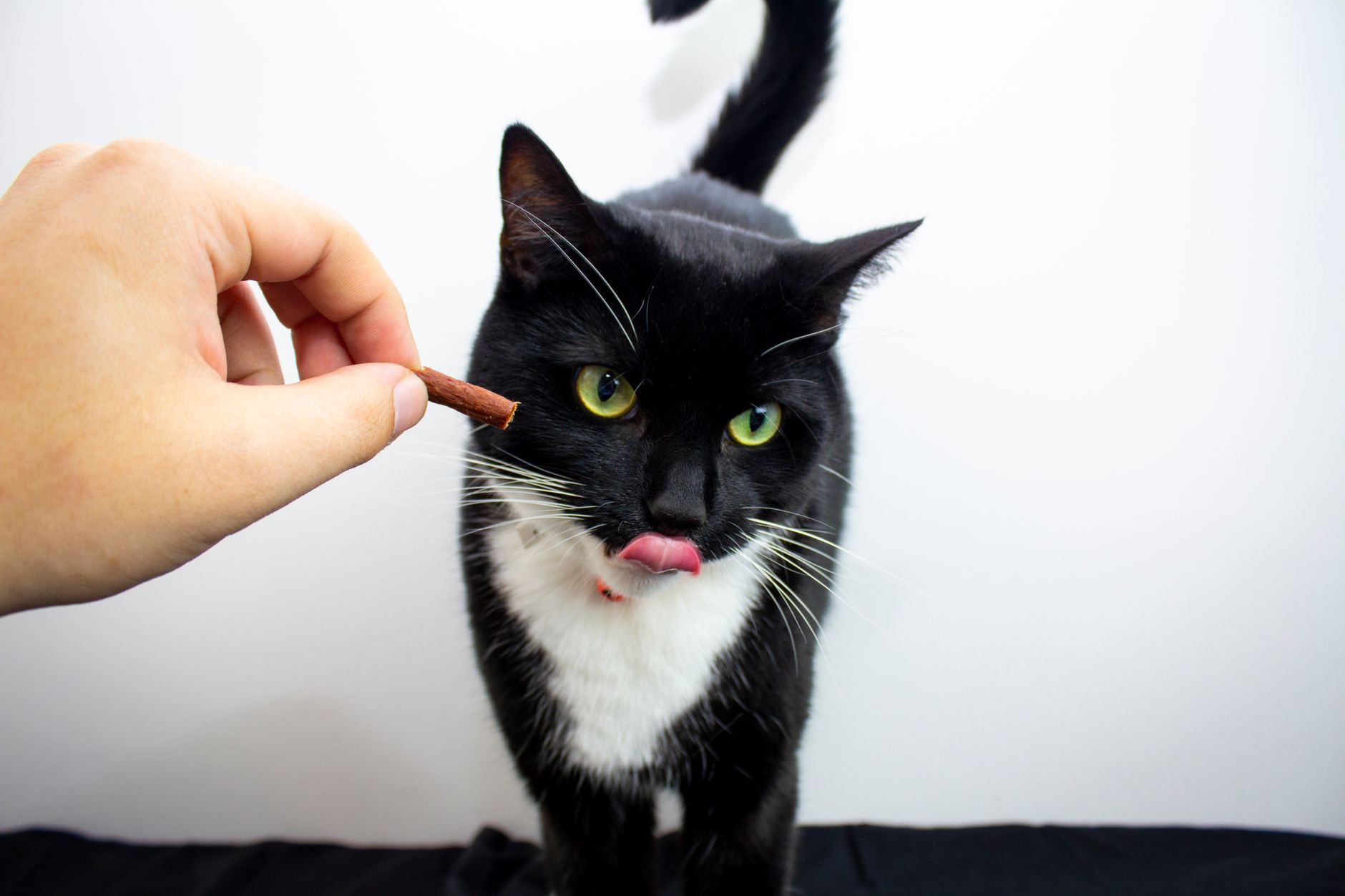
If your cat licked minoxidil, phone your veterinarian, an emergency animal hospital or an animal poison control line now, even if your cat looks completely normal. Signs are not always immediate: the ASPCA says they “can develop rapidly or be delayed up to 12 hours,” so a cat that seems fine at first is not yet in the clear.
Minoxidil is the active ingredient in Rogaine and other hair-regrowth products, and cats are more sensitive to it than dogs are. Pet Poison Helpline warns that “Cats are particularly sensitive to this medication, and any exposure can result in severe poisoning and potentially death.” A review of ASPCA poison-center records found illness “even with low exposure amounts, such as drops or licks.” So a single lick of a treated hand counts. This page covers the first hour. The poison-center figures and case reports behind it are gathered in our main guide to minoxidil toxicity in cats.
If your cat has licked, eaten or been splashed with minoxidil, call your veterinarian or an emergency animal hospital now, even if your cat seems fine. Two animal poison control centers answer around the clock: the ASPCA Animal Poison Control Center at (888) 426-4435 and Pet Poison Helpline at (855) 764-7661. Both may charge a consultation fee.
Cat licked minoxidil? Do these five things in order
- Separate your cat from the source. Put the bottle, dropper, foam can and any used tissues where no animal can reach them. Move your cat to a warm, quiet room, away from your treated scalp, your hands and your pillow. If you have other animals, look each one over too: the ASPCA advises checking every pet “even if you don’t think they were involved.”
- Stop any more licking. If minoxidil may be on the fur, stay with your cat and gently interrupt it whenever it starts grooming that patch. International Cat Care advises keeping a contaminated cat from grooming itself further, because whatever sits on a cat’s coat ends up swallowed. If you are the person using minoxidil, wash your hands before you handle your cat and keep your head out of its reach.
- Call for advice now. Ring your own vet if the practice is open, or an emergency clinic, or one of the two animal poison control lines: ASPCA Animal Poison Control at (888) 426-4435 or Pet Poison Helpline at (855) 764-7661. Do not hold off until something looks wrong; the ASPCA’s own instruction is “Even if your pet is acting normal, don’t wait to contact APCC.”
- Read out the details they need (the list is in the next section). Write down any case number you are given.
- Follow the plan you are given. That may mean washing the coat first, or going straight to a clinic. For the drive, the Merck Veterinary Manual’s owner guide says: “Wrap cats in a towel to limit movement, and put them in a dark box with breathing holes.” A closed carrier does the same job.
The reason for the hurry is that poisons often look harmless at first. The ASPCA puts it this way: “Many poisons can have a delayed effect and it can be harder to treat once your pet is symptomatic.” Pet Poison Helpline says signs of minoxidil poisoning “usually occur within 45 minutes to a few hours,” and other sources report longer gaps; our symptoms guide sets the onset figures side by side.
One real case shows how seriously the toxicologists take a single lick. In a story Pet Poison Helpline published, a man had put on his minoxidil and sat down on the couch. “My cat Kratos jumped up next to me and I felt licking on my head.” By his own account, it had been 15-20 minutes since he put the product on. Their advice was a hospital visit: “Robert called Pet Poison Helpline, and they recommended he take Kratos into the hospital for observation and possible treatment.” Kratos was treated overnight and recovered fully.
What to have ready when you call
The person on the phone will work out the risk from a handful of facts. The ASPCA says callers are asked about the pet’s “breed, age, weight and health history,” and then about “the product package, the strength of ingredients and the amount your pet was exposed to.” Pet Poison Helpline’s advice is to note the product, how much, “including the strength and quantity,” and when it happened. Gather this while the phone rings:
- The product itself. Have the bottle, can or box in your hand. The brand, the form (liquid with a dropper, foam or spray) and the strength printed on the label all matter. If it is a beard or hair-growth serum that does not say minoxidil, read the ingredients aloud: the ASPCA notes that some contain related ingredients such as Aminexil, Nanoxidil and Neoxyl.
- How your cat met it. Licked your hand, licked your hair or scalp, slept on your pillow, was splashed, or chewed a container. The table further down covers each one.
- How much. Your honest best guess: one lick or several, how big the wet patch on the fur was, or how much is missing from the bottle.
- When. The time you applied the product and the time your cat licked it or was splashed.
- Your cat. Its weight (a recent vet bill will show it), age, breed, any illnesses and any medicines it takes.
- What you have seen and done. Any vomiting, hiding, refusing food or unusual breathing so far, and anything you have already tried. The ASPCA asks callers to mention any home treatment, so be candid.
Expect a fee for the call. The ASPCA says only that “A consultation fee may apply,” while Pet Poison Helpline lists “a $89 USD per incident fee” and says “All follow-up consultations are included.” Keep the case number: the ASPCA says that if you need to go to a clinic, “just give the clinic the case number and the call back number, have them call ASPCA Poison Control and they can take it from there!”
Washing minoxidil off your cat’s fur
This applies only when the product is on the coat: a splash, a spill, or fur that has been rolling on a treated pillow. If your cat only licked your skin, there may be nothing on its fur to wash. Either way, call before you wash. A bath should never hold up the trip, and International Cat Care says “Often washing and clipping is best done at the veterinary clinic as it can be stressful for your cat.”
If the poison specialist or your vet tells you to clean the coat at home, the ASPCA’s home decontamination guide describes the method for skin and fur exposures in general:
- Protect yourself first. The ASPCA says to “put on rubber gloves and a plastic apron or old clothes to avoid contact with the substance.” Minoxidil on your own hands is just as easy for a cat to lick.
- Use mild liquid dish soap in warm water, the kind meant for washing dishes by hand. The ASPCA prefers it to shampoo and explains why: “dish soap is more effective at cutting through oily or chemical residues.” Work it gently through the affected fur and skin, keeping away from the eyes and ears.
- Rinse until nothing is left. In the ASPCA’s words, “rinse your pet thoroughly to ensure no soap or substance residue remains.”
- Towel-dry, with no hair dryer. “Do not use a blow dryer, as heat may further irritate the skin or spread any residues.”
- Keep your cat warm and with you. Low body temperature is one of the signs Pet Poison Helpline lists for minoxidil poisoning, and a damp cat chills fast. Dry the fur well in a warm room. Merck’s owner guide on chilled animals says to dry a wet animal first and only then add warmth, using water bottles that are warm, not hot.
The FDA’s advice after a different skin medication, a flurbiprofen pain cream, sums up the order of things: “bathe or clean your pet as thoroughly as possible and consult a veterinarian.” Clinics follow the same principle. The veterinary authors of a 2022 minoxidil case report recommend cleaning exposed skin straight away with liquid dishwashing detergent, and the Merck Veterinary Manual adds that clipping the hair may be needed, a job for the clinic rather than for you.
What not to do, and why
Do not try to empty your cat’s stomach
Vomiting should only ever be brought on by a veterinary team, in a clinic, when they judge it useful. Pet Poison Helpline is blunt: “There is simply no safe way to induce vomiting at home with cats.” In the Merck Veterinary Manual’s professional guidance, the advice under the heading for cats reads “Hydrogen peroxide, apomorphine, and ropinirole should not be used.”
Hydrogen peroxide is the remedy people reach for, and it is dangerous in cats. Pet Poison Helpline says “under no circumstance should you administer it to them as an emetic,” because it can cause irritation and bleeding in the gut. A 2017 case report describes a cat whose owner gave it hydrogen peroxide at home after it swallowed a piece of foam. Surgeons found “severe ulceration of approximately 60% of the gastric mucosa”, and “Due to the severity of ulceration and presumed poor prognosis, the patient was euthanized intraoperatively.” Salt is no better: “Using salt as an emetic is never advised, and the risk far outweighs any benefit you can get.”
Even professionals do not always choose to empty the stomach. In the Kratos case, the helpline’s toxicologists “recommended against induction of emesis based on the timing since ingestion of the cream” and chose other treatment in hospital.
No activated charcoal from the medicine cabinet
Whether to give charcoal at all is a veterinary decision, made case by case; Pet Poison Helpline notes “there are cases where activated charcoal may be unsafe and/or ineffective.” It also says “Activated charcoal capsules that you may have at home in a first aid kit are NOT considered a substitute” for what a clinic gives, and the Merck manual warns that “Hypernatremia is a risk with any activated charcoal administration”, meaning a dangerous rise in blood sodium.
Nothing by mouth
Offer no milk, food, human medicine, pet medicine or home remedy unless the vet or poison specialist asks you to. Pet Poison Helpline’s emergency instructions say “Do NOT give any home antidotes.” Its myths page adds that “In most situations milk is not an effective antidote, and it could even make things worse.” The ASPCA’s rule covers everything else: “It’s best to talk to a veterinary professional, like APCC, before taking any steps or giving your pet anything after a possible poisoning.”
Do not wait and watch
Waiting to see whether your cat gets sick only uses up time. Both poison centers treat minoxidil as urgent from the moment of contact, not from the first sign. Pet Poison Helpline says “If your pet is exposed to minoxidil, it should be addressed urgently.” The ASPCA’s instruction is to “seek veterinary care immediately or call ASPCA Poison Control” if you believe your pet has been exposed. A phone call takes minutes; watching and waiting can take hours you may need.
How your cat came into contact: what to do in each case
The ASPCA records show how cats usually meet minoxidil: “pet licked owner’s skin or pillowcase, pet was splashed during a medication spill.” Every route below starts with the same step, a call for advice now. The second column is what to do as well.
| What happened | Call now, then also |
|---|---|
| Licked your treated hand | Wash your hands with soap and water before touching your cat again. Tell the vet how long after applying it happened. |
| Licked your scalp, hair or beard | Keep your head away from your cat until your hair is washed. Note the minutes since you applied it, as Kratos’s owner did. |
| Lay on or licked your pillowcase or bedding | Strip the bed and shut the bedroom door. Ask whether the coat needs washing, since cats groom pillow residue off their fur. |
| Splashed, or knocked a bottle over onto itself | Gloves on. Ask whether to wash the fur at home or at the clinic, and keep your cat from grooming in the meantime. |
| Chewed a bottle, dropper, applicator or used tissue | Collect every piece and the bottle, and work out roughly how much is missing. Bring them all with you. |
| Not sure, but found wet fur or a tipped bottle | Treat it as an exposure. Say exactly what you found and when. |
The pillow row is easy to underestimate. The ASPCA says “Toxicity has been seen in cats that simply lay on pillows with minoxidil residue and then groom themselves.” The spill row is not hypothetical either: one published case involved a cat that knocked over its owner’s bottle, spilled the solution onto itself and licked it. Once this emergency is over, our guide to residue on hands, hair and pillows after applying minoxidil and our routine for using minoxidil in a home with cats cover how to stop it happening again.
What happens when you get to the clinic
Expect the team to examine your cat, wash off any product still on the coat and decide whether emptying the stomach is still worthwhile, which Pet Poison Helpline says depends on how long ago the exposure happened. To stop more licking, vets may fit an Elizabethan collar; one case report notes “An Elizabethan collar should also be used to prevent additional oral exposure.” Many cats are admitted for observation: Kratos “was placed on intravenous fluids and was kept overnight for intensive care with monitoring of his heart rate, blood pressure and the development of any respiratory changes.” The ASPCA says a cat with heart or breathing signs may need care “for up to three to four days.” What hospital treatment involves and how cats recover has its own guide.
Signs to watch while you arrange care
Keep your cat in sight while you make calls and travel. Pet Poison Helpline lists loss of appetite, vomiting and lethargy for cats, along with “Dyspnea (difficulty breathing), pulmonary edema (fluid in the lungs), pleural effusion (fluid in the chest)”, “Hypothermia (low body temperature)” and “Cyanosis (bluish discoloration of gums).”
Go straight to the nearest emergency clinic, and phone ahead from the car, if your cat:
- is breathing fast, with effort, or with its mouth open
- has pale, gray or bluish gums
- feels cold, or is weak, wobbly or collapsed
- cannot be roused, or has a seizure
That matches the ASPCA’s general rule: “If your pet is unconscious, having difficulty breathing, bleeding or having seizures, it is best you take your pet directly to a veterinary clinic for immediate care.” Our guide to minoxidil poisoning symptoms in cats explains what each sign looks like and why it happens. In the published spill case, the cat reached a hospital 24 hours after the exposure, and on examination it had “rapid shallow breathing, pale mucous membranes, hypothermia, tachycardia, and hypotension.”
Frequently Asked Questions
How much minoxidil does it take to poison a cat?
Nobody knows a safe amount. No study or poison center gives a toxic dose for cats, and in published cat cases the amount is usually unknown and counted only in licks. The ASPCA poison-center review found illness after as little as a few drops or licks, so treat any lick as a reason to call.
My cat licked my head after I used Rogaine but seems fine. Do I still need to call?
Yes. Signs of minoxidil poisoning can take hours to show, and the ASPCA says “Even if your pet is acting normal, don’t wait to contact APCC.” In the Kratos case, Pet Poison Helpline advised a hospital visit for observation after the cat licked its owner’s freshly treated head.
Can I use hydrogen peroxide to help a cat that licked minoxidil?
No. Pet Poison Helpline says “There is simply no safe way to induce vomiting at home with cats,” and hydrogen peroxide can ulcerate a cat’s stomach. In a 2017 case report, a cat given hydrogen peroxide at home was euthanized because of the stomach damage. Any decision to empty the stomach belongs to a vet.
How much does it cost to call animal poison control about my cat?
Pet Poison Helpline charges “a $89 USD per incident fee” and includes follow-up calls. The ASPCA line says “A consultation fee may apply.” Your own vet or an emergency clinic can also advise you, and can call the poison center with your case number.
Can my cat be poisoned just by sleeping on my pillow after I use minoxidil?
Yes. The ASPCA says “Toxicity has been seen in cats that simply lay on pillows with minoxidil residue and then groom themselves.” If your cat has slept on your bed, call for advice, ask whether its coat should be washed, and keep it off the bed from now on.
Sources
- Minoxidil and Pets: What You Need to Know — ASPCA (ASPCA Poison Control), February 26, 2026; read October 8, 2026
- Warning: Minoxidil — Pet Poison Helpline, read October 8, 2026
- Topical Minoxidil Exposures and Toxicoses in Dogs and Cats: 211 Cases (2001-2019) — Journal of the American Animal Hospital Association, 2021
- Hair Loss Drug Can be Deadly to Pets — Pet Poison Helpline (Toxin Tails), read October 8, 2026
- What to Do if Your Pet Is Poisoned — ASPCA, March 2019; read October 8, 2026
- What to Expect When Calling ASPCA Poison Control — ASPCA, April 2020; read October 8, 2026
- ASPCA Poison Control — ASPCA, read October 8, 2026
- 24/7 Animal Poison Control Center — Pet Poison Helpline, read October 8, 2026
- Pet Decontamination at Home: What to Do After Exposure — ASPCA (ASPCA Poison Control), September 2026; read October 8, 2026
- FDA Warns of Illnesses and Deaths in Pets Exposed to Prescription Topical Pain Medications Containing Flurbiprofen — U.S. Food and Drug Administration, Center for Veterinary Medicine (archived copy), 2015; read October 8, 2026
- Cats and poisons — International Cat Care (reviewed by the Veterinary Poisons Information Service), updated September 2025; read October 8, 2026
- What to Do in a Dog or Cat Emergency — Merck Veterinary Manual (Pet Owner Version), read October 8, 2026
- Why You Should Not Induce Vomiting in Cats — Pet Poison Helpline, read October 8, 2026
- Principles of Toxicosis Treatment in Animals — Merck Veterinary Manual (Professional Version), read October 8, 2026
- Necroulcerative hemorrhagic gastritis in a cat secondary to the administration of 3% hydrogen peroxide as an emetic agent — Journal of Veterinary Emergency and Critical Care, 2017
- “Peroxide in Cats” First Aid Myths — Pet Poison Helpline, read October 8, 2026
- Top 6: What NOT to do! — Pet Poison Helpline, read October 8, 2026
- Emergency Instructions — Pet Poison Helpline, read October 8, 2026
- Successful management of suspected minoxidil toxicosis in a cat following accidental dermal exposure — Veterinarni Medicina, 2022
- A Case Report of Successful Treatment of Minoxidil Toxicosis Using Hemodialysis in a Cat — Veterinary Sciences, 2024
- A Case Report of Successful Treatment of Minoxidil Toxicosis Using Hemodialysis in a Cat (full text) — Veterinary Sciences (MDPI), 2024
This article is general information for cat owners, written from the published veterinary literature and poison control guidance listed above. It is not a diagnosis or a treatment plan for your cat. If you think your cat has been exposed to minoxidil or any other medication, contact a veterinarian or an animal poison control center straight away. Rogaine is a registered trademark of its owner; Cat Professor is not affiliated with any drug maker.