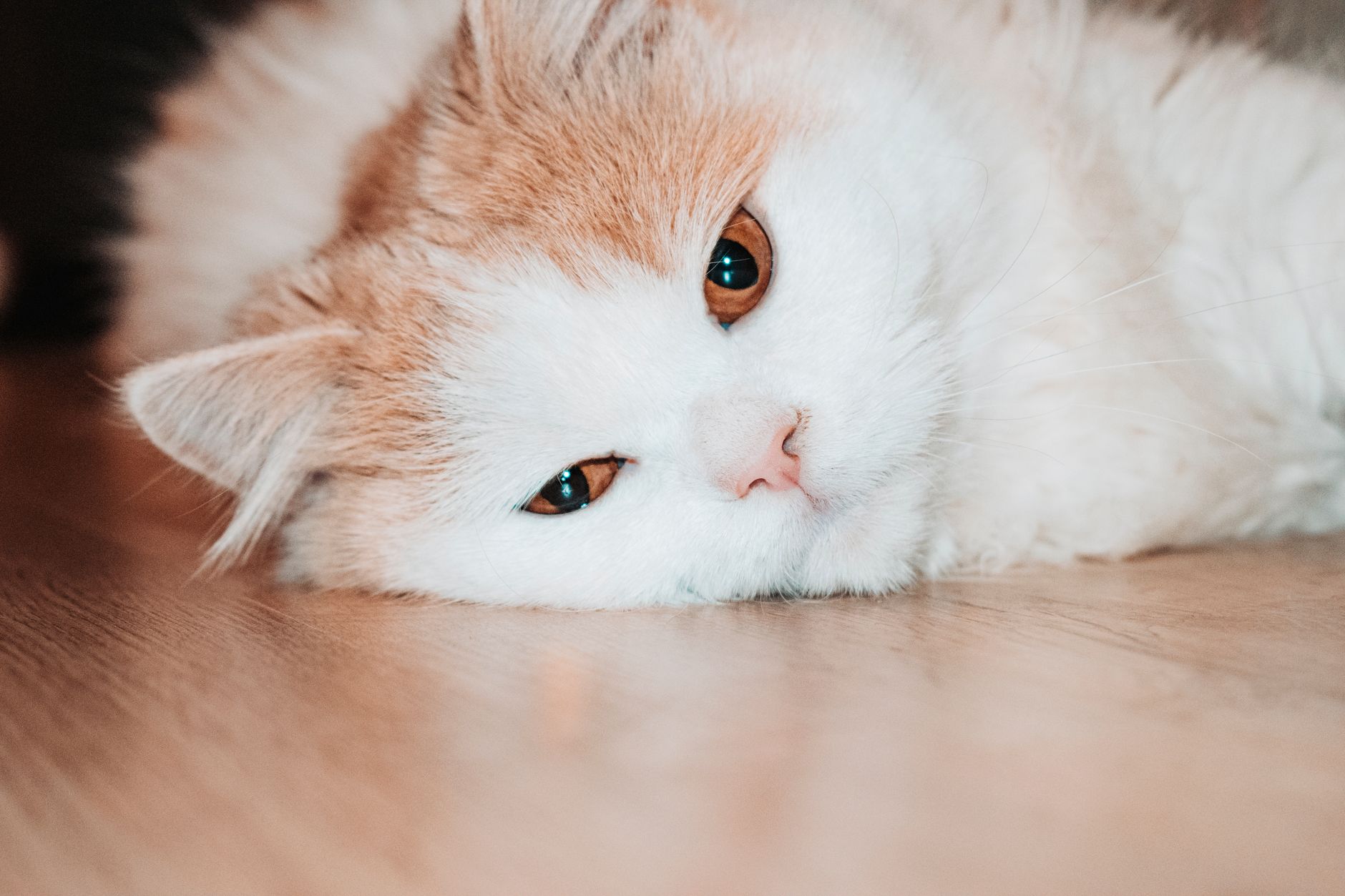
The main signs of minoxidil poisoning in cats are lethargy and weakness, loss of appetite or vomiting, fast or labored breathing, pale or bluish gums and a low body temperature. Any trouble breathing, collapse, gray or blue gums, or a cat that feels cold means go to an emergency clinic now, and because signs can take from under an hour to a day or more to appear, a cat that still looks normal after contact with minoxidil needs a call to the vet too.
Minoxidil is the drug in Rogaine and similar hair-regrowth products. It lowers blood pressure, and cats are especially sensitive to it. Pet Poison Helpline warns that “Cats are particularly sensitive to this medication, and any exposure can result in severe poisoning and potentially death.” If you know or suspect your cat has had contact, start with the first-hour checklist: the call, the details to have ready and how to clean the coat.
If your cat has licked, eaten or been splashed with minoxidil, call your veterinarian or an emergency animal hospital now, even if your cat seems fine. Two animal poison control centers answer around the clock: the ASPCA Animal Poison Control Center at (888) 426-4435 and Pet Poison Helpline at (855) 764-7661. Both may charge a consultation fee.
Signs of minoxidil poisoning in cats, and why they happen
Pet Poison Helpline’s list for cats is loss of appetite, vomiting and lethargy, plus “Dyspnea (difficulty breathing), pulmonary edema (fluid in the lungs), pleural effusion (fluid in the chest)”, “Hypothermia (low body temperature)” and “Cyanosis (bluish discoloration of gums).” The Merck Veterinary Manual, written for vets, names the commonest findings as low blood pressure, a fast heart rate, low temperature and fluid around the lungs. Here is how those translate into what an owner actually sees.
| Sign | What you see at home | Why it happens |
|---|---|---|
| Lethargy, weakness | Sleeping more, hiding, slow to get up, wobbly, will not jump | Low blood pressure leaves muscles and brain short of blood |
| Loss of appetite, vomiting | Walks away from food, brings food or froth back up | Stomach upset, often one of the earlier signs |
| Breathing trouble | Fast or shallow breaths at rest, belly working hard, mouth open, crouched or sitting upright | Fluid in the lungs (pulmonary edema) or in the chest around them (pleural effusion) |
| Pale, gray or blue gums | Gums lighter than usual, grayish, or tinged blue | Poor circulation (pale, gray) or too little oxygen (blue) |
| Low temperature | Ears, paws and body feel cold to you | Recorded in several published cat cases; it makes shock worse |
| Heart rate change | A pounding, racing heartbeat, or one that seems normal or slow | Often fast as blood pressure falls, but cats in shock may have a normal or slow rate |
| Collapse | Lying flat, cannot stand, hard to rouse | Severe low blood pressure (shock); heart or breathing failure |
No cat shows every sign, and the order varies. The cat in a 2024 case report that knocked a bottle of minoxidil over onto itself first came in with lethargy and loss of appetite; on examination it had “rapid shallow breathing, pale mucous membranes, hypothermia, tachycardia, and hypotension.” Any one of these signs after possible contact is enough to call for help.
Why minoxidil makes a cat so ill
Minoxidil widens the body’s small blood vessels. The tablet label on DailyMed describes it as a “direct acting peripheral vasodilator that reduces elevated systolic and diastolic blood pressure by decreasing peripheral vascular resistance.” In a person with high blood pressure, that is the point of the drug. In a cat of normal blood pressure, the same widening can drop the pressure far too low.
The ASPCA summarizes where that leads: minoxidil “is rapidly absorbed and can cause life-threatening complications with low blood pressure, abnormal heart rhythm, fluid build-up in the lungs and possibly cardiac or respiratory arrest.” Three problems run together:
- Low blood pressure and shock. Merck’s owner guide explains that “Shock happens when the body can’t deliver enough blood, oxygen, and nutrients to tissues.” That is behind the weakness, pale gums and collapse.
- A heart under strain. Two Savannah cats in a 2023 report “developed significant myocardial injury, and clinical signs were consistent with congestive heart failure.” The authors of a 2022 cat case write that “The cardiotoxicity of minoxidil is due to its haemodynamic effects rather than direct cardiotoxicity”, meaning the heart is damaged by the extreme swings in blood pressure and blood flow rather than poisoned directly.
- Fluid where it should not be. The two cats in a 2004 report “were hypothermic, and had pulmonary edema and pleural effusion present on thoracic radiography.” Fluid in and around the lungs is why breathing becomes fast, shallow and effortful.
Low body temperature sits alongside all three. It was recorded in the 2004 pair, at 35.0 °C in the 2022 cat, and as “signs of hypothermia (rectal temperature: 36.3 °C)” in the 2024 cat. Merck’s guidance for vets notes that hypothermia can worsen “shock (especially in cats).”
Minoxidil also lingers. The 2022 authors found that “Even a small dose of topical minoxidil is slowly absorbed systemically and can exert significant and prolonged adverse vasodilatory events in cats,” and suggest a single exposure’s effect “may be at least 3 days after exposure.” Why cats are hit harder than dogs is not fully proven; our overview of minoxidil and cats explains the leading theory, and why so many human medicines are risky for cats is a wider pattern worth knowing.
How soon symptoms appear: the sources disagree
There is no single, agreed timeline. Each source measures something slightly different: the first sign, the heart signs, or simply when a sick cat reached a hospital. Here they are side by side.
| Source | Reported timing |
|---|---|
| Pet Poison Helpline | Usually within 45 minutes to a few hours |
| Merck Veterinary Manual | Stomach upset often within a few hours; heart signs can be delayed 12–24 hours |
| ASPCA Poison Control | Rapid, or delayed up to 12 hours |
| American Academy of Dermatology, summarizing published research | Possible within 30 minutes; most within one to 67 hours |
| Two cats, 2004 report | Lethargy and breathing difficulty within 36 hours |
| One cat, 2024 report (spill) | Reached hospital 24 hours after exposure |
| One cat, 2022 report (skin contact) | Exposed 3 days before admission, ill for the last two |
In their own words: Pet Poison Helpline says “Signs of poisoning usually occur within 45 minutes to a few hours.” Merck says “GI upset is often observed within a few hours after exposure in animals. Cardiac signs can be delayed 12–24 hours.” The ASPCA says “clinical signs can develop rapidly or be delayed up to 12 hours.” The dermatologists’ page says “a pet can become sick in 30 minutes. However, most pets become noticeably sick within one to 67 hours after licking or chewing something that contains minoxidil, according to the research.”
One difference may help explain the spread. The ASPCA describes swallowed minoxidil as rapidly absorbed, while the 2022 authors describe minoxidil on the skin as slowly absorbed, so a lick and a contaminated coat may not follow the same clock. The case reports also describe one or two cats each. What every source shares is that none names a time after which a cat is safe, so the time to call is as soon as you know about the contact.
Signs that mean go to an emergency clinic now
Do not wait for an appointment or a call back if your cat shows any of these. Put it in a carrier and go, phoning the clinic from the car:
- Difficulty breathing: fast or effortful breaths at rest, breathing with the mouth open, or crouching or sitting upright to breathe. Merck’s owner guide notes that “Open-mouth breathing and a bluish tinge to the gums or skin indicate severe oxygen loss.”
- Collapse, or a cat that cannot stand or is hard to rouse.
- Pale, white, gray or bluish gums.
- A cold body, or ears and paws that feel cold.
- Extreme weakness, such as a cat that stays where you put it.
The ASPCA’s general rule says the same: “If your pet is unconscious, having difficulty breathing, bleeding or having seizures, it is best you take your pet directly to a veterinary clinic for immediate care.”
Do not wait for a racing heart
Minoxidil often speeds the heart up, and some poisoned cats do arrive with a fast heart rate. But a normal or slow rate is not good news. Describing shock in cats, Merck’s guidance for vets says “Cats have gray mucous membranes, slow CRT, weak or absent pulses, hypothermia, and a normal or low heart rate.” The 2022 cat had a heart rate inside the normal range on arrival while its temperature and blood pressure were both low. Pet Poison Helpline’s list of poisoning signs includes “Racing or slow heart rate, pale gums, weakness or lethargy, collapse.” Judge by breathing, gums, warmth and alertness, not by the pulse.
Quick checks that do not delay the trip
None of these should hold you up; each takes seconds and can be done while someone else fetches the carrier. Tell the vet what you found.
- Gum color. If your cat allows it, gently lift the upper lip at the side of the mouth, in good light. Gums that look paler than you are used to, white, grayish or blue-tinged are an emergency sign on their own.
- Breathing effort. Watch the chest and belly while your cat rests. Merck’s owner guide explains that “Animals that have trouble breathing breathe faster and harder, and they often change posture,” and that “Cats might crouch or sit in an upright position.” For a sense of how fast is too fast, the 2022 cat was breathing 108 times a minute against a clinic reference range of 20–30.
- Warmth. Feel the ears, paws and body. A normal rectal temperature for a cat is 38.1–39.2 °C (100.5–102.5 °F), according to the Merck Veterinary Manual’s reference table; the poisoned cats in the case reports measured 35.0 °C and 36.3 °C. You do not need a thermometer reading to decide to go: a cat that feels cold to you is reason enough. And do not count on shivering to warn you, since “Shivering is not a reliable sign of hypothermia.”
Keep a cold cat wrapped in a dry towel on the way. In hospital, warming is part of treatment: Merck states that “Temperature is a vital parameter to monitor and treat in cats with clinical signs of shock, and active warming is an essential component of therapy.”
Why a cat that seems fine is not in the clear
Cats are good at hiding illness. International Cat Care lists a cat’s “ability to hide (so that signs of poisoning aren’t immediately obvious)” among the reasons poisoned cats recover less easily, and Cornell’s Feline Health Center warns that “By the time an owner recognizes a problem, a cat may be at significant risk for serious health problems.” Add the delay in the timing table, and a calm, normal-looking cat an hour after a lick tells you very little.
The ASPCA’s general advice explains why waiting costs something: “Many poisons can have a delayed effect and it can be harder to treat once your pet is symptomatic.” That is why poison control wants the call at the moment of contact, before any sign.
Tell the vet about minoxidil, even days later
Minoxidil poisoning is easy to miss if nobody mentions it. The 2022 cat had a “2-day history of anorexia, lethargy, and dyspnoea” when it arrived, and its vets wrote that “we did not suspect the cat was exposed to minoxidil at the initial presentation.” Only further questioning showed it “had been exposed to a topical minoxidil solution 3 days before admission.” In a 2025 report, a young cat had two separate episodes of heart failure, eight months apart, and minoxidil was “retrospectively considered a likely contributor” once it came to light that the cat had been persistently licking a relative’s minoxidil-treated hair. If anyone in your home uses minoxidil and your cat becomes unwell with breathing trouble, weakness or a low temperature, say so at the start of the visit.
What happens next
There is no antidote, so treatment supports blood pressure, breathing and temperature until the drug wears off, usually in hospital. What that treatment involves and how many cats recover is covered in our separate guide, and the first-hour steps for a cat that has just licked minoxidil are on their own page. The largest data set, an ASPCA poison-center review, found that among cats that showed signs, “most developed moderate or major illness (56.0% dogs, 59.7% cats)”, and that eight of those 62 sick cats died.
Frequently Asked Questions
How long after licking minoxidil will a cat show symptoms?
There is no single answer. Pet Poison Helpline says signs usually start within 45 minutes to a few hours, the ASPCA says they can be delayed up to 12 hours, and the Merck Veterinary Manual says heart-related signs can take 12 to 24 hours. Published cats have also come in a day or more after contact. Call a vet or poison control as soon as you know about the exposure rather than waiting for signs.
Is a fast heartbeat always a sign of minoxidil poisoning in cats?
No. Minoxidil often speeds up the heart, and a racing heart was recorded in some cat cases, but the Merck Veterinary Manual says cats in shock can have a normal or low heart rate. A cat with a normal pulse but pale or gray gums, a cold body or labored breathing still needs emergency care.
Can minoxidil poisoning look like heart disease in a cat?
Yes. A young cat described in a 2025 veterinary cardiology report had two bouts of heart failure with thickened heart muscle, and minoxidil from a family member’s hair was linked to them only afterwards. Make sure the vet knows about any minoxidil in the household.
Can a cat get symptoms from minoxidil on its fur without licking anyone?
Yes. Cats groom whatever is on their coat, and several published cases began with minoxidil on a cat’s skin or fur rather than with licking a person. One cat that knocked over a bottle and spilled the liquid onto itself reached a hospital a day later with lethargy and loss of appetite.
Do cats recover from minoxidil poisoning?
Many do with prompt hospital care, but not all. Among the 62 cats with signs in the ASPCA records reviewed in 2021, 8 died. Our separate guide covers treatment and recovery in detail.
Sources
- Warning: Minoxidil — Pet Poison Helpline, read October 8, 2026
- Toxicosis in Animals From Human Topical Agents — Merck Veterinary Manual (Professional Version), read October 8, 2026
- Minoxidil and Pets: What You Need to Know — ASPCA (ASPCA Poison Control), February 26, 2026; read October 8, 2026
- Dermatologists caution: Minoxidil can be toxic to cats and dogs — American Academy of Dermatology, last updated August 2026; read October 8, 2026
- Suspected toxicosis after topical administration of minoxidil in 2 cats — Journal of Veterinary Emergency and Critical Care (abstract via Crossref), 2004
- Successful management of suspected minoxidil toxicosis in a cat following accidental dermal exposure — Veterinarni Medicina (Vet Med Praha), 2022
- Successful management of suspected minoxidil toxicosis in a cat following accidental dermal exposure (full text) — Veterinarni Medicina, 2022
- A Case Report of Successful Treatment of Minoxidil Toxicosis Using Hemodialysis in a Cat — Veterinary Sciences, 2024
- A Case Report of Successful Treatment of Minoxidil Toxicosis Using Hemodialysis in a Cat (full text) — Veterinary Sciences (MDPI), 2024
- Successful management of minoxidil 5% toxicosis in 2 cats from the same household — Journal of Veterinary Emergency and Critical Care, 2023
- Heart failure associated with minoxidil intoxication in a cat — Journal of Veterinary Cardiology, 2025
- Topical Minoxidil Exposures and Toxicoses in Dogs and Cats: 211 Cases (2001-2019) — Journal of the American Animal Hospital Association, 2021
- MINOXIDIL tablet (Par Health USA, LLC) — DailyMed, U.S. National Library of Medicine, label updated June 2026; read October 8, 2026
- Initial Triage and Resuscitation of Small Animal Emergency Patients (Primary Survey) — Merck Veterinary Manual (Professional Version), read October 8, 2026
- Monitoring the Critically Ill Small Animal Using the Rule of 20 — Merck Veterinary Manual (Professional Version), read October 8, 2026
- Evaluation and Initial Treatment of Dog and Cat Emergencies — Merck Veterinary Manual (Pet Owner Version), read October 8, 2026
- What to Do in a Dog or Cat Emergency — Merck Veterinary Manual (Pet Owner Version), read October 8, 2026
- Normal Rectal Temperature Ranges — Merck Veterinary Manual, read October 8, 2026
- Triaging a Potentially Poisoned Pet at Home — Pet Poison Helpline, read October 8, 2026
- What to Do if Your Pet Is Poisoned — ASPCA, March 2019; read October 8, 2026
- Cats and poisons — International Cat Care (reviewed by the Veterinary Poisons Information Service), updated September 2025; read October 8, 2026
- Common Cat Hazards — Cornell Feline Health Center, Cornell University College of Veterinary Medicine, read October 8, 2026
This article is general information for cat owners, written from the published veterinary literature and poison control guidance listed above. It is not a diagnosis or a treatment plan for your cat. If you think your cat has been exposed to minoxidil or any other medication, contact a veterinarian or an animal poison control center straight away. Rogaine is a registered trademark of its owner; Cat Professor is not affiliated with any drug maker.