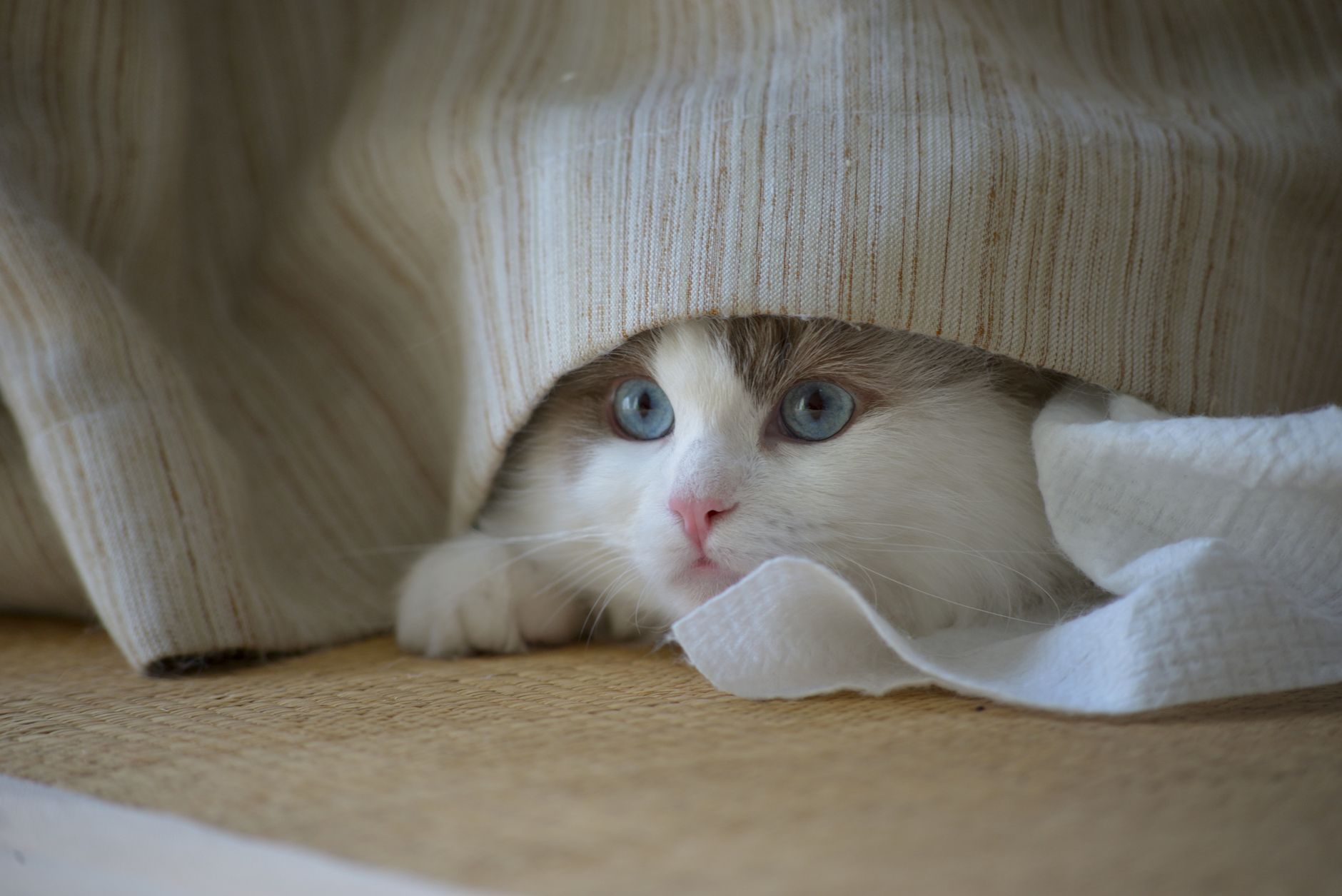
Your cat is hiding and not eating because it likely feels sick, in pain, frightened, or stressed. New or increased hiding under beds or in closets often signals vulnerability, not preference.
Veterinarians call this appetite loss anorexia, meaning the cat either will not eat or cannot eat comfortably. The combination matters because hiding plus food refusal points toward illness or strong stress rather than picky eating. Quick action protects the liver and speeds diagnosis.
Table of Contents
Is hiding a warning sign?
Cats instinctively conceal weakness, so withdrawal is often an early clue. According to the Cornell University College of Veterinary Medicine, new hiding can reflect pain, fever, illness, fear, or stress rather than a new favorite spot Cornell's guide to feline behavior issues.
Routine change alone can also trigger physical signs. Ohio State University reported that healthy cats showed sickness behaviors like food refusal and vomiting after unusual events, with sharply higher risk Ohio State's report on routine disruption in cats. A move, guest, new pet, loud repair, or changed feeding time can precede the episode.
Why won't your cat eat?
Veterinarians separate true anorexia from pseudo-anorexia. In true anorexia the cat does not want food. In pseudo-anorexia hunger remains, but mouth pain, ulcers, nausea, or trouble swallowing blocks eating.
Common medical triggers include dental disease, upper respiratory infection, stomach or intestinal disease, pancreatitis, kidney or liver disease, infection, medication effects, and cancer, according to VCA Animal Hospitals VCA's guide to anorexia in cats. Watch whether your cat approaches food then drops it, drools, paws at the mouth, turns from smell, vomits, or breathes with effort. Those details help the veterinarian locate the problem faster.
Why is waiting risky?
Cats cannot safely go long without calories. After several days without food, body fat floods the liver and causes hepatic lipidosis, a potentially fatal liver failure. Overweight cats face special danger.
About 90 percent of hepatic lipidosis cases follow an underlying disease that caused the appetite loss, Cornell specialists report Cornell's guide to hepatic lipidosis. Starvation is therefore usually a symptom that needs diagnosis, not a hunger strike to wait out. Yellow ears or gums, vomiting, drooling, lethargy, and continued hiding raise concern.
What should you do now?
Provide a quiet retreat, fresh water, and familiar food in a calm spot. Track how much your cat eats, drinks, urinates, and defecates.
Keep handling gentle and avoid forcing food or carrying your cat from hiding. Contact a veterinarian after about 24 hours without eating. Veterinarians advise sooner care for warning signs: Bring notes on recent changes, medications, vaccines, diet, and litter-box habits to the visit.
- vomiting, diarrhea, lethargy, or rapid weight loss
- yellow skin or eyes, drooling, mouth pain, or bad breath
- breathing difficulty, fever, hiding beyond 24 to 48 hours, or no water intake