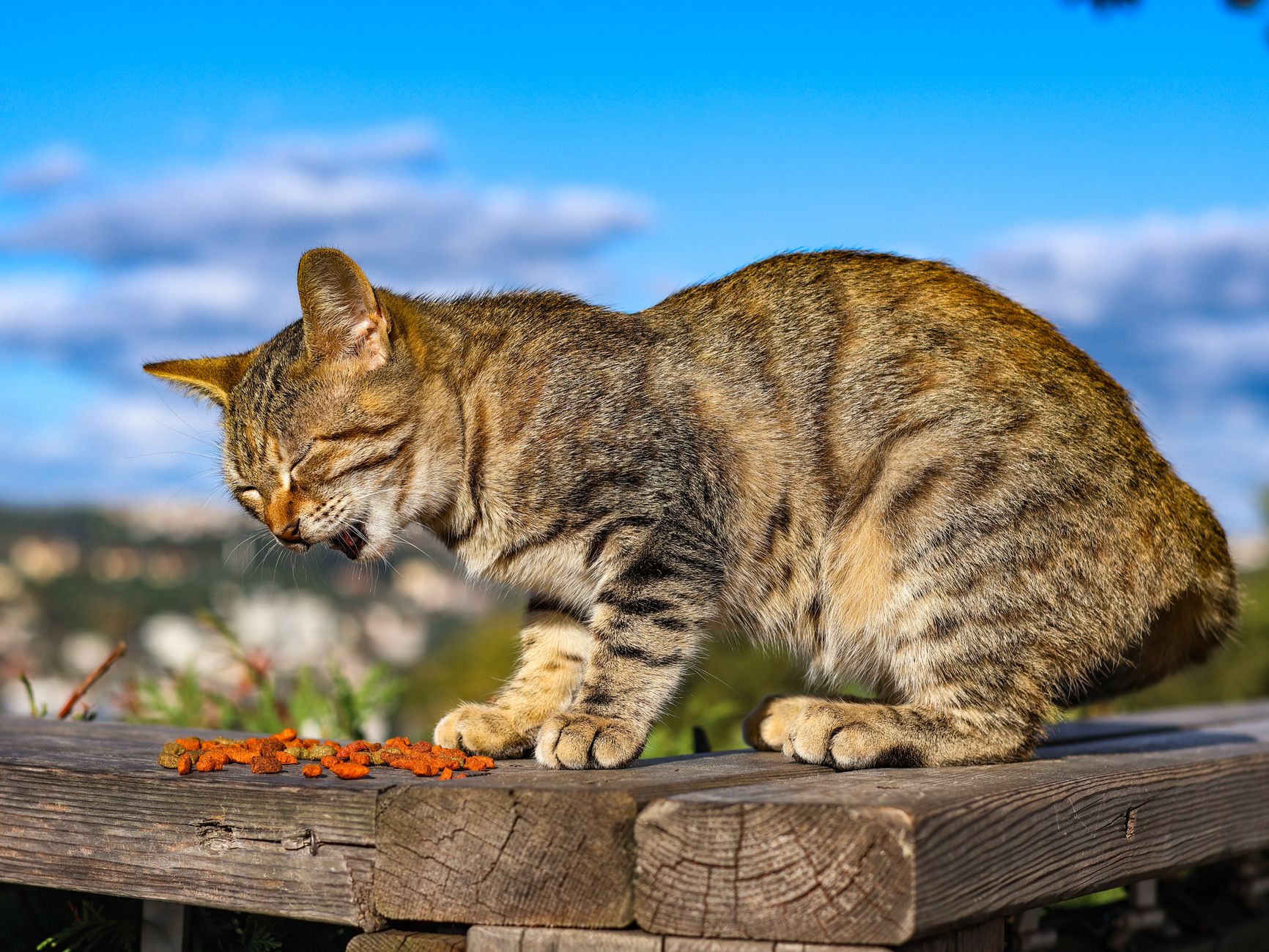
Diet affects cat spraying mainly through indirect paths, not direct cause and effect. Food availability, urinary health, and stress-related nutrients can all raise or lower a cat's likelihood of marking, but no documented diet change has been shown to stop spraying on its own. Spraying is a cat standing upright, backing up to a vertical surface, and releasing a small amount of urine to mark territory with scent — a different act from ordinary urination in a litter box. The strongest documented driver of this behavior is neuter status, while diet works around the edges by removing triggers like hunger, pain, and chronic stress.
Table of Contents
- How Food Routine Can Trigger Spraying
- Why a Vet Visit Comes Before a Diet Change
- What a Therapeutic Urinary Diet Actually Does
- Stress, Nutrients, and the Limits of the Evidence
- A Practical Approach for Owners
How Food Routine Can Trigger Spraying
A cat facing an empty bowl may spray near the place that frustrated it, according to VCA Hospitals. This is a response to the disrupted routine, not to anything in the food itself.
The Cornell Feline Health Center lists restrictive diets alongside insufficient playtime as frustrations that can push a cat toward marking, grouping diet with other environmental stressors rather than treating it as a direct physiological cause of spraying (source above; see Cornell Feline Health Center). A predictable feeding schedule and a bowl that is never left empty address the trigger side of this equation. They do not address marking driven by hormones, territory disputes with other cats, or underlying illness.
Why a Vet Visit Comes Before a Diet Change
New marking should prompt a veterinary exam before anyone assumes it is purely behavioral. VCA Hospitals cites a study finding medical problems — renal insufficiency, cystitis, and urolithiasis — at a similar rate of about 39% in both toileting cats and spraying cats (VCA Hospitals). That overlap matters because a cat straining or urinating outside the box from feline idiopathic cystitis (FIC), a common bladder inflammation with no single identified cause, can look like marking to an owner even though it is a medical problem.
- Signs that warrant a vet visit before trying diet changes: straining in the box, blood-tinged urine, frequent small urinations, vocalizing while urinating, or urinating just outside the box rather than against vertical surfaces.
- A visit rules out the medical causes diet cannot fix and clarifies whether true marking is also present.
What a Therapeutic Urinary Diet Actually Does
A 2015 randomized trial by Kruger and colleagues found that a therapeutic urinary diet, fed either dry or wet, cut recurrence of FIC signs by 89% compared with a standard maintenance diet, as cited in Vet Times. International Cat Care recommends wet food for cats prone to FIC-related urinary signs because it increases water intake and dilutes urine.
The same guidance notes that dilution alone does not resolve FIC, since chronic household stress is believed to be the underlying trigger (International Cat Care). This diet effect reduces the urinary symptoms that get mistaken for marking. It is not evidence that diet changes spraying frequency itself, since the trial measured FIC recurrence, not marking behavior.
Stress, Nutrients, and the Limits of the Evidence
Some ingredients are studied for their effect on stress biomarkers rather than spraying directly. A controlled feeding study found that a diet supplemented with alpha-casozepine and L-tryptophan, given daily for eight weeks, raised a blood ratio linked to calming and lowered urinary cortisol, a stress hormone, in cats. The study's authors called for further behavioral testing before drawing conclusions about actual behavior change (Kato et al., PubMed).
No primary veterinary source identified has tested a diet change and reported a direct reduction in spraying frequency itself. The available diet studies measure FIC recurrence, urinary cortisol, or general anxiety signs like vocalizing and fighting — not how often a cat sprays. Neutering status is the strongest documented predictor of spraying regardless of diet. Intact males spray most often, and roughly 10% of neutered males and 5% of spayed females continue to spray no matter what they are fed, according to Catster.
A Practical Approach for Owners
Combining the Cornell and VCA guidance points to a sequence rather than a single fix: Diet's documented role is reducing urinary-tract triggers and anxiety-related physiology, while neutering and environmental management do the most to reduce spraying itself.
- Have a veterinarian rule out urinary disease first, since medical causes occur at a similar rate to spraying itself.
- Keep feeding times consistent and food bowls full to remove a known frustration trigger.
- Address litter-box setup and multi-cat competition for resources, since these are frequent marking triggers independent of diet.
- Consider a therapeutic urinary diet if a veterinarian diagnoses FIC, since that diet reduces symptom recurrence by a documented margin.
- Treat calming-nutrient diets as a possible support for stress-related anxiety signs, not a standalone spraying treatment.