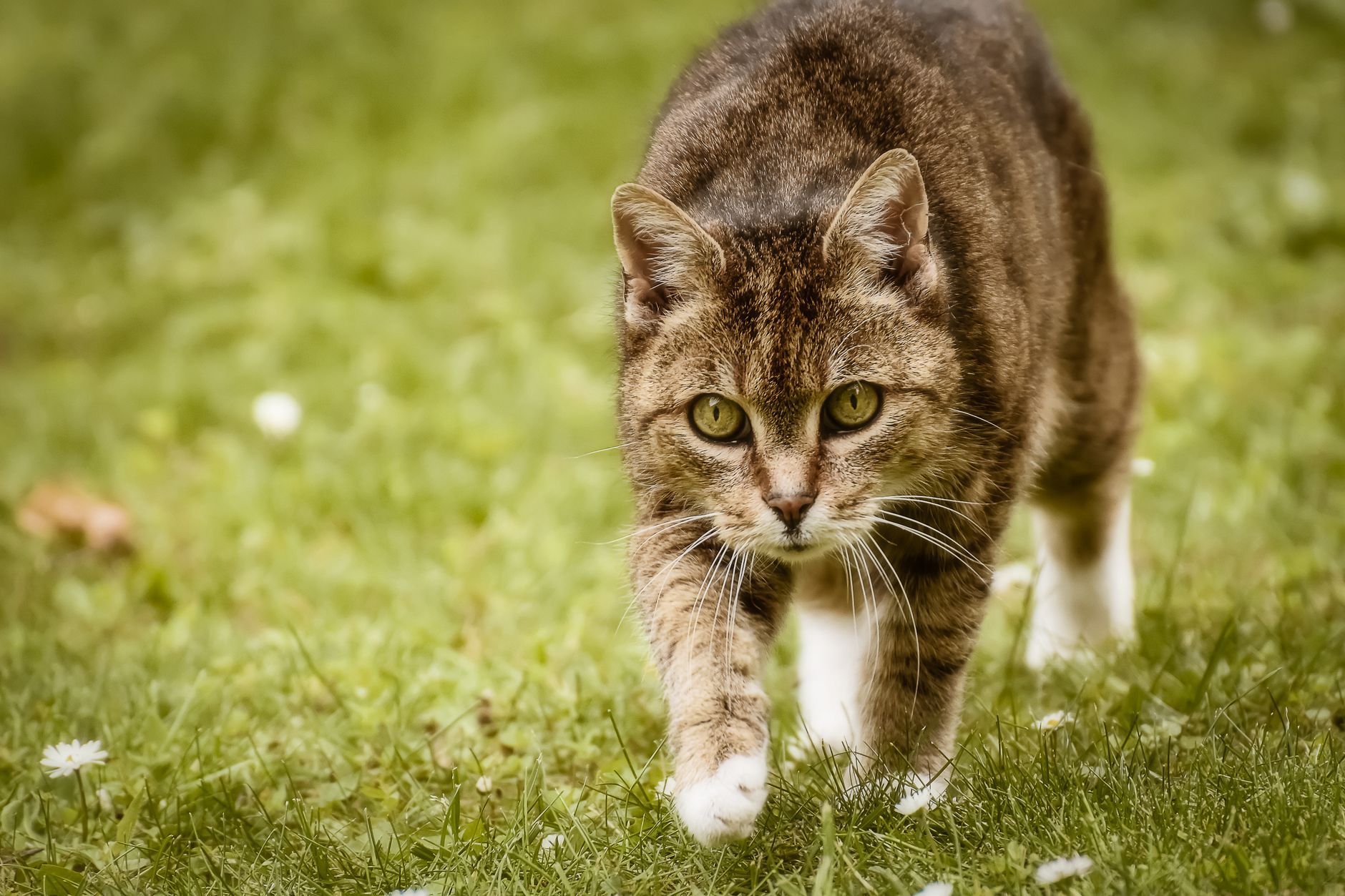
Short bursts of sprinting in an otherwise healthy, stable cat are almost always normal — the frenetic random activity periods pet owners call "zoomies." Sprinting becomes a health question when it is new, sustained, or paired with weight loss, a bigger appetite, or more drinking and urinating, especially in a cat aged 10 or over, because those are the classic signs of hyperthyroidism. Hyperthyroidism is an overactive thyroid gland that floods the body with thyroid hormone and speeds up the metabolism. It is common in older cats and very treatable, but activity level on its own is the weakest clue you have. The useful signal is the pattern around the running: how long it lasts, what else has changed, and how old the cat is.
Table of Contents
- What normal zoomies actually look like
- The signs that point to the thyroid instead
- Why age changes the odds
- What the vet visit involves
- Two complications worth knowing about before treatment
- Where activity level stops being useful
- Frequently Asked Questions
What normal zoomies actually look like
"Zoomies" is the everyday name for what behaviorists call frenetic random activity periods, or FRAPs. VCA Animal Hospitals describes them as a normal feline behavior that can strike at any hour of the day or night and ends as abruptly as it begins. The triggers are not firmly established.
The usual explanations are pent-up energy released after a long rest and the hunting instinct expressing itself in a house with nothing to hunt — a cat waking from a four-hour nap and running the hallway twice is the ordinary version of this. The shape of the episode matters more than its intensity. Normal zoomies have a clear start and a clear stop, the cat settles afterwards, and the rest of the day looks like every other day. A cat that cannot settle at all, or that seems driven rather than playful, is describing something different.
The signs that point to the thyroid instead
Hyperthyroidism does not usually announce itself through running. According to the Cornell Feline Health Center, the main signs are weight loss, increased appetite, and increased thirst and urination, with vomiting, diarrhea, and hyperactivity also possible. In most cases the cause is a non-cancerous thyroid adenoma, not cancer.
That combination — a cat eating well or even ravenously while getting thinner — is the single most telling pattern. The MSD Veterinary Manual also lists excessive vocalization among common signs, so a cat that has started yowling at night as well as racing around deserves a closer look. Signs worth writing down before a vet visit:.
- Weight change over the past three to six months, by feel if not by scale
- Appetite: eating more, less, or the same amount
- Water bowl refills and litter box output
- New night-time vocalizing or restlessness
- Vomiting or loose stools
Why age changes the odds
Hyperthyroidism is overwhelmingly a disease of middle-aged and older cats. A primary-care study of 95,629 cats at 84 English practices, published by Stephens and colleagues through the RVC's VetCompass programme, found apparent prevalence of 2.4% across all cats but 8.7% in cats aged 10 or above, with affected cats ranging from 6 to 25 years old. That is roughly one in eleven senior cats. So the same symptom — new restlessness, more running — carries very different weight in a two-year-old than in a thirteen-year-old.
In a young cat with stable weight and appetite, zoomies are a behavior question and the answer is usually more structured play. In a senior cat, they are worth a blood test. Age also argues for testing before symptoms arrive. The American Association of Feline Practitioners' 2016 hyperthyroidism guidelines note that including total thyroxine in senior wellness panels supports earlier diagnosis — catching the disease before the scrawny, unkempt cat with a palpable neck mass shows up in the exam room.
What the vet visit involves
There is a defined workup rather than a judgment call. The AAFP's feline hyperthyroidism guidelines sort the disease into six clinical categories and call for a minimum database of complete blood count, serum chemistry, urinalysis, and a T4 assay — T4 being thyroxine, the main thyroid hormone measured in blood. When those results leave the diagnosis unclear, the guidelines list further options: free T4, TSH, 99mTc scintigraphy (a thyroid scan using a radioactive tracer), or a T3 suppression test.
Treatment choices include radioiodine, the anti-thyroid drugs methimazole or carbimazole, and surgery. For a cat with brief sprinting episodes and stable weight, appetite, and drinking, that workup will usually be normal and the behavior is normal too. For a cat aged 10 or over with new or escalating restlessness, a total T4 alongside CBC, chemistry, and urinalysis is the appropriate next step.
Two complications worth knowing about before treatment
High blood pressure travels with hyperthyroidism and can damage the eyes, kidneys, heart, and brain. Cornell notes that the hypertension will often resolve once the hyperthyroidism is successfully treated, and that prognosis with appropriate therapy is generally good. The kidneys are the subtler problem. An overactive thyroid raises renal blood flow, which can hide existing kidney disease.
In a study by Williams and colleagues in the Journal of Veterinary Internal Medicine, none of 262 hyperthyroid cats were azotemic — showing elevated waste products in blood, a marker of reduced kidney function — before treatment, yet 42 of them, 16%, were azotemic when rechecked a median of six months after radioiodine. That unmasking has consequences. Work published ahead of print in JAVMA found cats that became azotemic after successful radioiodine had a shorter median survival than those that did not, 2.8 years versus 4.3 years, which contrasts with earlier research on methimazole and thyroidectomy that found no survival difference. It is a reason to expect post-treatment bloodwork, not a reason to delay treatment.
Where activity level stops being useful
The honest limitation is that running tells you less than owners expect, in both directions. The MSD Veterinary Manual lists hyperactivity and weight loss despite a good appetite among common hyperthyroid signs — but notes that a minority of hyperthyroid cats instead show lethargy and loss of appetite, a presentation called apathetic hyperthyroidism. So a slowed-down senior cat that has stopped playing is not thereby cleared.
If anything, the quiet cat is the one more likely to have the diagnosis missed, because nobody reports a symptom they read as ordinary aging. Weight, appetite, and water intake carry the signal. Track those three in any cat over ten, and treat a change in them — not a sprint down the hallway — as the thing that books the appointment.
Frequently Asked Questions
My cat is three and gets zoomies every night. Should I test her thyroid?
Not on that basis alone. Hyperthyroidism cases in the VetCompass study ranged from 6 to 25 years, and overall prevalence was 2.4%. In a young cat with stable weight, appetite, and drinking, nightly zoomies are a normal behavior pattern — scheduled interactive play before bed is the usual answer.
Can hyperthyroidism be cured, or is it lifelong medication?
Both paths exist. The AAFP guidelines list radioiodine and surgery alongside the daily medications methimazole and carbimazole, so a definitive treatment is available as well as ongoing drug control.
Does a lump in my cat's neck mean hyperthyroidism?
A palpable neck mass is one of the recognized findings, and Cornell notes most cases arise from a non-cancerous thyroid adenoma rather than cancer. It still needs the bloodwork to confirm — have a vet examine any new neck swelling rather than assuming the cause.
Why would my cat's kidney values get worse after treatment works?
Hyperthyroidism increases blood flow through the kidneys, which can mask existing disease. In the Williams study, 16% of 262 cats were azotemic at a recheck a median of six months after radioiodine despite none being azotemic beforehand — the kidney problem was present and hidden, not caused by the treatment.