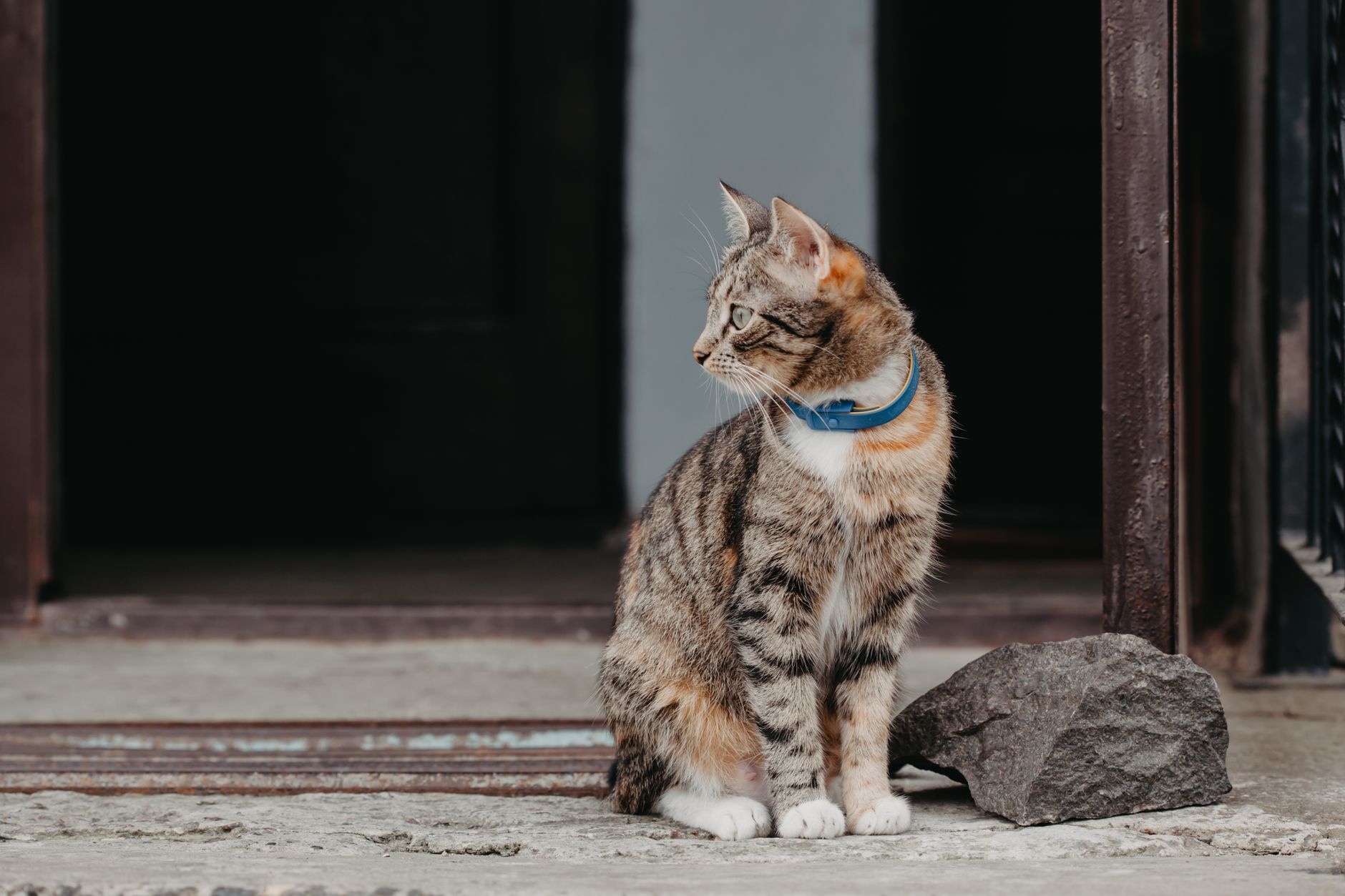
No, an automatic collar does not stop nighttime cat hunting. It cuts the number of prey brought home by about half. An automatic sonic collar, such as the CatAlert tested in Britain, triggers a sound when the cat stalks or pounces. It warns prey at the final moment rather than keeping the cat from hunting.
Table of Contents
- How much does the sonic collar reduce catches?
- Why is nighttime hunting especially hard to block?
- How do bibs, bright covers and curfews compare?
- What can owners do to cut nighttime kills?
How much does the sonic collar reduce catches?
In a British trial of 89 cats, bell collars reduced birds brought home 41% and sonic collars reduced them 51% compared with plain collars. Conservation Evidence summarizing Nelson and colleagues reports 74 birds with bells and 59 with sonic devices, versus 117 with plain collars, as shown in the Conservation Evidence summary of the Nelson trial. The same trial found a similar pattern for mammals.
Cats with plain collars returned 181 mammals, compared with 120 for bell collars and 111 for sonic collars. There was no meaningful difference between bells and sonic collars for mammals. Both help, but many hunts still succeed.
Why is nighttime hunting especially hard to block?
Wild mammals hunted by cats are largely nocturnal. Cats allowed out at night therefore meet more active prey. Returned prey also understates real killing.
Animal-camera work in Cape Town found owners saw only 18% of video-recorded prey, implying 5.56 times more kills, with most predation at night, according to the Cape Peninsula study described in the camera-collar prey-return PDF. A collar can interrupt single attacks. It cannot change the higher nighttime encounter rate.
How do bibs, bright covers and curfews compare?
The CatBib pounce-protector blocks the pounce rather than warning prey. A Perth trial of 56 cats cut the number of cats catching birds from 26 to 5. Bright Birdsbesafe covers work by alerting birds visually.
A University of St Andrews trial of 19 cats over eight weeks found the cover reduced birds killed by 78%, as recorded in the St Andrews research record. Nighttime confinement tackles exposure itself. A British study of 282 cats found cats kept in at night brought home 6.0 mammals on average, versus 8.9 for cats allowed out.
What can owners do to cut nighttime kills?
Use the collar as one layer, not a full fix. Fit it snugly, check fit often, and use a quick-release collar for safety.
University of Maryland researchers using Washington camera data concluded owners can reduce disease, wildlife-killing, and overlap risks by keeping cats indoors rather than relying on deterrents alone. Keep nighttime indoors as the main rule.
- Bring the cat indoors before dusk and keep it in overnight.
- Offer evening play, food, and a litter tray to ease the change.
- Add a warning device for daytime outings if the cat tolerates it.
- Count prey returned, but assume unseen kills still happen.