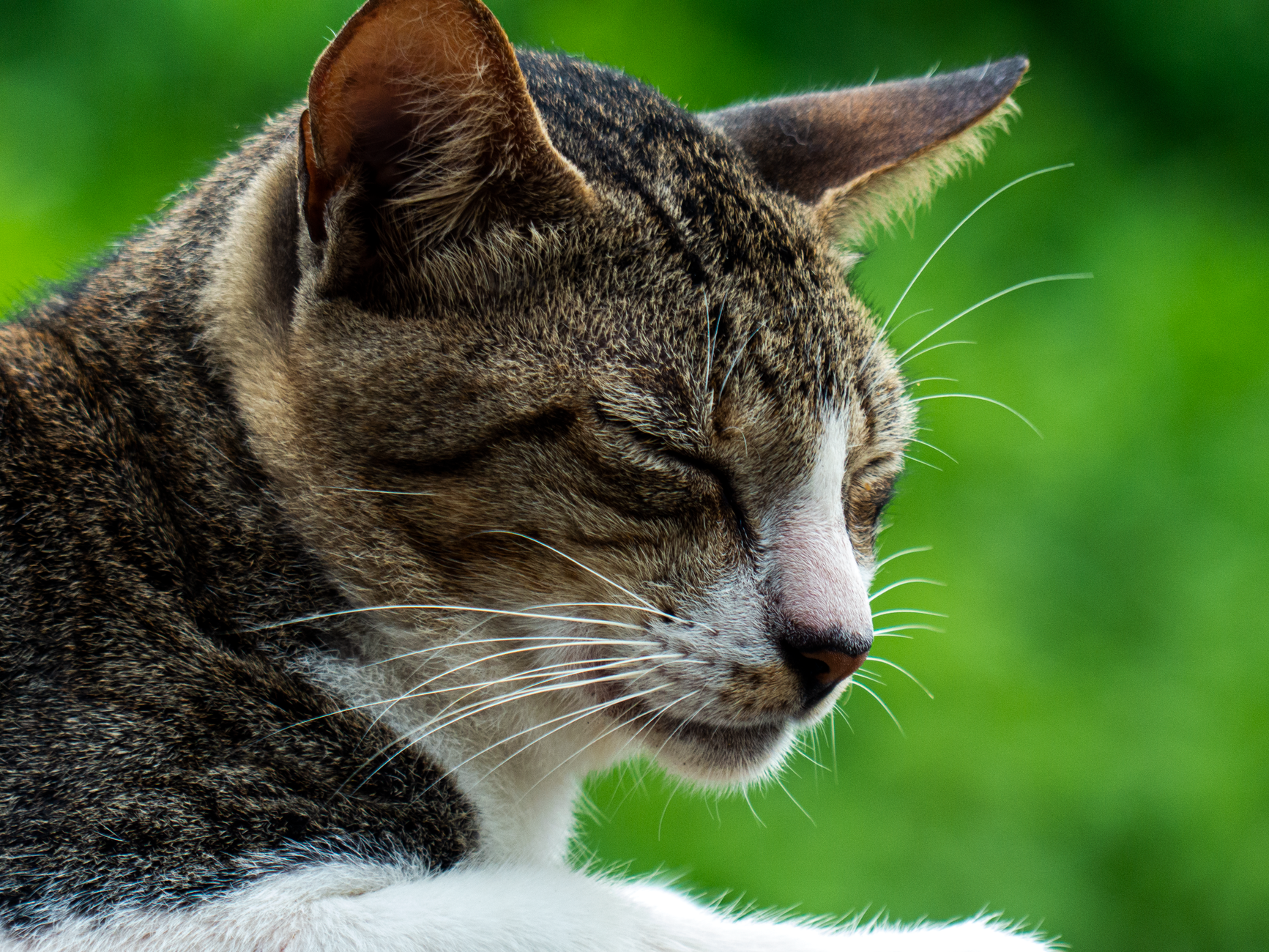
Cats purr when content because they feel safe, relaxed, and bonded to familiar people or cats. The rumble signals comfort and affection during petting, resting in a warm spot, kneading, or rubbing. A content purr usually comes with kneading, slow blinks, and leaning into touch. The same sound can mean other things in other moments, so context matters.
Table of Contents
- How do cats produce purring?
- Where does content purring start?
- Do cats purr when they are not happy?
- How should you read your cat's purr?
How do cats produce purring?
Scientific American describes a brain neural oscillator that sends rhythmic signals to laryngeal muscles. The muscles rapidly open and close the vocal cords during inhalation and exhalation at about 25–150 Hz. Read how purring works for the full mechanism.
A 2023 University of Vienna larynx experiment revised that brain-only view. Domestic-cat vocal folds with connective-tissue pads vibrated at purring rates without cyclical nerve input in laboratory tissue. See the larynx experiment report for details.
Where does content purring start?
Pet Townsend Veterinary Clinic explains that kittens begin purring within a few days of birth while nursing. The sound tells the mother they are close, fed, and okay. She purrs back to reassure, guide, and sustain nursing and bonding, as described in this guide to reasons cats purr.
Adult cats keep that early association. They often purr while being petted, resting warmly, kneading, or rubbing against trusted people or cats. Vet Verified links these moments to feeling relaxed, safe, and affectionate.
Do cats purr when they are not happy?
The Library of Congress notes cats also purr when stressed, fearful, in pain, giving birth, injured, or at the veterinarian. Veterinarians read this purring as self-soothing, care-seeking, or endorphin-linked coping. It is comfort-seeking, not happiness alone.
National Geographic reporting on a 2009 University of Sussex study found hungry cats embed a 220–520 Hz cry-like whine in the low purr. In tests with 10 cats, 50 listeners rated these solicitation purrs more urgent and less pleasant. See the report on solicitation purring for context.
How should you read your cat's purr?
Read the whole cat, not only the sound. A relaxed body, soft eyes, and steady breathing point toward contentment.
Get veterinary care rather than assuming happiness when purring comes with: Vet Verified cautions that purr frequencies overlap the 25–50 Hz range studied for tissue stimulation. Healing benefit for cats and people remains an unproven hypothesis. Purring alone does not prove recovery.
- hiding
- appetite loss
- labored breathing
- limping or other pain signs