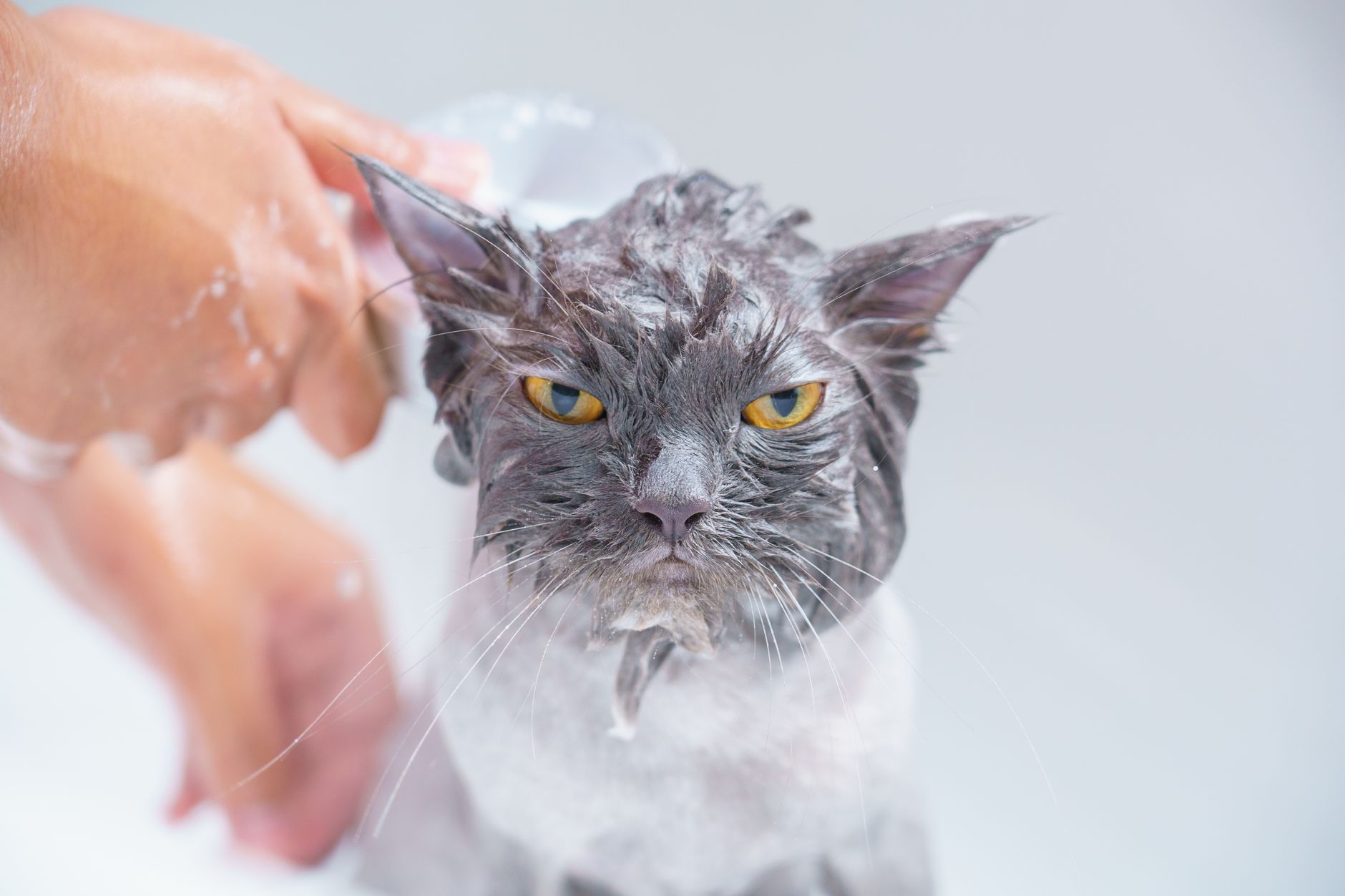
The best flea shampoo for cats is a cat-labeled wash used for quick knockdown plus vet-directed prevention and home cleaning. Vets recommend shopping for feline safety, age limits, and aftercare rather than the strongest killer. A flea shampoo is a medicated wash that kills fleas, eggs, larvae, or ticks already on the cat. It offers little lasting protection, so buying well means planning the next step.
Table of Contents
- Why cat-only labeling comes first
- What is actually in the bottle
- How to bathe for safety and effect
- Why the house decides whether fleas return
Why cat-only labeling comes first
The U.S. EPA directs owners never to apply dog flea products to cats because some pesticides are more toxic to one species, as explained in EPA flea and tick guidance. The agency also says to monitor pets after first use and to rebathe with mild soap and water if a reaction occurs.
Check both front and back labels for cats, kittens, and minimum age. Pet Poison Helpline warns that cats do not tolerate concentrated pyrethrins, permethrin, cypermethrin, and related pyrethroids, according to Pet Poison Helpline on cats and pyrethroids. It notes EPA labeling bars cat use unless the product was specifically tested on cats. When in doubt, ask your vet before using leftovers or switching brands.
- Buy only a shampoo labeled for cats and your cat's age
- Never borrow a dog shampoo, spot-on, or collar for a cat
- Save the box or photo of active ingredients and age limits
What is actually in the bottle
The Drugs.com veterinary label summary lists Adams Plus Flea and Tick Shampoo with Precor, EPA Reg. No. 2724-485-270, as 0.15 percent pyrethrins, 0.10 percent S-methoprene, and 1.88 percent piperonyl butoxide. It is labeled only for dogs, cats, puppies, and kittens older than 12 weeks.
That age cutoff rules out very young kittens. Vet's Best states its cat flea and tick shampoo uses 0.63 percent clove oil and 0.03 percent cottonseed oil in a plant-based formula that kills fleas, larvae, and ticks by contact. Chewy education guidance separately advises cat owners to avoid permethrin, citrus oils, and tea tree oils because of feline toxicity risk. Plant-based does not mean risk-free, so read the full active-ingredient panel.
How to bathe for safety and effect
Use lukewarm water, full lather contact, the label's wait time, thorough rinsing, and gentle drying. Keep shampoo away from eyes, mouth, and broken skin. Watch your cat during and after the first wash for scratching, redness, drooling, trembling, or lethargy.
Shampoo handles what is on the pet that day. FDA and EPA materials distinguish EPA-regulated over-the-counter shampoos, spot-ons, and collars from ingested or injected preventives, while PetMD notes selamectin products such as Revolution are FDA-approved prescription drugs requiring a vet order. Ask your vet which ongoing preventive fits your cat's age, weight, health, and other pets.
- Follow label dose, frequency, and rinse instructions exactly
- Do not combine multiple flea pesticides without vet direction
- Record product name, date, and any reaction for the next visit
Why the house decides whether fleas return
Cornell University College of Veterinary Medicine states flea control requires clearing fleas from the cat and from the home and yard through meticulous vacuuming, flea-killing products, and possibly a professional exterminator, as described in Cornell guidance on fleas. Wash bedding, vacuum rugs, cushions, and baseboards, then empty the vacuum outside. Repeat cleaning as eggs hatch over days to weeks.
Medicated shampoos kill fleas, eggs, larvae, and ticks already on the pet but do not reliably repel new fleas or stop reattachment, according to WebMD citing Cornell in WebMD on flea treatment limits. That limit explains why shampoo alone rarely ends an infestation. If you see trembling, drooling, vomiting, or skin redness after a wash, rebathe with mild soap and water and call your vet right away.