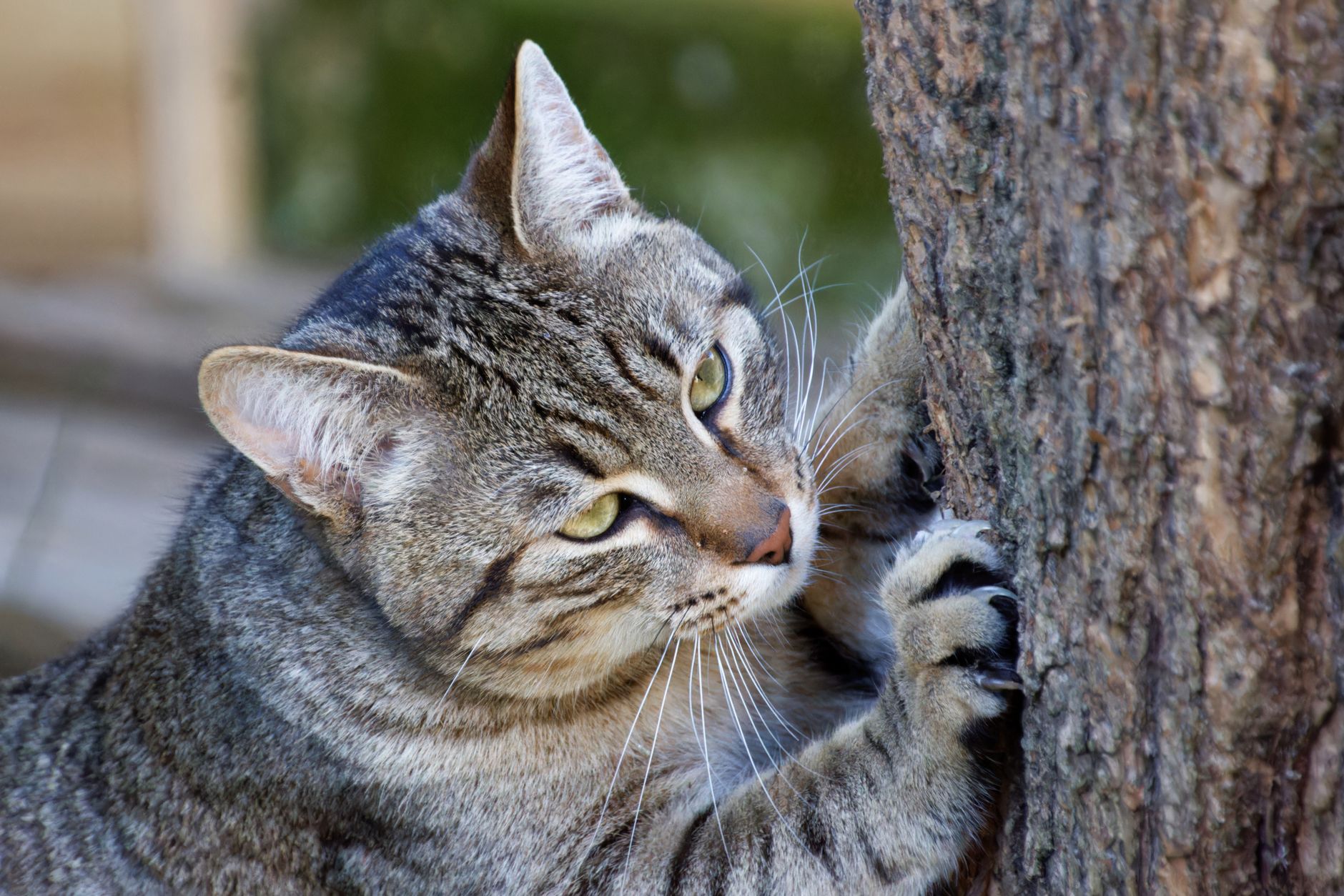
This Cat Scratching FAQ for November 2026 gives source-checked answers to common questions. Scratching is normal feline marking and claw care, and owners can manage it with post placement, redirection, and regular nail trims. The guide below explains why cats scratch, where to put scratchers, how often to trim nails, and why surgery to stop scratching carries lasting harm. Each answer focuses on a practical choice you can make at home.
Table of Contents
- Why do cats scratch?
- Where should scratching posts go?
- How often should you trim claws?
- What does declawing actually remove?
- What works instead of declawing?
Why do cats scratch?
Cats scratch to mark territory, stretch muscles, and maintain claws. Cornell University College of Veterinary Medicine explains in its feline behavior guide that scratching deposits scent from paw glands, leaves visible marks, and removes the translucent outer claw sheath.
It is not spite. Normal scratching happens during play, stretching, and territorial marking. The goal is to redirect the location, not to stop the behavior itself.
Where should scratching posts go?
Offer both vertical and horizontal scratchers in sisal, cardboard, wood, or carpet. Ohio State University Indoor Pet Initiative recommends in its indoor cat resources posts tall and sturdy enough for a full stretch.
Place posts where cats already scratch, near sleeping areas, and along entry routes. A post hidden in a back room will lose to a couch arm by the window.
- Put one post beside previously scratched furniture
- Add another near a favorite nap spot
- Keep posts steady so they do not wobble during a stretch
How often should you trim claws?
Most indoor cats need nail checks every 1-2 weeks and trims about every 2-3 weeks. ASPCA Pet Health Insurance notes in its nail-care guide to clip only the sharp white tip, staying clear of the pink quick.
Young active outdoor cats may go about a month between trims. Older cats often develop thick, brittle claws and need more frequent care to prevent snagging and overgrowth.
What does declawing actually remove?
Declawing, or onychectomy, amputates the last phalanx bone of each toe. That includes joint capsule, ligaments, tendons, and nerves, not merely the nail.
A GREPAQ analysis of 188 cats from eight studies in 2010-2023 found declawed cats with osteoarthritis withdrew paws at lower pressure. Affected cats showed chronic pain, hypersensitivity, irreversible nerve damage, and gait problems, worst in heavier cats.
What works instead of declawing?
The American Veterinary Medical Association strongly discourages elective onychectomy unless medically necessary, as stated in its declawing policy. Normal claw use matters for movement, stretching, and behavior.
Humane options include regular trims, vinyl glue-on nail caps such as Soft Paws, pheromone products, double-sided tape on furniture, and reward-based training. Trim tips on schedule, cover favored couch corners with tape, and reward the cat for using the post.