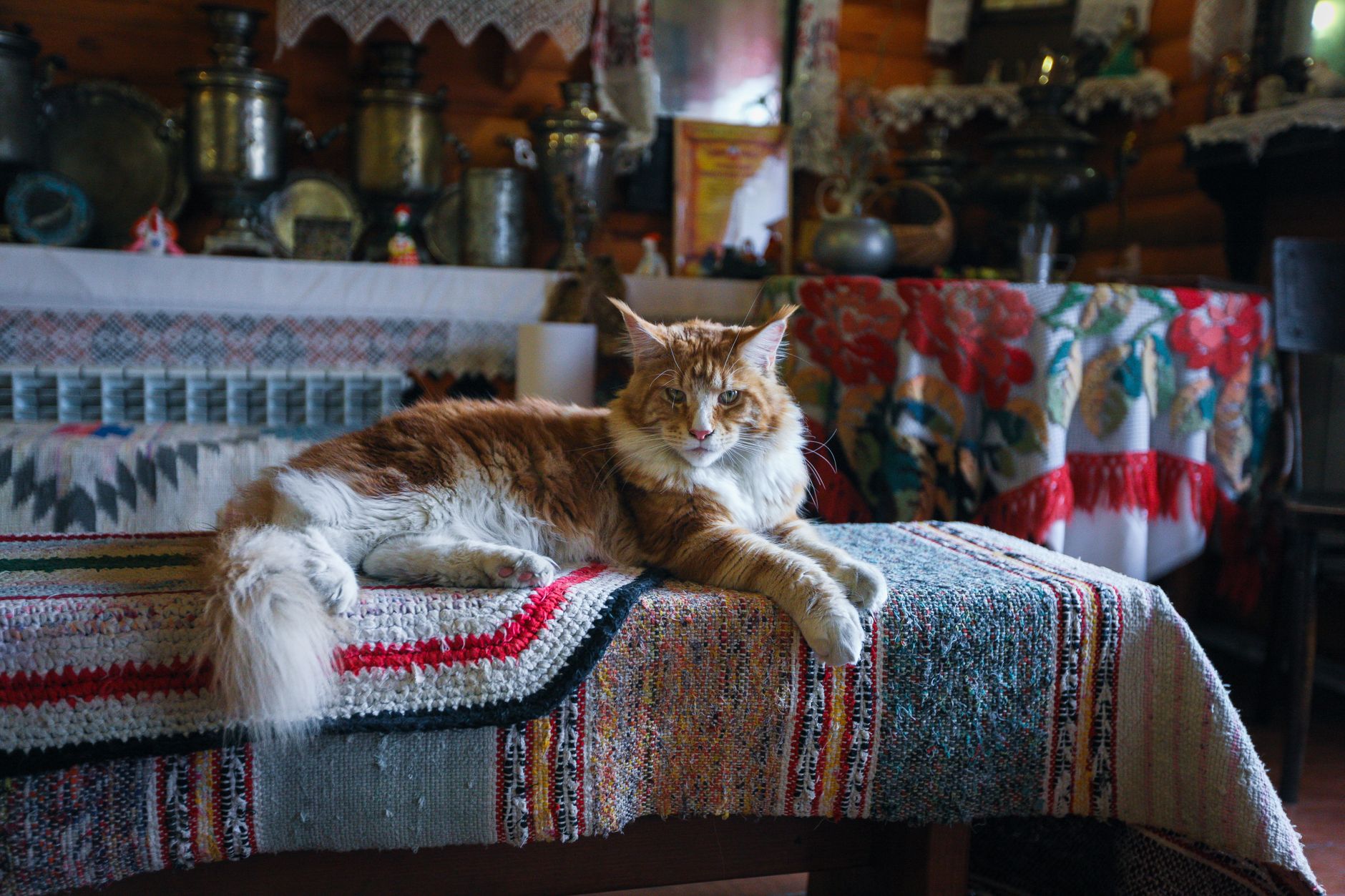
Maine Coon cats scratch more noticeably than other breeds because they are bigger, stronger, and able to reach higher. Their normal marking behavior leaves deeper gouges, taller marks, and more visible debris. Scratching is marking behavior that deposits scent from paw glands into territory. According to the Cornell Feline Health Center in its guide to destructive scratching behavior, it also removes the translucent claw sheath, leaving marks and husks as confidence displays.
Table of Contents
- How does size turn normal scratching into major damage?
- Why do stress and boredom increase scratching?
- What setup calms a Maine Coon's claws?
- What are the limits of the evidence?
How does size turn normal scratching into major damage?
Maine Coons do not necessarily scratch more often than other cats. According to Maine Coon Central in its advice for stopping furniture scratching, they cause more noticeable damage because they are heavier, stronger, and stretch higher.
That size difference is large. The Governing Council of the Cat Fancy describes Maine Coons as massive, powerful, and muscular in its Maine Coon breed profile, with males averaging 10-18 lbs and sometimes reaching 20 lbs. Larger claws plus greater body weight mean greater scratching force on posts, door frames, and sofa arms.
Why do stress and boredom increase scratching?
Stress is a leading cause of excessive scratching. A 2024 Ankara University-led study of over 1,200 single-cat owners, published in Frontiers in Veterinary Science in its report on scratching risk factors, found child presence, high playfulness, long play sessions, and nocturnal activity significantly increased it.
Maine Coons are vulnerable because they stay playful into adulthood and need outlets for energy. Boredom, lack of stimulation, anxiety, or an unsuitable post can drive destructive scratching. Scratching then serves as stress relief and physical exercise.
What setup calms a Maine Coon's claws?
Give the cat acceptable places to mark, climb, hide, and play. Veterinary researchers advise stress reduction through hiding places, elevated observation spots, and play opportunities, plus a large stable post placed near the cat's chosen spot and positive reinforcement, not punishment.
- Place a tall, heavy post beside the furniture the cat already uses.
- Add a hideaway and a high perch for watching the room.
- Schedule short daily play to burn energy without overstimulation.
- Reward post use with treats or praise and never punish scratching.
What are the limits of the evidence?
The 2024 findings rely on owner-reported surveys of single-cat homes. Those reports are prone to bias and show association rather than proving that children or playfulness directly cause scratching.
That limit matters for busy households. A Maine Coon may scratch more during noisy evenings, long indoor days, or after a post wobbles, even when no single trigger is proven. Watch the pattern for one to two weeks, then change bedding location, perch height, post stability, and play timing one at a time.