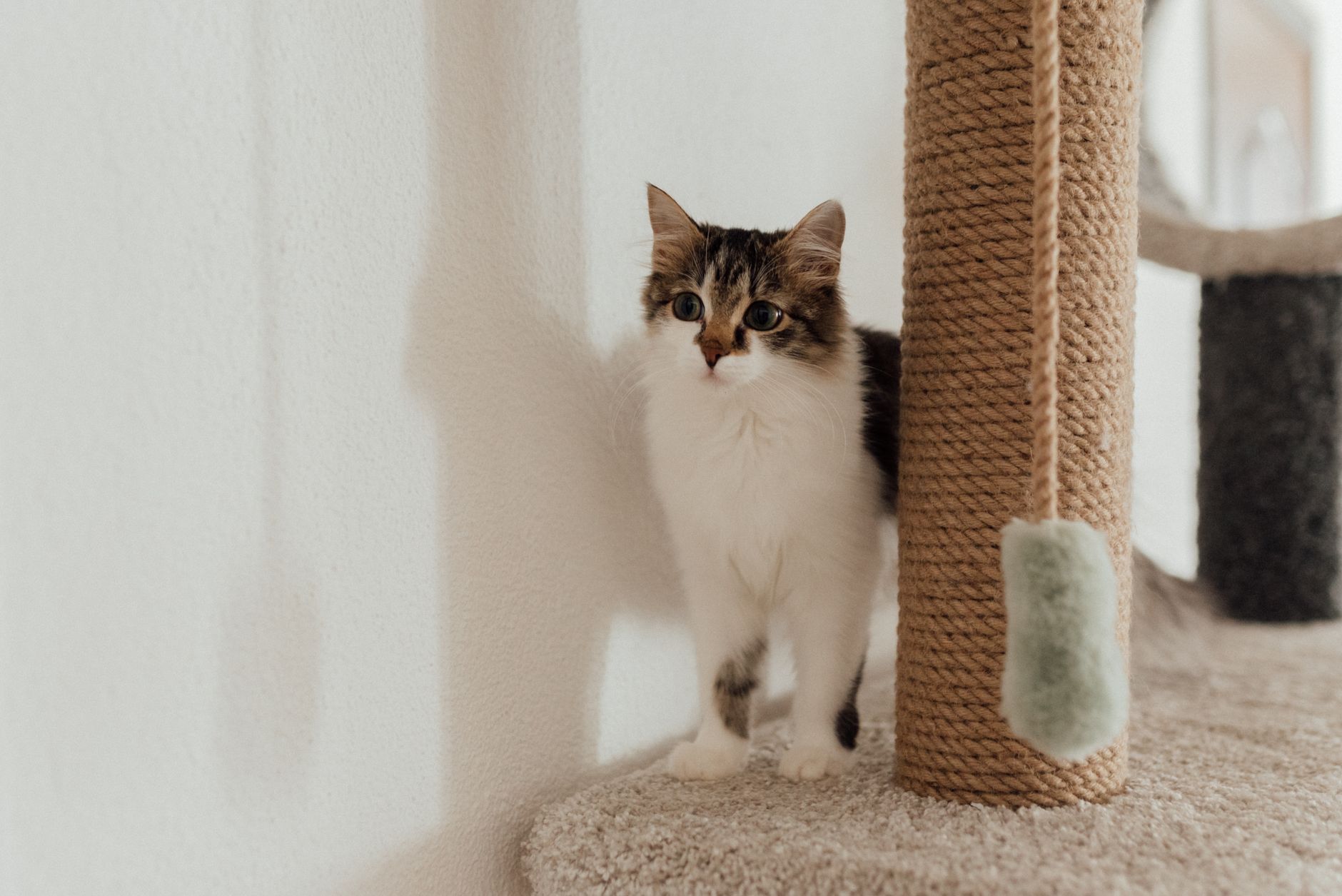
Sisal rope lasts longer than cardboard for cat scratching. Sisal rope, a coarse plant fiber wound tightly around a post, holds together for months while corrugated cardboard shreds in weeks. Gabhan Pets reports in its scratcher buying guide that sisal rope lasts 6–12 months, loose cardboard 2–4 weeks, and dense board 3–6 months. Wear runs faster with more cats, harder scratching, and lighter construction.
Table of Contents
- Why does sisal stand up to claws?
- How does wear look day to day?
- Which surface will your cat actually use?
- How should you combine both at home?
Why does sisal stand up to claws?
The Discover Natural Fibres Initiative explains in its sisal fibre profile that sisal from Agave sisalana is coarse, hard, strong, stretchable, and moisture-resistant. Those traits help wound strands absorb repeated claw pulls without tearing like paper board.
On a post, claws catch and release between fibers instead of slicing through. Rope frays slowly at high-use spots before it fails. Cardboard crushes and sheds flakes with each rake, so its surface thins fast.
How does wear look day to day?
A sisal post first looks fuzzy, then shows loose strands and bare patches. Scratching still works while the winding stays tight to the core. Replace it when strands hang, the wrap gaps, or the post wobbles.
Cardboard starts pilling, then forms deep grooves and piles of confetti. Cats often keep using a grooved pad because the edge grips claws. Swap or flip the pad once pieces break off daily or the surface caves.
Which surface will your cat actually use?
Cornell's Feline Health Center advises in its destructive-behavior guide matching the scratcher to the habit. For cats that shred couches and nubby fabrics, choose sisal or a rope-like covering. For horizontal carpet scratchers, offer a flat cardboard box or sideways log. In a UC Davis-linked owner survey published in the Journal of Feline Medicine and Surgery via PubMed Central, carpet was the most commonly offered surface.
Cats most often used rope or sisal when rope was available. Watch where your cat already scratches. Vertical couch rakes point to a tall sisal post. Floor-level carpet pulls point to a low cardboard scratcher.
How should you combine both at home?
Use sisal for the main workout post and cardboard for variety. A tall, heavy vertical post takes daily stretching and claw shedding.
A low horizontal pad gives cats a second approved spot. Check the post base for wobble each month and tighten or replace loose wrapping promptly. Flip or replace cardboard once grooves deepen and crumbs spread daily.
- Place the sisal post beside the couch or chair your cat already rakes.
- Set a cardboard scratcher where your cat paws carpet.
- Anchor both so neither slides or tips.