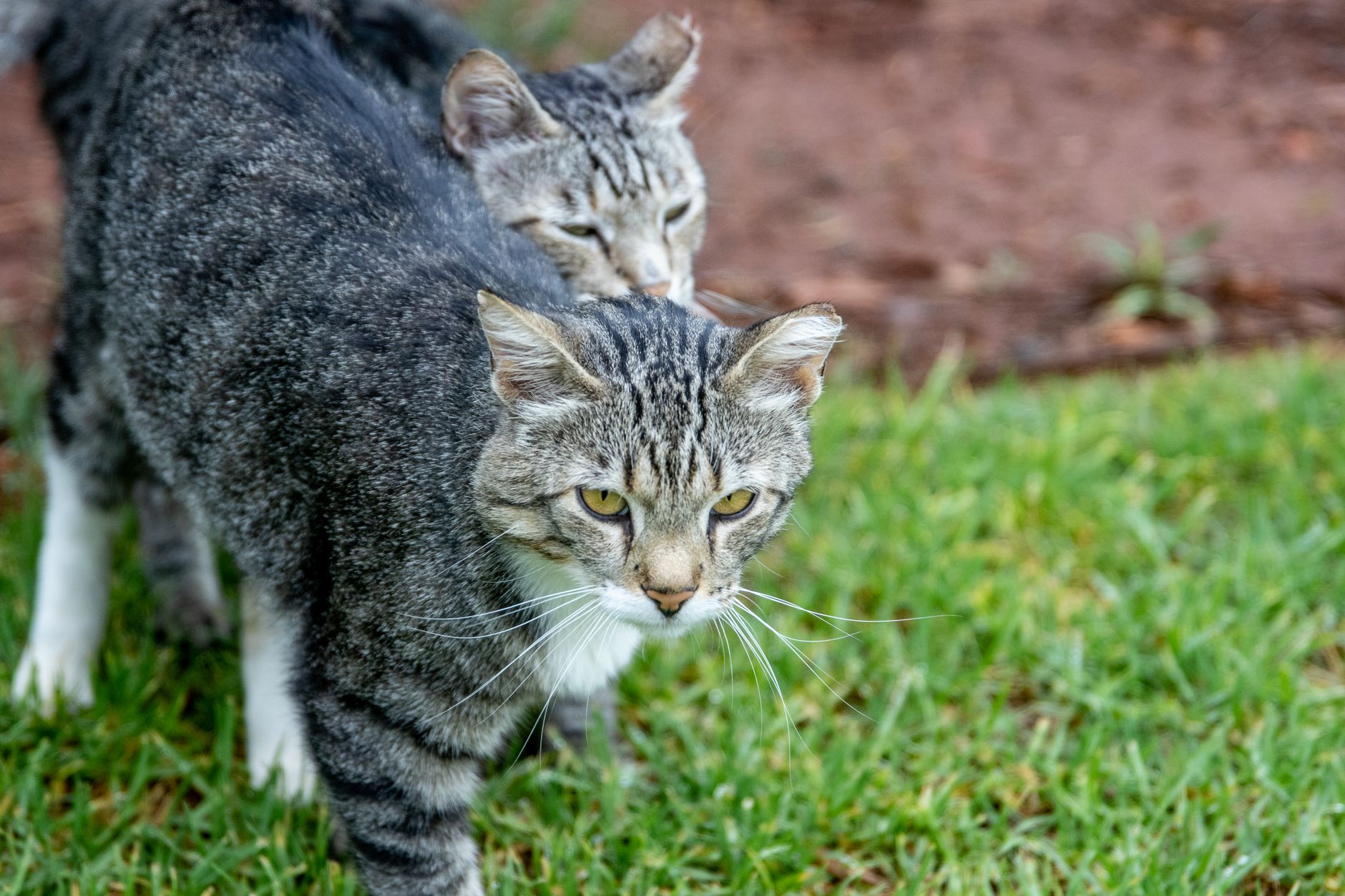
Hawai'i County law makes it unlawful to feed, or attempt to feed, feral and stray animals — including cats — on any property owned, leased, rented, managed or operated by the County of Hawai'i. The rule took effect Jan. 1, 2026, and carries a fine of up to $50 for a first offense and up to $500 for each offense after that.
Feeding a stray cat on your own private property is still legal on Hawai'i Island. The ban applies to county land: parks, beaches, and county facilities across the island. If you care for a colony that lives on one of those sites, the law now applies to you, and there is no caretaker exemption to apply for.
Table of Contents
- What the ordinance actually covers
- How it passed, and what was cut from it
- Does this outlaw trap-neuter-return?
- Why the county passed it
- A separate state rule already applied at harbors
- What a caretaker can do now
- Frequently Asked Questions
What the ordinance actually covers
The measure began as Bill 51 and was enacted as Ordinance 25-63. According to the American Bird Conservancy's account of the bill's passage, it prohibits feeding or attempting to feed feral and stray animals on property the county owns, leases, rents, manages or operates. "Attempting to feed" matters.
Setting out a bowl, leaving dry food under a bench, or putting down a feeding station can fall under the prohibition even if no animal eats from it. The ban is not written for cats alone. Hawai'i Public Radio reported that it reaches feral cats, pigs, chickens and goats on county parks, beaches and facilities island-wide. The rule sits in Hawai'i County Code Chapter 4 (Animals), the same chapter that gives animal control officers authority to seize and impound dogs, cats and domesticated animals.
How it passed, and what was cut from it
The Hawai'i County Council passed the measure 6-2 on Aug. 6, 2025, following a first reading in late July, as the Hawaii Tribune-Herald reported. Enforcement began with the new year. An earlier draft would have created a pilot managed-cat program, letting certified caretakers feed at approved county sites.
The council removed that provision before final passage. The law as enacted has no caretaker carve-out and no trap-neuter-return exemption. That deletion is the single most important detail for anyone running a colony. A registered, organized, well-managed feeding operation on county land has the same legal status under this ordinance as a stranger tossing kibble at a beach park.
Does this outlaw trap-neuter-return?
No. Trap-neuter-return — trapping free-roaming cats, sterilizing them, and returning them to their territory — remains legal in Hawai'i County. Hawai'i Public Radio noted that because the ordinance reaches only county land, feeding on private property stays legal and TNR itself is not banned.
What the ordinance removes is the feeding step on county property, which is how most TNR programs maintain a colony and keep cats trappable for follow-up care. Sterilizing a cat is still permitted; provisioning it at a county park is not. Practically, that pushes colony work onto private land. A caretaker who can secure a private property owner's permission can continue a full TNR-and-feed operation there without running into this ordinance.
Why the county passed it
Supporters, including bird-conservation groups, backed the ban as a native-species measure. The American Bird Conservancy cited protection of endangered birds such as the nēnē — the Hawaiian goose, the state bird — from cat predation, and from toxoplasmosis, a parasitic disease spread through cat feces that also affects native wildlife.
That framing explains the scope. A ban aimed at wildlife protection naturally targets the public lands where native species and introduced predators overlap most: beaches, parks and shoreline facilities.
A separate state rule already applied at harbors
County law is not the only restriction on Hawai'i Island. A state administrative rule, HAR §13-232-57.1, effective Dec. 31, 2018, bars feeding colonies, strays, wildlife or feral animals on any property under the jurisdiction of the Division of Boating and Ocean Recreation — small-boat harbors and launch ramps.
The text of that rule exempts only bait or chum used for fishing. So a harbor colony was already covered by state rule years before the county ordinance arrived. Checking which agency controls a given site matters, because the two rules come with different enforcement bodies and different penalties.
What a caretaker can do now
The honest limitation is that the ordinance does not describe what happens to the cats. County Animal Control administrator Matthew Runnells argued that the ban does not solve the underlying problem, since populations simply relocate when feeding stops, and the ordinance does not specify who removes the animals or how officers will enforce it, per KHON2's coverage of the vote.
The practical burden falls on caretakers: a colony on county land has to be relocated or fed somewhere else. Steps worth taking if you currently feed on or near county property: A single first-offense citation costs less than one spay surgery, which makes the fine a poor deterrent on its own — but repeat citations at $500 apiece add up faster than most volunteer colony budgets can absorb.
- Confirm who owns the site. County park, state harbor, state park and private land are four different legal situations.
- Stop feeding on county land. First offense is up to $50; each one after that is up to $500, and the fines are per offense, not per colony.
- Ask nearby private owners for written permission to relocate feeding stations off county ground.
- Keep sterilizing. TNR is untouched by this ordinance, and a sterilized colony shrinks rather than replaces itself.
- Move feeding gradually and at a set time each day, so the cats shift to the new location rather than scattering.
Frequently Asked Questions
Can I feed a stray cat in my own yard in Hawai'i County?
Yes. The ordinance applies only to property owned, leased, rented, managed or operated by the county, so private property is not covered.
Is there a permit or registration that lets me keep feeding at a park?
No. The pilot program for certified caretakers at approved county sites was stripped out of the bill before the council's final vote.
What are the penalties?
Up to $50 for a first offense and up to $500 for each subsequent offense, as reported by the Honolulu Star-Advertiser's coverage of the council vote.
Does the ban cover animals other than cats?
Yes. It applies to feral and stray animals generally, including pigs, chickens and goats on county parks, beaches and facilities.