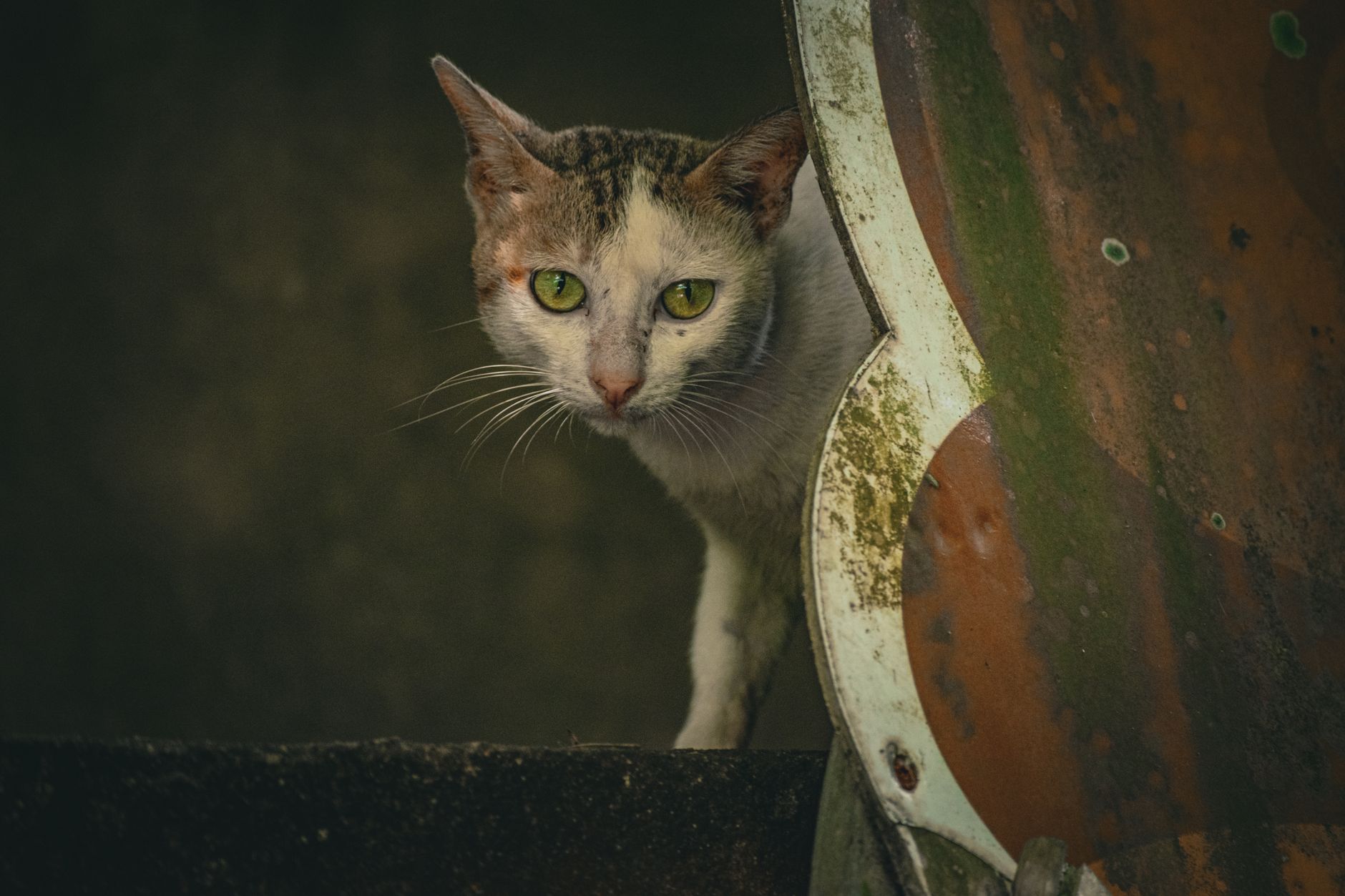
Stray and feral cats hide under cars in winter because the space is warm, dry, and sheltered from wind, snow, and predators. A car that has recently been running is the warmest thing on most streets, and the engine bay above the front wheels holds that heat for hours after the driver walks away. The behavior makes sense for the cat and is dangerous for the same reason. The Kentucky Humane Society notes that community cats seek the residual warmth of a recently switched-off engine, and that a cat resting against the engine can be injured or killed by the fan belt the moment the key turns.
Table of Contents
- What a parked car offers that a yard does not
- The fan belt injury, and what it looks like
- The 10-second check before you turn the key
- Antifreeze is the second hazard under the same car
- Give them a better option than the engine bay
- Frequently Asked Questions
What a parked car offers that a yard does not
A car gives a cat four things at once: a roof, a windbreak, a dry surface, and a heat source. Shrubs and porches offer one or two of those. A car parked on a driveway after a commute offers all four. Heat is the decisive factor.
An engine block, exhaust system, and transmission stay warm long after shutdown, and the sheet metal above traps that warmth near the wheel wells and the top of the engine bay. A cat does not need the heat of a running car — the residual warmth of one driven an hour ago is enough. The underside also sits low and enclosed, which matters as much as temperature. A cat under a car can see out in every direction while being hard to reach, so it reads as a defensible spot rather than a trap. Unowned cats, which have no indoor option at all, use these places most.
The fan belt injury, and what it looks like
The serious risk is not the cat being run over. It is the cat sleeping on or beside the engine when the engine starts. Belts and the cooling fan spin up instantly and at speed, and a limb resting against them is pulled in before the cat can move. The PDSA documented one named case in detail. Saffy, a former stray in Bradford, climbed under a neighbour's bonnet for warmth in early November 2019; when the engine was started, her leg caught in the fan belt and severed her thigh bone.
The team at the Bradford PDSA Pet Hospital amputated the leg. The charity says such accidents are not unusual across the colder months. Two details from that case are worth carrying forward. The car belonged to a neighbour, not to Saffy's household — a cat will use any warm car on the street. And the cat was a former stray, the group least likely to have an indoor alternative on a cold night.
The 10-second check before you turn the key
Both the ASPCA and Alley Cat Allies recommend the same habit, and it costs almost nothing. The ASPCA advises banging loudly on the hood of the car before starting the engine so a hidden cat has a chance to get out.
Run through this before every cold-weather start: Alley Cat Allies frames it the same way in its cold weather tips: look between the tires and tap the hood, because cats hide underneath or inside the engine compartment. A noise that moves the car slightly is more effective than a quiet look, since a sleeping cat may not react to being seen.
- Tap or bang the hood firmly a few times, then pause and listen.
- Look between the front tires and under the car for eyes or a tail.
- Check inside the wheel arches, which the PDSA calls out specifically.
- Pay extra attention if the car has been driven in the last few hours and the engine may still be warm.
- Walk a full circle around the car if you park where community cats are known to live.
Antifreeze is the second hazard under the same car
A parked car creates a poisoning risk as well as a mechanical one. Antifreeze leaks and spills collect under and around vehicles, and ethylene glycol — the active ingredient in most conventional coolants — tastes sweet and is swallowed readily. Cats are far more vulnerable than dogs to the same spill. The Merck Veterinary Manual gives the minimum lethal dose of undiluted ethylene glycol as 1.4 mL/kg in cats against 4.4 to 6.6 mL/kg in dogs, and its pet-owner page puts the lethal amount for a cat at roughly one to two teaspoons.
That is a volume a cat can take from a driveway puddle. The ASPCA calls antifreeze lethal to both dogs and cats and asks people to clean up spills thoroughly and to choose products containing propylene glycol instead of ethylene glycol. If you suspect a cat has swallowed any, the ASPCA Animal Poison Control line is (888) 426-4435. Treatment depends on speed, so call before symptoms appear rather than after.
Give them a better option than the engine bay
The lasting fix is a shelter that beats a car on every dimension the car is winning on. Alley Cat Allies recommends an outdoor shelter roughly two feet by three feet and at least 18 inches high, kept deliberately small so the cats' own body heat warms the interior. Insulation choice is where people most often go wrong. Straw repels moisture; hay and blankets absorb it and turn cold and damp.
Use straw, and clear snow away from the entrance after a storm so the shelter stays usable. Food and water matter alongside shelter. Cold weather raises a cat's energy needs, and wet food freezes in subfreezing temperatures, so put out dry food and liquid water. Absent illness or injury, Alley Cat Allies says leaving community cats outdoors — with shelter, food, and water — is the best way to protect them, rather than bringing a feral adult cat indoors.
Frequently Asked Questions
Does banging on the hood actually work if the cat is asleep?
The point is the vibration and noise together, which travel through the metal the cat is resting on. Bang firmly, then pause and listen before starting the engine — a quiet visual check can miss a cat tucked against the block.
Is a cat under the car safer than one inside the engine compartment?
Both are risky, but the engine bay is where the fan belt injuries happen. A cat underneath can still be struck as the car moves off, so check between the tires and in the wheel arches as well as tapping the hood.
Should I bring a stray cat that is hiding under my car indoors?
Alley Cat Allies advises that absent illness or injury, community cats are best left outdoors with shelter, food, and water. A truly feral adult rarely adjusts to being confined, and a straw-insulated shelter removes the reason it chose your car.