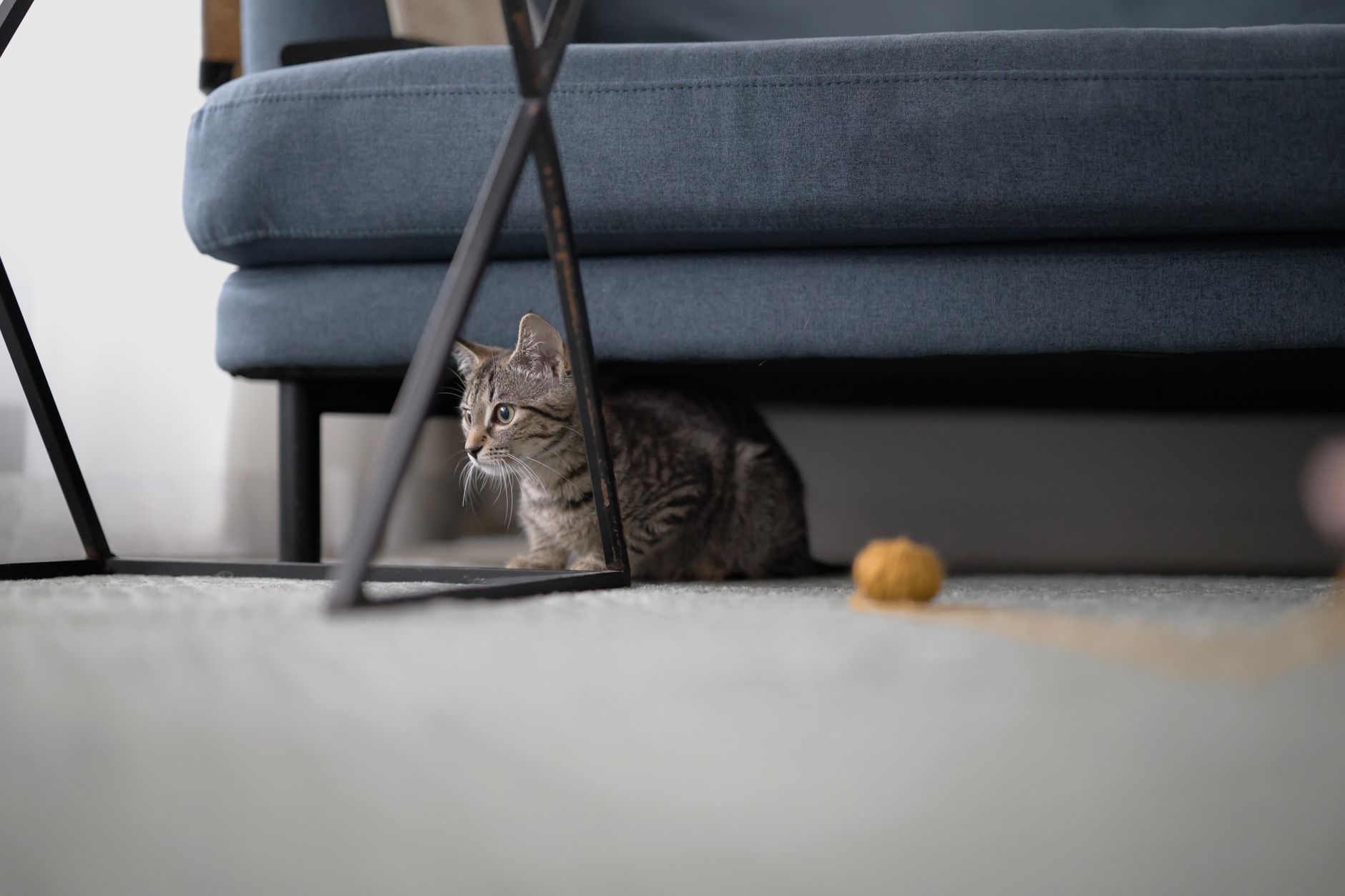
Your cat hides in the Christmas decorations box because it feels warm, enclosed, and safe. The walls block holiday noise and activity while leaving one opening to watch from. Unpacking brings new smells, textures, rustling material, and close human attention. When guests arrive and routines change, that same novel box becomes a quiet retreat.
Table of Contents
- Why a small box feels safe
- Why warmth matters
- Why holiday boxes are extra tempting
- How to offer a safer box
- When hiding needs attention
Why a small box feels safe
Cats act as both predator and prey, so open rooms demand constant scanning. VCA Animal Hospitals explains in its guide to odd sleeping spots that walls behind the body and one entrance to watch lowers that vigilance load.
As ambush hunters, cats also like cover that hides the body while leaving movement visible. Shelter cats given a hiding box adjusted sooner and showed faster stress reduction in a 2014 Utrecht University study, as reported by Phys.org in its report on hiding boxes and stress.
Why warmth matters
Cats prefer sustained warmth because their thermoneutral zone is about 86-97°F. That range means the temperature where a cat does not need extra energy to stay warm.
Corrugated cardboard traps body heat, so an empty decorations box holds warmth better than the floor or tree skirt. Phys.org reports that heat-trapping effect in its report on hiding boxes and stress.
Why holiday boxes are extra tempting
A decorations box combines novelty, rough cardboard texture, tissue paper, and your attention during unpacking. Curious cats climb in to sniff, scratch, paw at ribbon, and settle where you are working.
The holidays then add noise, visitors, lights, scents, and broken routines. A familiar box in a busy living room offers a retreat within the action, not full isolation.
How to offer a safer box
Keep the decorations box for fragile items and give your cat a separate den. Remove tape, staples, handles, ribbon, scented packing, and loose plastic. Place it away from ornaments, light cords, and tree water.
- Choose a sturdy, empty cardboard box just larger than the curled cat.
- Cut one cat-sized doorway and leave the other sides high.
- Add a washable blanket or old sweater for insulation.
- Set it in a quiet corner with a view of the room.
- Keep tinsel, glass ornaments, and cords out of reach.
When hiding needs attention
Holiday hazards deserve separate care from normal box preference. Cornell veterinarians advise anchoring the tree against tipping, including tying it to a ceiling hook with wire or string, according to the university's holiday hazard guidance.
The ASPCA warns in its holiday safety tips that swallowed tinsel can cause severe vomiting, intestinal obstruction, dehydration, and surgery. Watch for a sudden rise in hiding with less eating, lethargy, or litter-box changes, which can signal pain or illness and warrants veterinary examination. Place the safe box in a calm spot before you open the decorations.