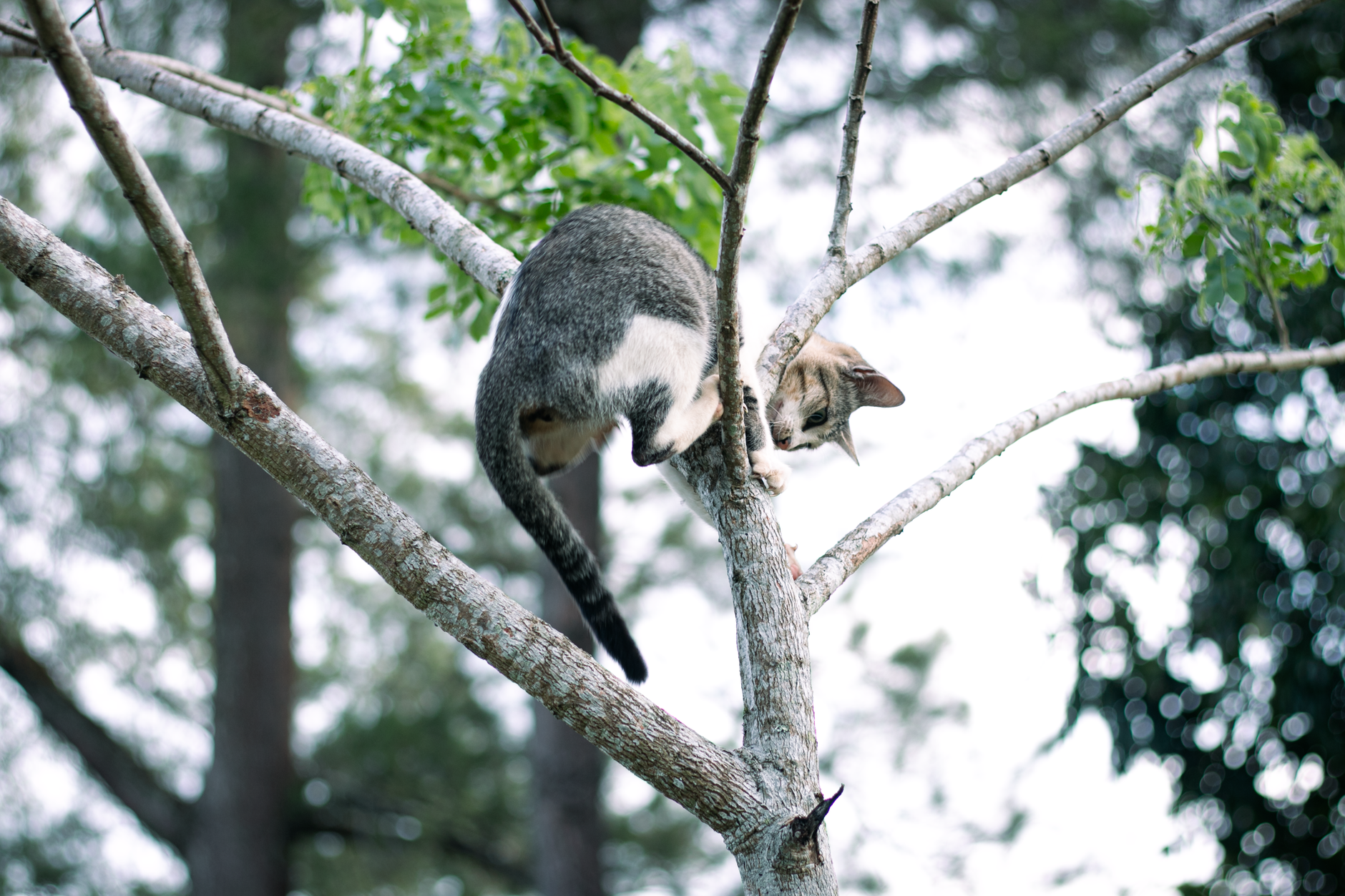
Cats climb Christmas trees because the tree hits several strong instincts at once: a large new object to inspect, height for safety, bark for scratching, and shiny moving decorations that look like prey. December simply places that combination inside a familiar living room. A tree also brings outdoor smells indoors. That novelty draws investigation first, then climbing, scratching, hiding and play often follow.
Table of Contents
- Why does a new tree attract immediate attention?
- What makes ornaments hard to resist?
- Will the cat get hurt or cause damage?
- How can owners reduce the risk?
Why does a new tree attract immediate attention?
UC Davis cat researcher Mikel Delgado reports cats intensely investigate any large new object in familiar territory, and a Christmas tree adds attractive outdoor smells plus bark that invites claw-sharpening, according to the dvm360 explainer on feline tree attraction. A cat may sniff the trunk, rub its face along branches and test the bark within minutes.
Veterinarian Lorna Whittemore explains domestic cats retain a climbing instinct to gain height, survey surroundings and avoid predators. An indoor tree offers a ready vantage point, meaning a high spot for watching safely. Its lower branches also create a hiding place for rest or ambush.
What makes ornaments hard to resist?
Reflective ornaments, glistening tinsel and accessible branches trigger play because movement and shine mimic prey and toys. A swaying bauble acts like a small animal shifting in grass. A light flicker can prompt a quick paw strike.
University of Melbourne veterinarian Leonie Richards says shiny balls, lights, strings of tinsel and baubles invite batting by little paws, especially kittens and younger cats, acting like one big playpen, according to the University of Melbourne Pursuit article on feline tree obsession. Kittens often test more objects with mouth and paws. Older cats may watch longer, then choose one branch or ornament.
Will the cat get hurt or cause damage?
Richards says cats plus decorations reliably cause mayhem, but serious self-injury from the chaos itself is unlikely. The most common result is mess and damage to the tree, not the cat. Expect knocked ornaments, bent branches and scattered needles.
Ingestion is the separate concern. The ASPCA warns swallowed tinsel can cause severe vomiting, blocked digestive tract and dehydration requiring surgery, while tree water breeds bacteria causing nausea and diarrhea, according to the ASPCA holiday safety tips. In multi-cat homes, cats may also converge on the tree to claim territory by climbing, scratching and urinating. That competition raises the risk of feline injury and home damage.
How can owners reduce the risk?
VCA Animal Hospitals says ingested tinsel, ribbon or twine can lodge in intestines as a linear foreign body, meaning a string-like object that catches and cuts tissue, needing costly invasive surgery, according to the VCA holiday hazards guide for cat owners. Prevention focuses on removing swallowable items and making the tree stable and less rewarding.
Give climbing cats an approved tall perch nearby. Satisfy scratching needs with a stable post before the tree becomes the preferred option.
- Anchor the tree with a sturdy stand and wall support.
- Cover the water reservoir, electrical cords and outlets.
- Skip tinsel, ribbon garlands and easily chewed small ornaments.
- Place the tree in a room that can be closed when cats are unsupervised.