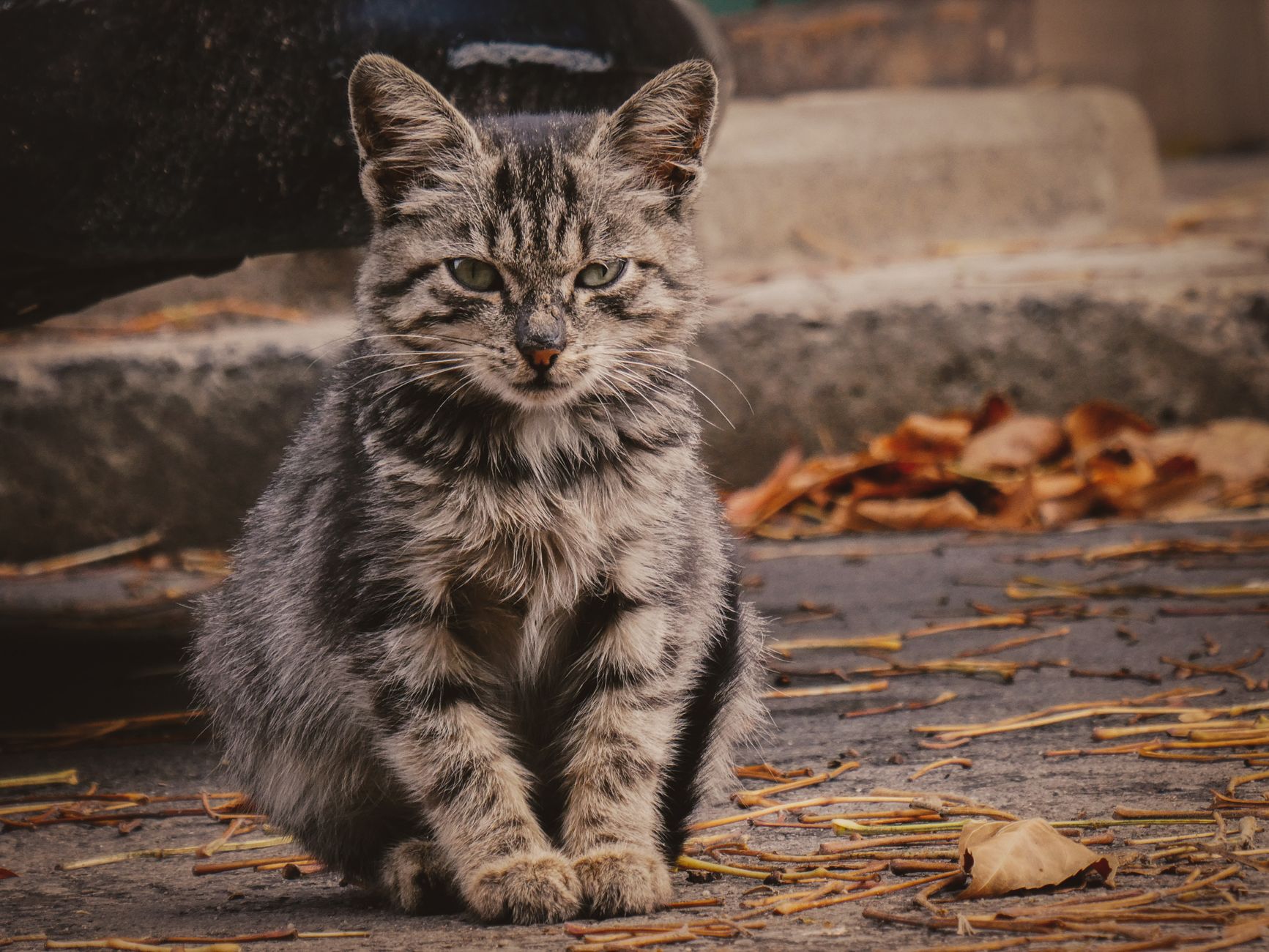
Stray cats slip into garages in cold weather because a garage is one of the warmest, driest, most sheltered spaces available to them — and a car that was driven recently is warmer still. Cats are built to seek heat: the National Research Council puts the thermoneutral zone for domestic cats at roughly 30–38°C (86–100°F), the range in which a cat holds its body temperature without burning extra calories, which the American Veterinary Society of Animal Behavior summarizes in its discussion of keeping cats warm. A cat standing in freezing air is far below that range and is spending energy every minute it stays there.
That makes an attached garage, a warm engine bay, or the space under a parked car a rational choice rather than mischief. It also puts the cat inside two hazards it cannot evaluate: a starting engine and an open container of antifreeze. Knowing why the cat is there tells you what to check before you turn a key, and what to change so it stops happening.
Table of Contents
- The heat math behind the behavior
- Why the car itself is the dangerous part
- The poison a garage adds
- Give the cat somewhere better to be
- How cold is too cold, and what to watch for
- Frequently Asked Questions
The heat math behind the behavior
A cat's comfort range starts near 86°F. Outdoor air in winter is nowhere close, so an unsheltered cat is running a constant deficit — raising its metabolic rate to generate heat it keeps losing through its skin, paws, and breath. Thin, old, very young, or short-coated cats lose that contest fastest.
A garage changes the equation in three ways at once. It blocks wind, which strips heat far faster than still air of the same temperature; it blocks rain and snow, and wet fur insulates badly; and it retains heat from the house, the water heater, and recently parked vehicles. An engine that has been running holds warmth for hours after shutdown. To a cold stray, a warm engine bay is the single best spot on the property: enclosed on all sides, elevated off cold concrete, and radiating heat from above and below.
Why the car itself is the dangerous part
The animals found in engine compartments are mostly strays, and mother cats sometimes move entire litters of kittens into them — the Humane Society of Tampa Bay made that point in a warning about checking under car hoods. A kitten in an engine bay cannot get out quickly, and often cannot get out at all. The ASPCA's cold weather safety guidance tells drivers to bang loudly on the hood before starting the engine in winter, because a fan belt can injure or kill a cat sheltering there.
The American Veterinary Medical Association's cold weather animal safety page adds two steps: look underneath the vehicle, and honk the horn before you start it. This is a documented hazard, not a theoretical one. The ASPCA published the case of a kitten that survived a ride under a car hood in freezing temperatures, and ABC7 Chicago reported on a cat that nearly died after getting tangled in a truck engine. Thirty seconds of checking covers it:.
- Bang hard on the hood two or three times and wait a moment.
- Honk the horn once.
- Look under the vehicle and around both front wheels.
- If you hear anything, open the hood before starting the engine.
The poison a garage adds
Engines are a crushing risk. Garages add a chemical one. Ethylene glycol antifreeze is extraordinarily toxic to cats: the Merck Veterinary Manual's professional overview of ethylene glycol toxicity gives the minimum lethal dose of the undiluted product as 1.4 mL/kg, against 4.4–6.6 mL/kg for dogs — roughly a teaspoon for an average cat. The ASPCA warns that ethylene glycol tastes sweet to animals, which is why a cat will drink a puddle it has no reason to touch.
Its recommendations are practical: clean spills thoroughly rather than letting them dry, and switch to coolant based on propylene glycol, which is substantially less toxic. Treat windshield washer fluid, de-icers, and brake fluid the same way. Store them closed and off the floor, and wipe the concrete under a car that has been leaking. A garage a cat can enter is a garage where every spill is a drinking bowl.
Give the cat somewhere better to be
The reliable fix is not sealing the garage harder — it is offering a warmer option a few feet away. The Kentucky Humane Society says outdoor winter shelters built from Styrofoam bins lined with straw keep cats out of engine compartments in the first place. A cat that has a dry, body-heat-trapping box will choose it over a cooling engine. The bedding choice decides whether the shelter works.
Alley Cat Allies is specific: use straw, never hay, towels, or blankets. Straw repels moisture and lets a cat burrow into it; absorbent bedding soaks up damp and leaves the inside frigid after rain or snow. Hay also molds. A few details make the difference between a used shelter and an ignored one:.
- Elevate it off the ground so cold and wet do not conduct straight through the floor.
- Weight it down, or wind will move it and the cat will stop trusting it.
- Keep the entrance clear of snow after every storm.
- Site it away from the driveway, so the warm spot and the moving vehicle are not the same place.
How cold is too cold, and what to watch for
No major organization publishes a hard outdoor temperature cutoff for cats. The ASPCA's position is a rule of thumb: conditions too cold for you are too cold for a pet. That is deliberately imprecise, because wind, damp, body condition, coat, age, and available shelter all shift the real answer for an individual cat. Veterinary hypothermia bands also vary by source.
PetMD's reference on hypothermia in cats describes mild hypothermia at a body temperature of roughly 90–99°F and severe hypothermia below about 82°F — measurements of the cat, not the weather, and not something you can judge by eye. What you can act on is behavior. A stray that is shivering, lethargic, unsteady, or unwilling to move away from a heat source is in trouble, and so is one that feels cold to the touch at the ears and paws. Kittens found in an engine bay need a veterinarian or a local rescue group regardless of how alert they look, because crush and burn injuries are not always visible. Contact your municipal animal services or a local TNR group — they can also tell you whether the cats in your garage are an established colony someone is already feeding.
Frequently Asked Questions
Should I just block the garage so cats cannot get in?
Sealing it without providing an alternative pushes the cat to the next-warmest spot, which is often under or inside a parked car. Close the gaps and put a straw-lined shelter nearby at the same time.
Is it safe to leave food and water in the garage for a stray?
Feeding inside a garage trains the cat to enter the space where the engine and the coolant are. Place food and water outside, near the shelter and away from the driveway, so the cat's habitual route avoids vehicles.
Why did the cat choose my garage and not my neighbor's?
Usually access plus retained heat: a gap under the door, a cat flap, or a door left ajar, combined with a recently parked car, a water heater, or a shared wall with the house.