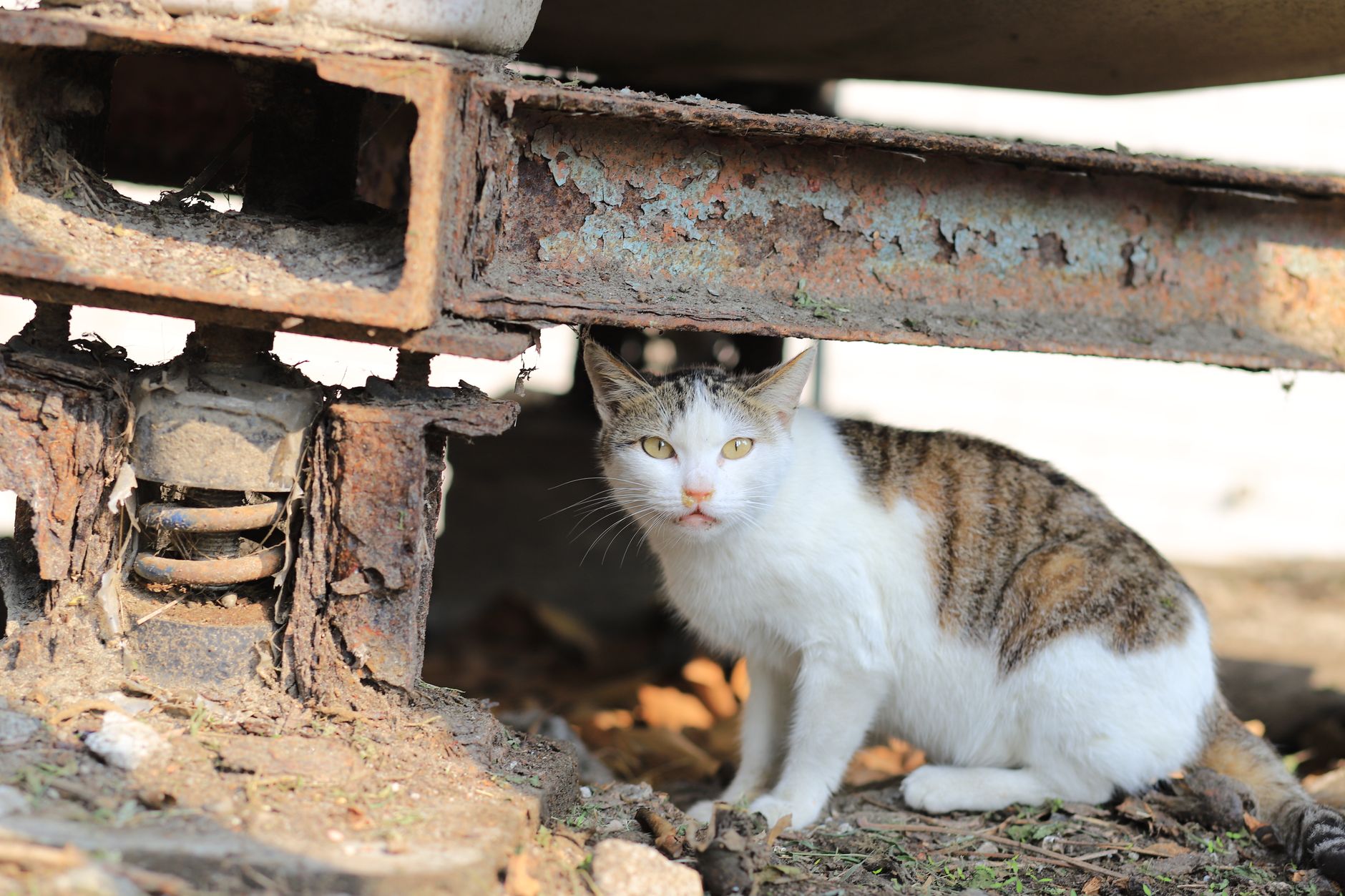
Videos capturing cats caring for animals outside their species reveal a genuine and underexplored aspect of feline behavior: maternal instinct that extends far beyond biological boundaries. While such videos capture hearts online, they reflect real neurological and behavioral mechanisms in cats that researchers and veterinarians have documented across multiple species combinations. These moments are not aberrations but expressions of the complex social and nurturing capacities that domestic cats possess, shaped by domestication, hormones, and individual personality.
The touching image of a cat nurturing a primate infant demonstrates that feline maternal behavior is not rigidly programmed to reject non-kittens. Cats experiencing high levels of oxytocin—the bonding hormone—and exposed to young animals in vulnerable states can activate deep caregiving responses. The cat in such scenarios isn’t confused or acting against nature; it’s expressing maternal behaviors that evolution has wired into many mammalian species as a strategy for genetic and social survival.
Table of Contents
- What Drives Cats to Adopt and Care for Other Species?
- The Behavioral Science Behind Cross-Species Adoption in Felines
- Documented Cases of Cats Raising Other Species
- Understanding Your Cat’s Maternal and Social Instincts
- The Risks and Limitations of Cross-Species Caregiving
- What This Reveals About Feline Behavior and Evolution
- The Role of Individual Personality in Caregiving Behaviors
What Drives Cats to Adopt and Care for Other Species?
Maternal behavior in cats is controlled by a complex interplay of hormones, sensory cues, and learned behavior. When a cat encounters a young, vulnerable animal—particularly one that emits distress calls or exhibits helpless behaviors—the cat’s brain can interpret these signals as similar to kitten distress. Oxytocin, prolactin, and estrogen create physiological states that prime cats to respond to nurturing opportunities, regardless of whether the recipient is feline. The sensory triggers matter tremendously. Infant primates and other young animals produce high-pitched vocalizations, move in unpredictable ways, and display physical vulnerability.
These characteristics overlap significantly with kitten behaviors. A cat that has recently given birth, or whose hormonal state mimics pregnancy, is especially susceptible to these triggers. The cat’s olfactory system—extraordinarily sensitive compared to humans—may also play a role, detecting pheromones or scent markers in the infant that signal “young and vulnerable.” Personality and prior socialization amplify these tendencies. Cats raised around diverse animals, or those with naturally high social tolerance, show greater willingness to engage in cross-species caregiving. A cat that has already successfully nursed kittens has reinforced neural pathways around nurturing, making subsequent caregiving responses more readily available.
The Behavioral Science Behind Cross-Species Adoption in Felines
Domestic cats retain ancestral behaviors from their wild predecessors, but thousands of years of selective breeding have altered which behaviors are suppressed and which are amplified. Domestication has reduced the aggression thresholds that once protected wild cats from competition and predation, simultaneously increasing their capacity for affiliative behaviors with other species. This is why domestic cats show adoption and caregiving behaviors that their wild counterparts rarely display. However, a critical limitation exists: cross-species adoption works only within narrow parameters. The adopted animal must be young enough to trigger maternal responses—typically in the first weeks of life.
A larger, mobile animal that makes sudden movements or vocalizes in ways that conflict with feline expectations can trigger predatory or defensive responses instead. An infant primate, still mostly immobile and dependent on caregivers, fits the behavioral profile that activates nurturing rather than hunting responses. An adult or partially mobile primate would produce entirely different outcomes. The success of cross-species adoption also depends on the absence of competitive feeding dynamics. If both animals must compete for resources, the cat’s survival instincts override its maternal instincts. Videos of successful cross-species care typically show scenarios where the primate infant is bottle-fed separately, or food is abundant, removing the scarcity pressure that would otherwise trigger defensive behavior.
Documented Cases of Cats Raising Other Species
Veterinary literature and animal behavior research document cases of cats successfully nursing and raising rabbits, squirrels, puppies, and other small mammals. These instances consistently occur when the cat has recent maternal experience—having just weaned kittens, for instance—and when the foster animal is sufficiently young and helpless. A notable historical example involved a tabby cat in a wildlife rehabilitation center that adopted and raised a young fox kit through its most vulnerable weeks, eventually facilitating the kit’s transition to independence.
What makes these cases remarkable is not that they violate feline nature, but that they reveal its flexibility. Cats are not rigid automatons responding to feline-only cues. The maternal brain, once activated, can generalize its responses across species lines. The risk, however, is that such flexibility can work in reverse: a cat might fail to recognize an adopted animal as “something to nurture” if the animal’s behaviors diverge too far from expected patterns, potentially leading to injury or rejection.
Understanding Your Cat’s Maternal and Social Instincts
If you own a cat and observe caregiving behaviors directed toward other animals, this is worth monitoring but not necessarily intervening. A cat engaging in grooming, gentle play, or protective behaviors toward another creature is displaying a facet of its personality that, under controlled conditions, poses no harm. However, the human responsibility intensifies when facilitating such relationships. The primary trade-off is safety versus enrichment.
Allowing a cat to engage in nurturing behaviors toward appropriate animals can provide cognitive and emotional enrichment—cats thrive when they have purposeful roles and social connections. However, this must occur only under direct supervision and with animals whose behavior and size are compatible with feline safety. A dog puppy, for instance, could accidentally crush a nursing cat’s tail or disrupt the caregiving dynamic in ways that injure both animals. An infant primate in a cat’s care would require veterinary oversight to ensure the cat’s grooming doesn’t cause accidental injury and that nutritional needs are met separately from whatever maternal behaviors the cat provides.
The Risks and Limitations of Cross-Species Caregiving
One significant warning: cross-species adoption should never replace appropriate species-specific care. An infant primate cannot genuinely be raised by a cat to maturity. The cat can provide warmth, comfort, and the psychological benefits of physical contact, but the primate’s nutritional, developmental, and behavioral needs far exceed what any cat can supply. Videos showing such relationships are almost universally captured in settings where professional human caregivers provide the actual nutrition and medical care.
Additionally, cats can transmit feline-specific parasites or pathogens to other species, and vice versa. A cat nursing a wild animal or an animal from outside its own household introduces disease vectors that could harm both the cat and the foster animal. Veterinary consultation is essential before facilitating any cross-species caregiving arrangement. The romantic appeal of such videos often obscures the medical complexities and potential zoonotic risks that require professional oversight.
What This Reveals About Feline Behavior and Evolution
Cross-species adoption in cats illustrates how domestication has fundamentally altered behavioral responses in ways that persist even when those responses are no longer adaptive. In the wild, a cat spending energy nursing a non-feline would reduce its own reproductive success. Yet in domestic contexts—where food is provided, threats are minimal, and reproduction is often controlled through spaying or neutering—this behavior creates no evolutionary cost.
Domestic cats can therefore “afford” the behavioral flexibility that wild cats cannot. This flexibility extends to social structures more broadly. Domestic cats form attachments to humans despite profound behavioral and biological differences, demonstrate problem-solving abilities directed toward non-survival goals, and show preferences for specific individuals. Cross-species caregiving is simply an extreme expression of the social adaptability that defines the domestic cat.
The Role of Individual Personality in Caregiving Behaviors
Not all cats exhibit the same capacity or willingness to adopt other species. A cat’s individual temperament—shaped by genetics, early socialization, and life experience—determines whether cross-species nurturing is likely. Some cats are inherently aloof and show minimal interest in other animals, let alone caregiving behaviors directed toward them.
Others are highly social and responsive to young, vulnerable creatures of any species. If you observe caregiving behaviors in your own cat, this reflects that individual cat’s personality and neurological makeup. Encouraging or discouraging such behaviors depends on your circumstances, the other animals involved, and your cat’s overall well-being. A cat that expresses caregiving behaviors is not broken or confused; it is expressing one legitimate facet of feline capability.