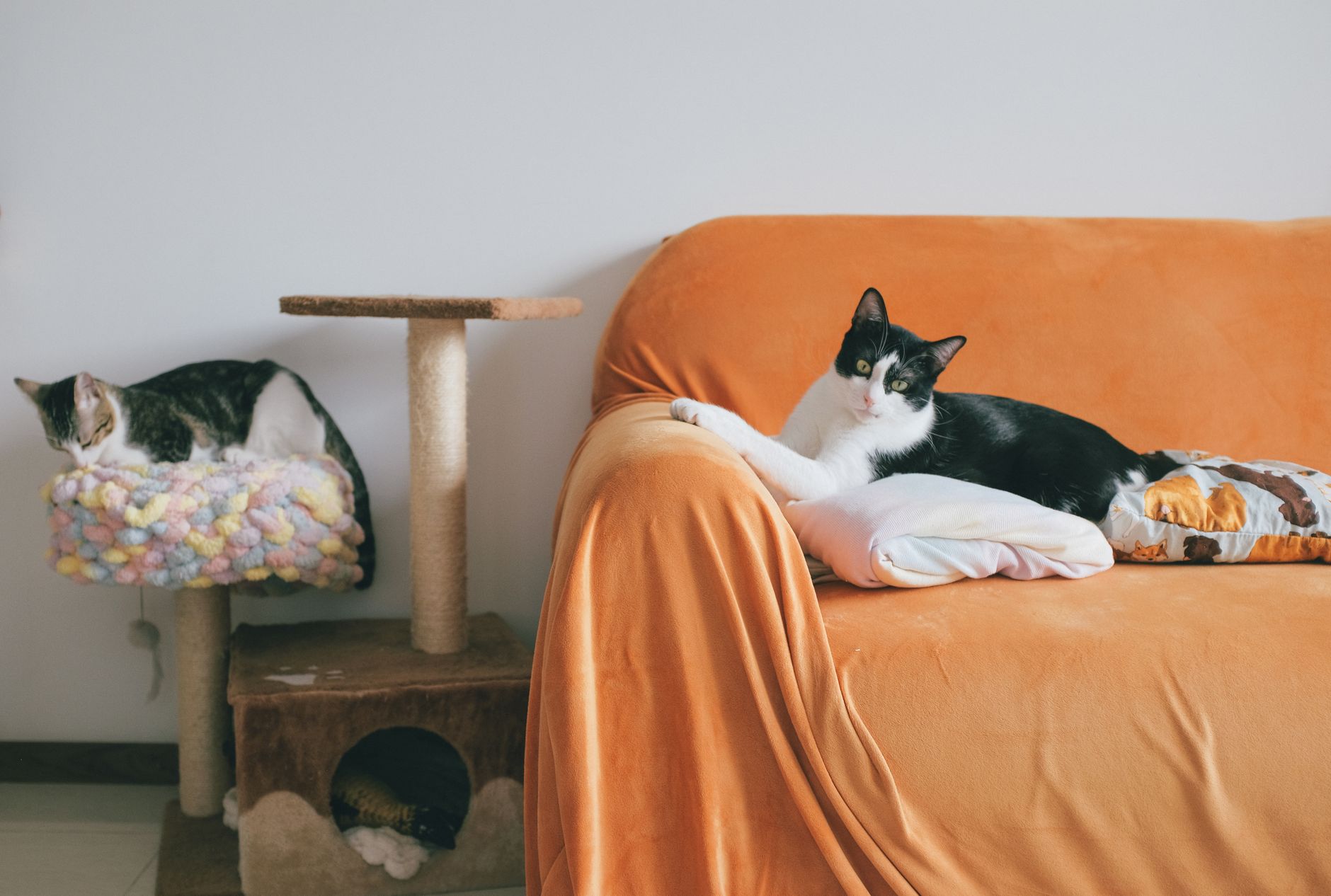
The best apartment cat trees for small living rooms are compact floor towers, floor-to-ceiling tension poles, and wall-mounted shelves. Top small-footprint picks include the furniture-style Catit Vesper V-High Base, the narrow PETEPELA tension-pole tree, the budget Feandrea 33.1-inch tower, and the low-profile Yaheetech 23.5-inch tree.
A cat tree is a standing or wall-mounted structure with perches, hiding spots, and scratching posts. For indoor apartment cats, height is a core need because an elevated area adds vertical space and lets a cat watch its surroundings, according to the AAFP and ISFM feline guidelines. In a small living room, footprint decides fit more than height because floor area is scarce while space above furniture often stays open.
Table of Contents
- Why small rooms still need vertical space
- How do you check fit before buying?
- Which floor models fit tight living rooms?
- When do wall shelves work better?
- Where should you place it?
Why small rooms still need vertical space
Cats use height for rest, observation, and retreat from noise and visitors. Apartment cats especially benefit because they cannot go outside to climb and survey. A single well-placed tower, pole, or shelf set can supply that lookout without filling the room.
Placement shapes use as much as the product itself. Mission Veterinary Clinic advises putting at least one high perch where the cat already spends time, near a secured window, with clear up-and-down routes so the cat never feels trapped, described in its apartment enrichment advice. Keep the landing path open on two sides when possible.
How do you check fit before buying?
Measure the exact spot first, including width, depth, nearby doors, and chair pull-out space. Kittenest advises that footprint matters more than height in small living rooms, so buyers should measure first, as explained in its small-apartment cat tree guide. Tape the base size on the floor and check the view from sofa height.
Also check ceiling height, wall material, and renter rules. Tension poles need enough ceiling contact, wall shelves need studs and drilling permission, and some towers need a wall strap. Confirm the cat's weight against the rated limit.
Which floor models fit tight living rooms?
The Catit Vesper V-High Base fits in about 22.1 x 22.1 inches at 47.8 inches tall. Kittenest picks it as the most living-room-friendly option because its wood-veneer cube looks like modern furniture. It suits readers who want height without a bulky carpeted tower.
The PETEPELA floor-to-ceiling tension-pole tree rises about 95-107 inches from a base of only about 17.3 x 9.4 inches. Kittenest notes that it needs no drilling, which suits a tight corner. The Feandrea 33.1-inch tower measures 23.6 x 15.7 x 33.1 inches, holds up to 15.4 lb, and includes an anti-tip wall strap, according to Feandrea product specifications. The Nested lists it as a balanced budget choice for studios and one-bedrooms.
- Catit Vesper V-High Base: about 22.1 x 22.1 inch base, 47.8 inches tall, furniture-style cube
- PETEPELA tension pole: about 17.3 x 9.4 inch base, about 95-107 inches tall, no drilling
- Feandrea 33.1-inch tower: 23.6 x 15.7 x 33.1 inches, up to 15.4 lb, wall strap included
- Yaheetech 23.5-inch tree: 16 x 16 inch base, about 11 lb per perch or condo, best beside sofa or window
When do wall shelves work better?
The NOVGOBHOT 9-piece wooden wall shelves use no floor space at all. Kittenest reports that they require drilling into studs, unlike tension poles. That makes them strong for owned walls but difficult for renters with drilling limits.
The Yaheetech 23.5-inch low-profile tree offers the opposite trade-off. The Nested reports a 16 x 16 inch base and about 11 lb per perch or condo. It tucks beside a sofa or window but does not suit heavy cats.
Where should you place it?
Start with the room your cat already favors, not an unused hallway. Put the tower or pole near a secured window with a clear jump up and a clear path down. Avoid wedging the top perch under a shelf or cabinet.
Secure the unit before inviting the cat up. Attach the included wall strap, tighten the tension pole against the ceiling, or fix shelves into studs. Test for wobble by pressing each level with your hand.