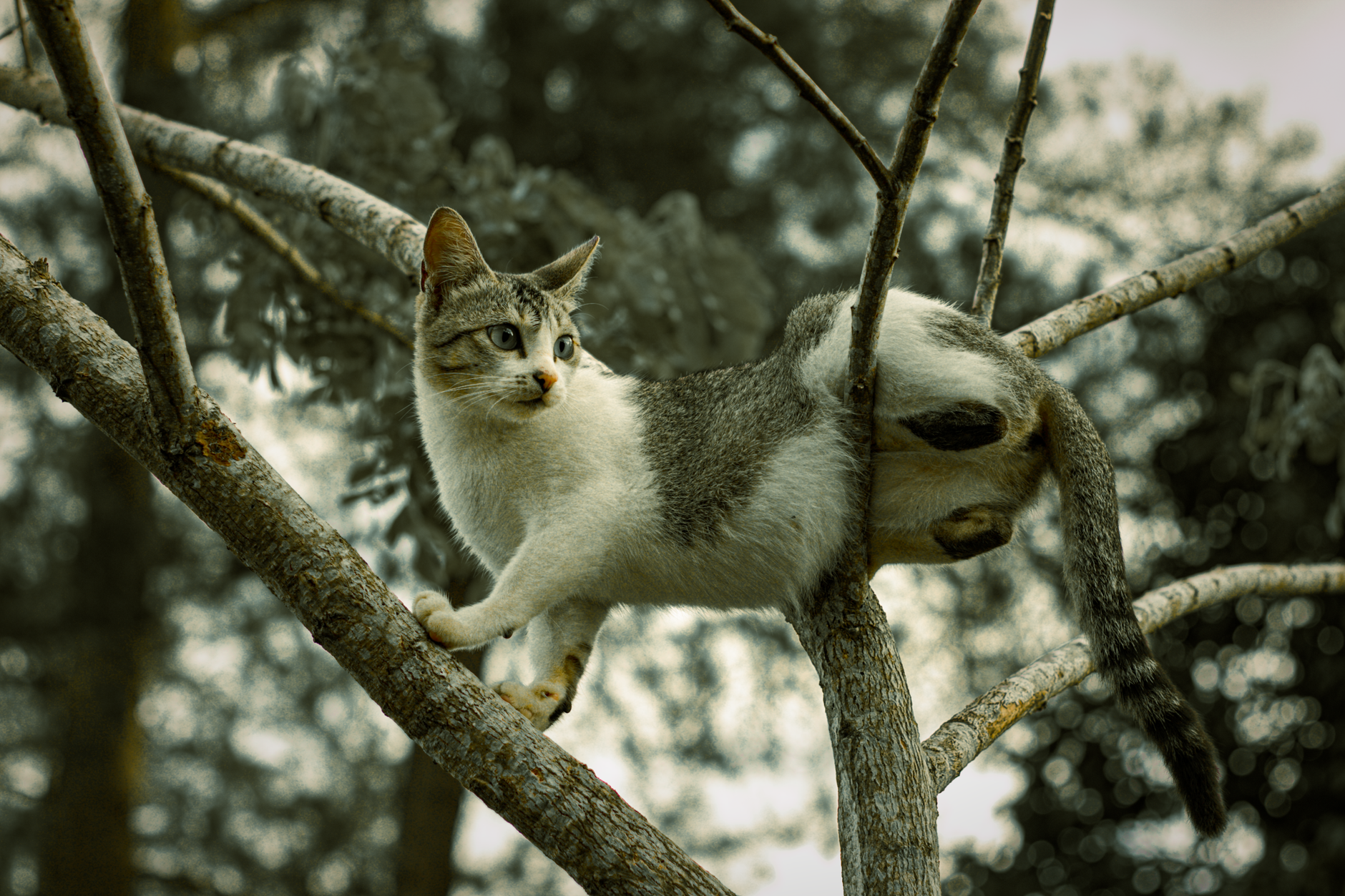
Cat climbing is a natural behavior rooted in evolutionary instinct—your cat isn't climbing for fun alone, but to satisfy survival drives that still run deep in domestic cats. This FAQ answers the most common questions about why cats climb, how to set up climbing furniture safely, what to do in multi-cat homes, and whether the popular myth about cats landing safely from any height holds up. Climbing meets multiple physical and psychological needs that keep your cat healthy and content. Without adequate vertical space, cats are more likely to develop behavioral problems and stress-related health issues, which is why veterinarians now recommend it as a standard part of indoor cat care.
Table of Contents
- Why Cats Climb and What Happens If They Don't
- Choosing and Installing Safe Climbing Furniture
- Managing Conflict in Multi-Cat Homes
- Protecting Your Furniture From Unwanted Climbing
- What the Research Really Says About Falls
- Designing Vertical Exploration Paths
- Frequently Asked Questions
Why Cats Climb and What Happens If They Don't
cats climb to fulfill evolutionary instincts: wild ancestors used elevated vantage points for safety from predators, hunting advantages, and temperature regulation, making vertical space a behavioral necessity, not a luxury. This drive doesn't disappear when a cat lives indoors—it's hard-wired. Young-Williams Animal Center explains that this behavior is fundamentally about security and control, so an indoor cat without climbing options experiences the equivalent of being confined to one floor of a building.
According to the American Association of Feline Practitioners, environmental enrichment including climbing opportunities is one of the top preventable factors in indoor cat behavioral and health problems. This isn't optional—it's a medical recommendation. Without climbing space, cats show increased anxiety, inappropriate elimination, and destructive behavior.
Choosing and Installing Safe Climbing Furniture
The first rule: bigger isn't always better, but secure is non-negotiable. Cat trees over 4 feet tall require wall-anchoring straps to prevent tip-overs during vigorous play, and all multi-cat homes should secure trees to reduce injury risk from collapse. Size depends on age. Kittens require shorter climbing structures (24–36 inches) until six months old; older cats benefit from platforms with 12–18 inch jumps and ramps to accommodate reduced mobility.
Wall-mounted furniture requires special attention. Wall-mounted cat furniture must attach to wall studs or heavy-duty anchors since drywall alone cannot support combined weight of a cat and furniture structure. Drywall anchors will rip out under repeated jumping and landing. Take time to locate studs using a stud finder or use specialized toggle bolts rated for the combined weight.
Managing Conflict in Multi-Cat Homes
If you have more than one cat, vertical space becomes even more critical. Vertical climbing spaces reduce multi-cat household tension by allowing each cat its own retreat area, lowering stress and conflict without consuming floor space.
Cats establish territory partly through spatial control. When cats are forced to share only floor space, they're constantly negotiating the same resources and pathways, which escalates conflict. Climbing furniture creates separate "territories" on different levels, letting each cat avoid direct confrontation and reducing the hormone markers of chronic stress.
Protecting Your Furniture From Unwanted Climbing
One of the most common concerns is whether providing climbing furniture will encourage more destructive behavior on household furniture. Providing dedicated cat trees reduces unwanted climbing on household furniture because climbing is a natural behavior cats will satisfy through available outlets.
Cats aren't choosing to climb your couch as rebellion—they're looking for the best available climbing option. If your couch is taller, more stable, or better textured than a cat tree, your cat will choose the couch. Offering a better alternative removes the appeal of your furniture.
What the Research Really Says About Falls
The popular myth holds that cats have a magical "righting reflex" that lets them survive falls from any height unharmed. The reality is more complicated. Cats can reflexively right themselves and survive falls under 8 feet, but a 1987 veterinary study found 90% of cats falling from various heights sustained chest trauma requiring emergency care.
Even more surprising: cats reach terminal velocity (60 mph) after falling approximately seven stories; falls below this distance cause proportionally worse injuries because velocity is still increasing. This means a fall from the third floor can cause more severe injuries than a fall from the sixth floor, because the cat hasn't yet reached maximum speed. The safest approach is to prevent falls altogether by securing all climbing furniture to walls.
Designing Vertical Exploration Paths
Once you understand the basics, you can optimize your climbing setup. Spacing wall-mounted shelves 12–18 inches apart vertically matches typical cat jumping ability and creates a functional "superhighway" for exploration and exercise.
This spacing allows cats to navigate vertically around your home without huge jumps that stress joints or require maximum effort. Cats will use a well-designed vertical path multiple times daily, providing the environmental stimulation and physical activity that indoor cats need to stay healthy.
Frequently Asked Questions
How can I tell if my cat is getting enough vertical climbing space?
A cat with adequate vertical space will use multiple levels throughout the day and show reduced stress behaviors. If your cat constantly seeks your furniture or displays anxiety, adding climbing space may help.
Are wall-mounted shelves better than floor-standing cat trees?
Both work well. Wall-mounted shelves save floor space and are secure when properly installed, but they require drilling into wall studs. Tall, properly-secured cat trees work for homes where wall mounting isn't feasible.
How should I arrange climbing furniture for a kitten versus an adult cat?
Kittens need shorter structures (24–36 inches) until six months old. Adult cats benefit from taller furniture with platforms 12–18 inches apart. Older cats especially need ramps rather than steep jumps to maintain mobility.