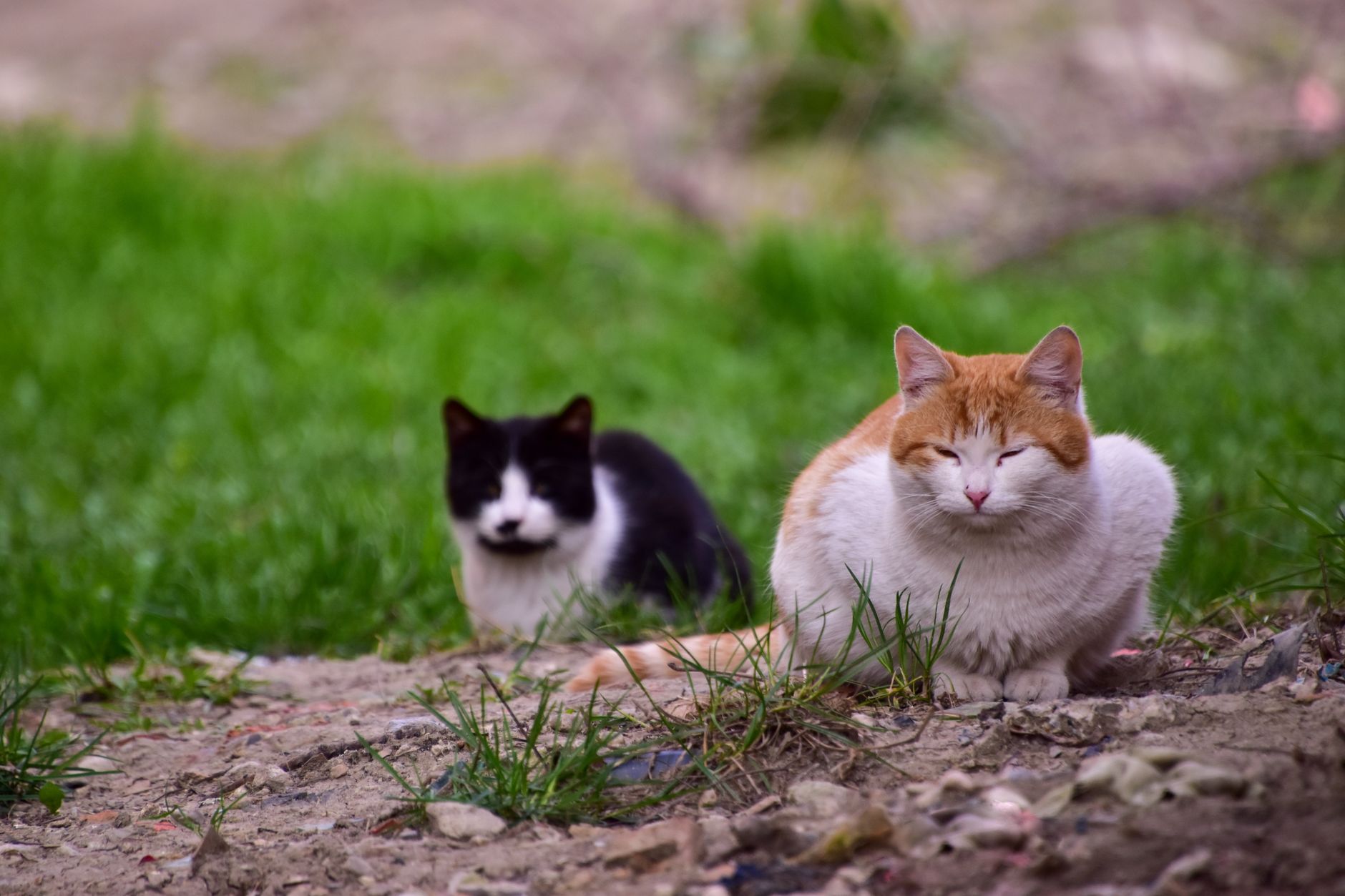
A good cat environment is one built around five needs the cat cannot meet alone: a safe place, separated resources, a chance to hunt and play, predictable human contact, and respect for its sense of smell. This framework comes from the AAFP/ISFM Feline Environmental Needs Guidelines, and it matters because a cat's comfort with its surroundings is directly tied to its physical health and behavior. This guide explains the symptoms of a poor environment, the safety hazards to remove, and the practical care options you can set up at home. It also lists the questions worth asking your veterinarian when behavior changes and health are hard to separate.
Table of Contents
- The five pillars of a healthy cat environment
- What are the symptoms of environmental stress?
- Which changes trigger flare-ups?
- Setting up litter and resources correctly
- Safety hazards to remove
- Frequently Asked Questions
The five pillars of a healthy cat environment
The AAFP and ISFM guidelines, published in the *Journal of Feline Medicine and Surgery*, organize a cat's needs into five pillars. Each is a resource the cat depends on you to provide.
According to VCA Animal Hospitals summarizing the guidelines, meeting these needs is essential rather than optional. They are the baseline for reducing stress-related disorders and unwanted behavior, not a set of luxuries.
- A safe place: a private, elevated or enclosed spot where the cat can retreat and feel secure.
- Multiple, separated key resources: food, water, litter, and resting or hiding spots, spaced apart so the cat is never forced to choose or compete.
- Opportunity to play and express predatory behavior: toys and activity that mimic hunting.
- Positive, predictable human interaction: contact on the cat's terms, on a routine.
- Respect for the cat's sense of smell: avoiding strong scents and preserving the cat's own familiar markings.
What are the symptoms of environmental stress?
environmental stress in cats often shows up first as a medical problem. The clearest example is feline idiopathic cystitis (FIC), a bladder condition with no identifiable cause that flares when a susceptible cat meets internal or external stress.
A 2022 review in PMC/NCBI describes the bladder as the cat's main "stress organ." Watch for these signs: Because these overlap with other illnesses, behavioral changes warrant checking both the cat's health and the home setup. Urinary signs in particular need veterinary attention quickly, since a blocked cat is a medical emergency.
- Straining to urinate or frequent trips to the box
- Blood in the urine
- Urinating outside the litter box
- Hiding, not eating, or vomiting
Which changes trigger flare-ups?
Cats are creatures of routine, and disruptions to their space are documented triggers for FIC. VCA Animal Hospitals and the PMC review list several common ones.
The recommended response combines veterinary care with multimodal environmental modification (MEMO) — deliberately improving the resources and predictability the cat relies on. In practice, that means reintroducing calm and routine rather than treating the bladder alone. If you know a disruption is coming, such as a renovation, keep the cat's core resources stable and give it a quiet retreat away from the activity.
- Moving furniture or rearranging a room
- Home renovation or nearby construction noise
- New pets or new people in the household
- Changes to your schedule or the cat's diet
Setting up litter and resources correctly
Litter box problems are among the most common reasons environments fail, and the fix is usually spatial. Veterinary guidance follows the "N+1" rule: one litter box per cat, plus one extra. The 2021 AAHA/AAFP Feline Life Stage Guidelines explain the placement logic. Boxes should sit in separate, quiet, accessible locations — ideally one per floor in a multilevel home.
Cats treat boxes as territorial resources, so clustering them in one room invites competition and elimination problems. The same separation principle applies to food, water, and resting spots. A cat forced to eat, drink, and toilet in one crowded corner has fewer real resources than the count suggests. Spreading them out gives the cat genuine choice and reduces the friction that drives stress.
Safety hazards to remove
An enriched environment is only healthy if it is also safe. Two hazards deserve specific attention. Lilies are the most dangerous common houseplant for cats. The ASPCA warns that true lilies (Lilium) and daylilies (Hemerocallis) — including Easter, Asiatic, Stargazer, and Oriental varieties — are severely toxic.
Every part is dangerous, and even licking pollen or drinking vase water can cause acute kidney failure. Keep them out of the house entirely; the ASPCA runs a 24-hour Animal Poison Control line at (888) 426-4435. Keeping cats indoors is widely advised for safety. Banfield Pet Hospital notes that outdoor cats face vehicle collisions, predators, infectious diseases like FeLV and FIV, poisoning, and fights. The trade-off is that indoor cats need deliberate enrichment — vertical space, active play, hiding spots, or an enclosed "catio" — to avoid obesity, boredom, and stress.
Frequently Asked Questions
How many litter boxes do I need for two cats?
Three — the N+1 rule means one box per cat plus one extra, placed in separate quiet spots and, in a multilevel home, at least one per floor.
My cat suddenly stopped using the litter box. Is it behavioral or medical?
Treat it as both. Urinating outside the box is a classic sign of feline idiopathic cystitis, which is triggered by stress but needs veterinary evaluation to rule out a blockage or infection.
Are any lilies safe to keep around cats?
The safest choice is none. The ASPCA flags Lilium and Hemerocallis lilies as severely toxic, with pollen and vase water alone able to cause acute kidney failure, so keep true lilies out of the home.