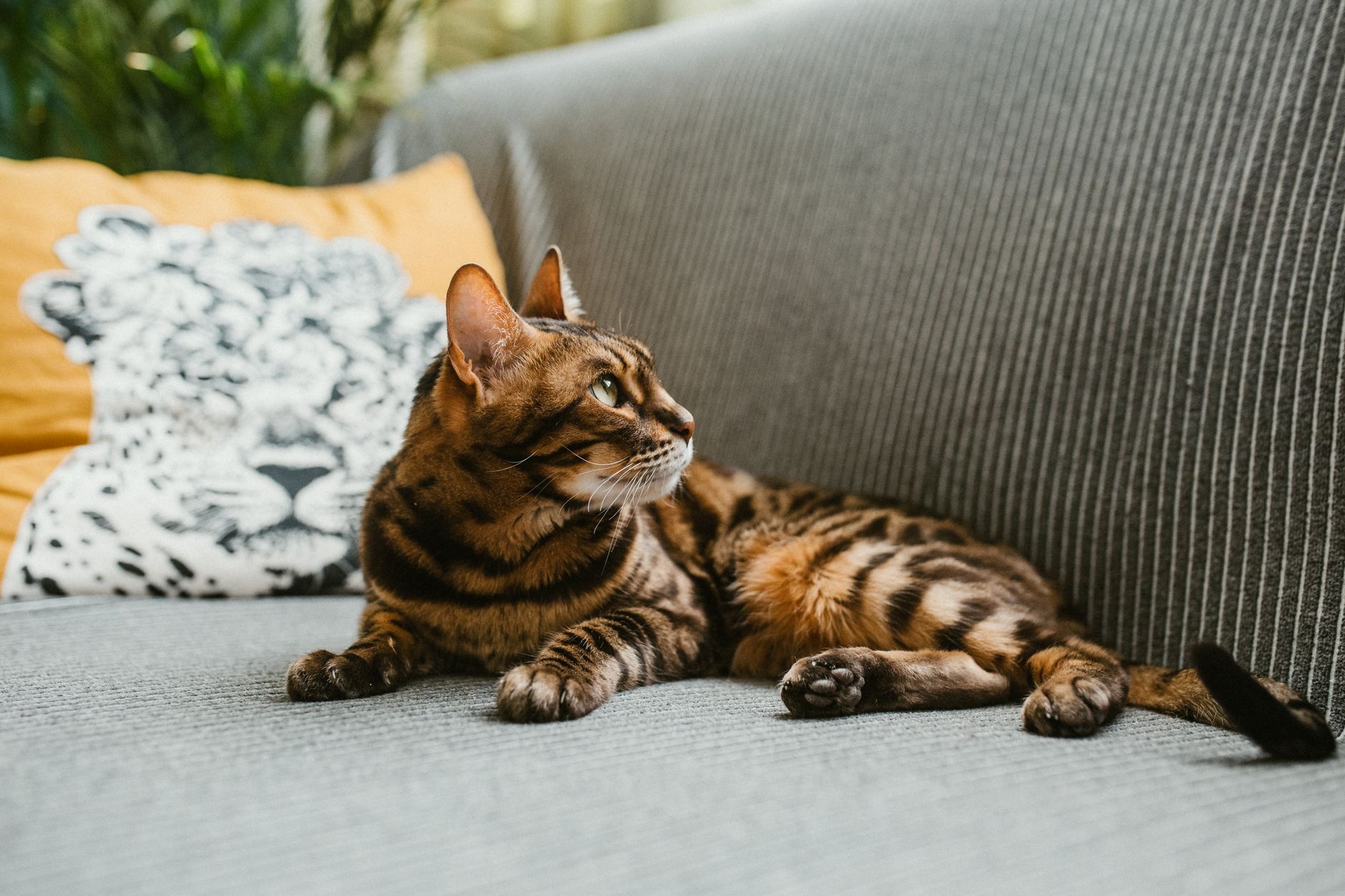
Bengal cats display a striking array of coat colors and patterns that set them apart from most domestic felines. The breed’s most distinctive feature is their leopard-like spotted or rosetted coat, combined with a rich palette of colors ranging from brown to silver to snowy white. For example, a brown-spotted Bengal might have a golden-cream base coat covered with dark brown or black rosettes arranged in a pattern similar to an Asian leopard cat, the wild ancestor from which the breed was originally developed through selective breeding starting in the 1970s.
The visual complexity of Bengal coats goes beyond simple color and pattern. Their fur has a unique silky texture with a subtle glitter effect caused by translucent hair shafts that reflect light. This glittered appearance, especially visible in certain light conditions, is one of the hallmarks of high-quality Bengals and is highly valued by breeders and owners alike. Understanding these coat characteristics is essential for anyone considering the breed, as appearance is intertwined with breed standards and health indicators.
Table of Contents
- What Are the Two Main Coat Patterns in Bengal Cats?
- What Are the Different Color Varieties in Bengal Cats?
- How Do Silver and Charcoal Colorations Appear in Bengals?
- What Are the Distinctive Facial and Body Markings?
- How Does the Bengal Coat Develop and Change Over Time?
- What Is the Glitter Effect and Why Do Some Bengals Have It?
- How Do Bengal Coat Patterns Differ From Other Spotted Domestic Cats?
- Frequently Asked Questions
What Are the Two Main Coat Patterns in Bengal Cats?
Bengal cats display two primary coat patterns: spotted and rosetted. Spotted Bengals have distinct individual dark markings arranged across the coat, while rosetted Bengals feature larger rose-shaped patterns that typically have darker edges with a lighter center, mimicking the rosette markings found on wild jaguars and leopards. The rosetted pattern is generally considered more desirable in breed standards, particularly when the rosettes are large, numerous, and well-defined against the base coat.
The difference between these patterns significantly affects a Bengal’s appearance and market value. A Bengal kitten born with prominent, clearly defined rosettes of the jaguar-spot or donut-rosette style will typically fetch higher prices than one with simple spot markings. However, spots and rosettes can occasionally appear on the same cat in a mixed pattern, and some Bengals display a pattern called “marbling,” which creates horizontal swirls resembling tabby patterns rather than distinct spots. This marbling pattern was not part of the original breeding goals but has become increasingly common and accepted in some breeding lines.
What Are the Different Color Varieties in Bengal Cats?
Bengal coats come in several recognized color categories, with brown and snow being the most common. Brown Bengals have a warm base coat ranging from ivory to golden-orange, with dark brown or black markings that create high contrast against the lighter background. The brown coloration comes from the presence of melanin and is influenced by the cat’s genetics and development during kittenhood.
Snow Bengals represent a fascinating color variety that includes three distinct subcategories: seal lynx point, seal sepia point, and seal mink point. Each of these snow variations is characterized by a pale or cream-colored body with darker points on the face, ears, legs, and tail, similar to Siamese cats. The genetic mechanism behind snow coloring is a form of colorpoint gene that affects melanin distribution. A critical distinction exists between these snow patterns—seal lynx point Bengals are typically born completely white or pale and develop their darker markings as they mature, while seal sepia and mink points are born with more visible coloring and develop deeper contrast over time.
How Do Silver and Charcoal Colorations Appear in Bengals?
Silver Bengals feature a pale, silvery-white base coat with dark gray or black markings that create exceptional contrast. This coloration is increasingly popular in recent years and was developed through selective breeding to enhance the brightness and clarity of the coat. The silver coloration reportedly eliminates or significantly reduces any warm tones from the coat, resulting in an almost metallic appearance that’s particularly striking under natural light.
Charcoal Bengals represent one of the rarer color variations, displaying a dramatically darker appearance with a charcoal-gray or smoky base coat and nearly black markings. This coloration can make the individual spots or rosettes less visible than in brown or silver Bengals, as the contrast between pattern and base coat is reduced. Charcoal coloring may not be recognized by all breed registries, which is an important consideration for owners planning to show their cats or breed them, as different organizations have different breed standards regarding acceptable colors.
What Are the Distinctive Facial and Body Markings?
Bengal cats typically exhibit specific facial markings that contribute to their wild appearance. They often have a mascara-like dark line running from the outer corner of each eye toward the cheek, along with spotted or barred cheeks and a distinctive M-shaped marking on the forehead, similar to tabby patterns found in many domestic cats. The ears are typically medium-sized with a white or pale spot on the back, which is often called the “ocelli” and serves to make the ears appear like eyes—a feature inherited from their wild ancestors as a defensive adaptation.
The body markings extend throughout the entire coat, including the legs and tail. The legs are typically banded or spotted, and the tail should be clearly ringed or spotted rather than plain. High-quality Bengals display horizontal flow to their markings, meaning the pattern lines run across the body horizontally rather than vertically down the sides. The belly and chest area typically feature distinctive spotted or rosetted patterns as well, and some breed standards specifically call for spotted or rosetted bellies rather than plain coloring, which distinguishes them from many wild cat species that have plain or lighter underside fur.
How Does the Bengal Coat Develop and Change Over Time?
Bengal kittens are often born looking quite different from their adult selves, particularly those with snow coloring or glitter effects that may take weeks or months to fully develop. A seal lynx point Bengal kitten, for example, might be born appearing nearly pure white, with the characteristic darker markings gradually emerging over the first few weeks of life as pigment develops. This color development continues through kittenhood and into early adulthood, with some Bengals not reaching their full color expression until six months to one year of age.
The glitter effect that many Bengals display is influenced by genetics and becomes more or less apparent depending on environmental factors like light exposure and the cat’s overall health and condition. Stress, illness, or poor nutrition can cause the coat to appear duller or less glittery than optimal. Additionally, intact male Bengals sometimes develop thicker, coarser coats with a mane-like appearance around the head and neck as they mature sexually, which can alter the appearance of facial markings and the overall impression of the cat’s appearance.
What Is the Glitter Effect and Why Do Some Bengals Have It?
The glitter effect is a distinctive shimmering appearance in Bengal coats caused by the structure of individual hair shafts that reflect light. Unlike the regular hair found on most cats, which is mostly opaque, some Bengals have hair that is partially translucent or has a specially structured surface that catches and reflects light, creating a sparkling or glittery appearance. This trait is highly valued in breed standards and breeding programs, with breeders specifically selecting for cats that display prominent glitter.
Not all Bengals display equally obvious glitter, and the intensity can vary significantly between individual cats and even between different areas of the same cat’s coat. Factors such as lighting conditions, coat cleanliness, hydration levels, and the angle at which light strikes the fur all affect how visible the glitter appears. Some Bengal owners report that their cats’ glitter appears more pronounced after grooming or when the cat is in direct sunlight, while the same coat might appear less glittery under indoor artificial lighting. The glitter effect has no impact on the cat’s health or functionality but is purely a cosmetic trait valued for aesthetic reasons within the breed.
How Do Bengal Coat Patterns Differ From Other Spotted Domestic Cats?
Bengal coats are distinctly different from the spotted patterns seen in other domestic cat breeds like the Egyptian Mau or the Ocicat. The key difference lies in the complexity, size, and arrangement of the markings. Bengal spots and rosettes are typically larger and more three-dimensional in appearance compared to the smaller, simpler spots of an Egyptian Mau.
The rosetted pattern specifically is rarely seen as prominently in other breeds and serves as a definitive identifier of Bengal genetics. Additionally, the texture and quality of the Bengal coat itself sets them apart—the silky fur and potential glitter effect are Bengal-specific traits not commonly found in other spotted domestic breeds. Standard domestic tabby cats with spotted patterns have a very different coat texture and lack the deliberate breeding for contrast and pattern clarity that defines a high-quality Bengal coat. This distinction is important for consumers who may encounter cats marketed as “Bengal-type” or “Bengal-looking” at lower price points, as these are typically domestic shorthairs with spotted tabby patterns rather than true Bengals from registered breeding lines.
Frequently Asked Questions
Can a Bengal cat have stripes instead of spots or rosettes?
Yes, Bengal cats can display a marbled pattern that resembles horizontal stripes or swirls rather than distinct spots. However, marbled Bengals are less common and may not be preferred in all breed standards, though they are becoming more accepted in recent years.
Do Bengal kittens change color as they grow?
Yes, particularly snow-colored Bengals, which are often born very pale and develop darker markings as they mature. Brown and silver Bengals may also show some color deepening and development of glitter effects as they reach adulthood.
What is the rarest Bengal coat color?
Charcoal and blue colorations are among the rarest Bengal colors, and not all registries recognize them as acceptable breed colors, which can limit their desirability among breeders and show competitors.
Is the glitter effect required for a Bengal to be registered?
No, the glitter effect is not required by all breed registries, though it is highly valued and often considered a mark of a high-quality Bengal. Some registries consider it optional or secondary to pattern clarity.
Why do some Bengals look more “wild” than others?
The wild appearance depends on several factors including pattern contrast, pattern size and definition, coloration intensity, and the presence of glitter. High-contrast coats with large, clearly defined rosettes typically appear more wild and leopard-like than those with subtle markings.