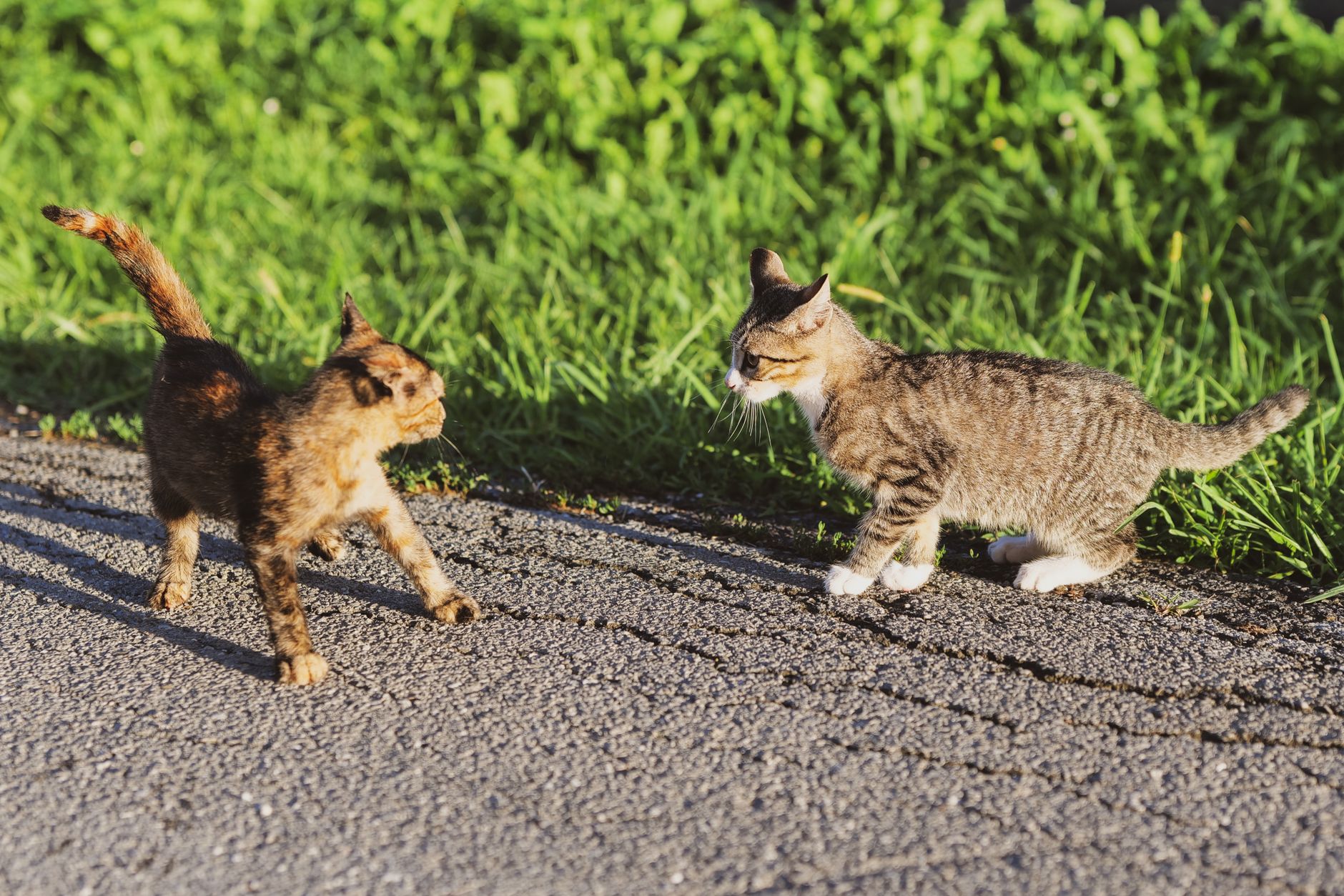
Stop the game the moment claws touch skin and redirect your kitten to a wand toy or kicker toy. Never use hands or feet as toys.
Play aggression is hunting practice aimed at the wrong target. Kittens stalk, pounce, and scratch moving hands and feet as if they were prey. Kittens need that chase, catch, and kick sequence to land on objects, not people.
Table of Contents
- Why does playful stalking turn scratchy?
- What should you do when claws hit skin?
- How do you give the hunt a better target?
- How do you protect skin while kittens learn?
Why does playful stalking turn scratchy?
Kittens raised without littermates or with too little play often treat human movement as prey. Cornell University College of Veterinary Medicine explains this pattern of stalking and pouncing in its guide to feline aggression.
Hands wiggling under blankets, bare feet, and dangling fingers look like small animals. A kitten that learns to chase skin practices harder, faster grabs. Adult teeth and claws then make the same game painful.
What should you do when claws hit skin?
Freeze, then end the fun. The ASPCA advises owners to stop play at once, fold arms, look away, or leave the room for a few minutes, as described in its tips for living with a new cat.
That pause teaches a clear rule: claws on skin remove attention and play. The ASPCA also warns never to offer hands or feet as toys because kittens learn rough habits that last into adulthood, explained in its guide to rough play.
How do you give the hunt a better target?
Keep a toy between you and the kitten. RSPCA South Australia recommends dragging a toy away, throwing toys to chase, and offering a wrestling toy for kicking and scratching in its guide to common cat behaviour problems.
Praise and continued play reward the swap. Short sessions twice daily work better than one long, frantic game.
- Drag a wand toy across the floor like escaping prey.
- Toss a soft ball or mouse for a full chase.
- Offer a long kicker toy for bunny-kicking with back feet.
How do you protect skin while kittens learn?
Give scratching a legal place. RSPCA Victoria recommends sturdy posts, playing around the post, dangling a toy against it, and rewarding use. Cornell University College of Veterinary Medicine notes scratching marks territory with paw scent and sheds claw sheaths, so it cannot be trained away, only redirected.
VCA Animal Hospitals advises trimming nails young and considering plastic nail caps to cut damage. Trimming reduces scratches but does not remove the urge to scratch. Never hit, scruff, squirt, or shout at a kitten for scratching, since VCA Animal Hospitals warns physical punishment creates fear and aggression. Keep a kicker toy within arm's reach during every play session.