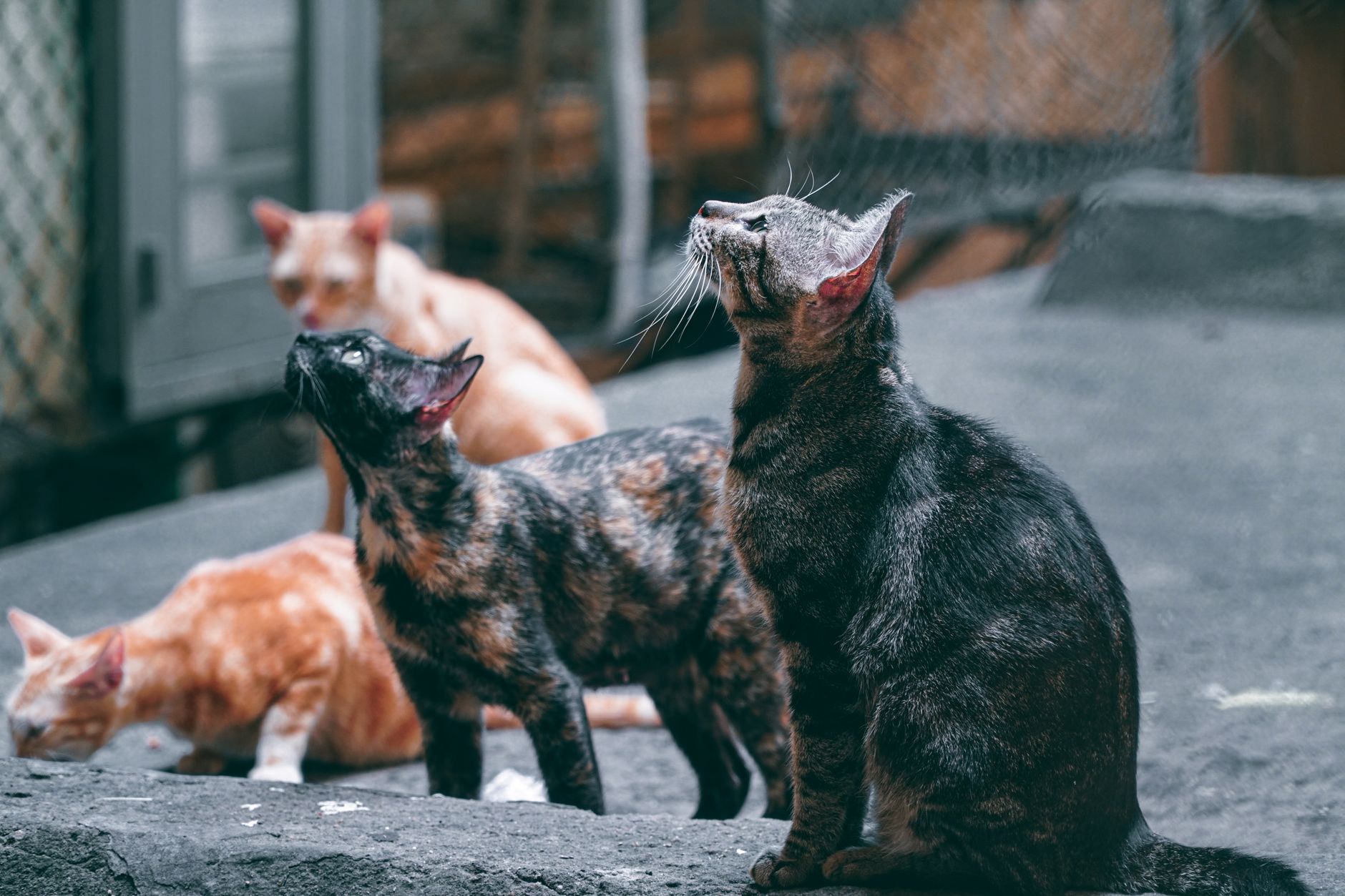
Research into feline behavior increasingly suggests that multi-cat households derive substantial benefits from access to outdoor environments, though the relationship between outdoor space and household dynamics is more nuanced than simple exposure. Cats living in multi-cat environments experience territorial pressures and social friction that can be meaningfully reduced through outdoor access, giving each cat distinct space to establish territory and decompress away from housemates. A household with three indoor cats, for instance, may see a marked decrease in spraying, aggression, and resource guarding once even a secured outdoor area becomes available.
The benefits extend beyond stress reduction. Outdoor environments provide environmental enrichment that indoor-only setups struggle to replicate—varied textures, natural light cycles, scents, and the sensory stimulation of weather and seasons. For multi-cat homes specifically, outdoor space acts as a pressure relief valve, allowing cats to naturally space themselves without forced proximity that creates behavioral problems.
Table of Contents
- Why Do Multiple Cats Need More Environmental Space?
- How Outdoor Access Affects Litter Box and Feeding Issues
- Enrichment and Behavioral Expression in Multi-Cat Environments
- Creating Safe Outdoor Access in Multi-Cat Homes
- Health and Safety Considerations for Outdoor Multi-Cat Exposure
- Monitoring Behavioral Changes and Individual Preferences
- Long-Term Management of Multi-Cat Outdoor Dynamics
Why Do Multiple Cats Need More Environmental Space?
In wild populations, cats maintain territories that can span several miles. Domestic cats retain this territorial instinct, and when multiple cats share a confined indoor space, competition for resources, preferred resting spots, and escape routes becomes acute. A household with two cats in a one-bedroom apartment creates unavoidable conflict zones at litter boxes, food areas, and favorite perches. Behavioral research on domestic cats shows that multi-cat tension correlates strongly with limited space and the inability to achieve visual separation.
Outdoor environments solve this through multiplication of resources. Instead of one sunny window ledge, there are multiple sunny spots in a yard. Instead of one escape route when a conflict brews, a cat can move to an entirely different area. The behavioral literature on felids indicates that cats value having choices and control over their environment more than total territory size—a cat given the option to separate itself from housemates will do so, reducing the frequency and intensity of conflicts. This explains why a small outdoor enclosure can reduce indoor aggression more than adding another room indoors.
How Outdoor Access Affects Litter Box and Feeding Issues
One of the most persistent problems in multi-cat households is litter box avoidance or competition. When cats cannot avoid each other comfortably while using facilities, subordinate cats may refuse to use boxes near a more dominant animal, leading to inappropriate elimination. Some cats will refrain from using a box if a housemate used it recently, and crowded indoor setups make this impossible to manage. Outdoor access—particularly access to a garden where some cats dig and eliminate naturally—can shift the entire dynamic by providing a parallel elimination outlet that doesn’t trigger dominance displays.
However, a significant limitation exists: seasonal variations, weather, and local wildlife control make outdoor elimination unreliable year-round in many climates. A cat accustomed to eliminating outdoors during warm months may resist indoor boxes in winter, creating a management problem. Additionally, indoor litter boxes remain necessary even in households with outdoor access, since illness, age, or injury will eventually confine any cat indoors. The practical solution requires maintaining an oversized indoor litter system (the rule is one box per cat plus one extra) even as outdoor access reduces tension around elimination.
Enrichment and Behavioral Expression in Multi-Cat Environments
Outdoor environments provide sensory stimulation that prevents boredom-driven aggression between housemates. Hunting behavior, climbing, exploring variable terrain, and exposure to ambient sounds and scents occupy cats’ attention and tire them mentally in ways that indoor toys cannot fully replicate. A cat that has spent time in a garden stalking birds, climbing trees, or monitoring insects returns indoors with diminished predatory frustration and reduced drive to wrestle or chase housemates. The behavioral benefit compounds with multiple cats.
In a study of feline behavior in enriched versus restricted environments, cats with outdoor access showed markedly lower rates of destructive play-fighting and more independent, self-directed activity patterns. For a three-cat household, this means each cat can pursue its own interests—one bird-watching, one climbing, one digging—without constant negotiation for the same toy or perch. The caveat is that outdoor enrichment is not a substitute for active play and engagement from owners; it supplements it. A household that provides outdoor access but no interactive play will still see behavioral problems.
Creating Safe Outdoor Access in Multi-Cat Homes
The most practical approach for most households is a secure outdoor enclosure—a “catio”—rather than free roaming, which carries risks from vehicles, predators, and infectious disease. For multi-cat households, enclosure design becomes more important than in single-cat situations, since the space must accommodate territorial spacing behaviors. A four-cat household thrives in a 100+ square-foot catio; the same size feels cramped for three cats if it lacks vertical elements like shelves or climbing structures.
Design priorities differ from single-cat enclosures. Multi-cat catios benefit from multiple exit/entry points, separate elevated areas where subordinate cats can rest undisturbed by dominant animals, and varied substrate (grass, dirt, sand, concrete) to accommodate different digging preferences. A tiered approach—with some cats accessing the outdoor area on a schedule rather than simultaneously—is sometimes necessary if certain cats cannot coexist peacefully in the larger space. The trade-off is complexity and management burden; a truly low-maintenance multi-cat household with outdoor access usually requires larger square footage than many owners anticipate or are willing to provide.
Health and Safety Considerations for Outdoor Multi-Cat Exposure
Outdoor access introduces exposure to infectious disease, parasites, and injuries that indoor cats avoid. In multi-cat households, illness spreads rapidly—one cat bringing feline herpesvirus from outdoors can infect every indoor housemate within days. Parasite loads from fleas, ticks, worms, and intestinal pathogens increase substantially with outdoor exposure. Vaccinations and preventative medicine become essential rather than optional; a household cannot responsibly provide outdoor access without current FVRCP vaccination and reliable flea/tick/worm protocols for all cats.
The injury risk is also amplified in multi-cat households. A cat returning from outdoors with a wound or illness may trigger stress responses in housemates, or the injury itself may alter the social hierarchy—a weakened cat may be bullied by previously balanced companions. Outdoor access is therefore incompatible with households where cats have existing medical fragility or compromised immune systems. Additionally, outdoor access can worsen indoor tensions if a cat becomes injured, trapped outside, or develops stress-related illness from exposure, creating net negative outcomes for the whole group.
Monitoring Behavioral Changes and Individual Preferences
Not all cats in a multi-cat household respond equally to outdoor access, and some may never adapt to or desire time outside. Some cats are too fearful of the novel environment; others are so predatory that they become frustrated by captive-enclosure hunting. Owners must observe individual responses rather than assuming all cats will benefit equally.
A cat that panics in the catio, refuses to go outside, or returns to the house in distress is experiencing stress, not enrichment, even if other housemates thrive. Careful observation of behavioral changes after introducing outdoor access—reduced spraying, fewer fights, calmer demeanor, better appetite—tells the real story of whether the arrangement is working. Some multi-cat households may find that only two of four cats use the catio regularly, and that’s a normal outcome.
Long-Term Management of Multi-Cat Outdoor Dynamics
As cats age or their social relationships shift, the utility and viability of outdoor access may change. An elderly cat that once appreciated the catio may no longer be interested, or declining physical function makes navigation of the outdoor space unsafe. A young cat’s arrival, or a death in the group, can alter the hierarchy and change which cats use the outdoor area.
Ongoing reassessment of whether the outdoor environment continues to provide net benefit is essential, rather than treating outdoor access as a permanent fixture that always works. For multi-cat households considering outdoor access, the decision should rest on realistic assessment of the space available, the cats’ individual temperaments, the household’s capacity for ongoing health management, and the specific behavioral problems the outdoor space would address. It is not a universal solution, but for the right household—one with adequate space, healthy cats, and motivation to manage the logistics—outdoor environments do meaningfully improve the quality of life for multiple cats living together.
- —