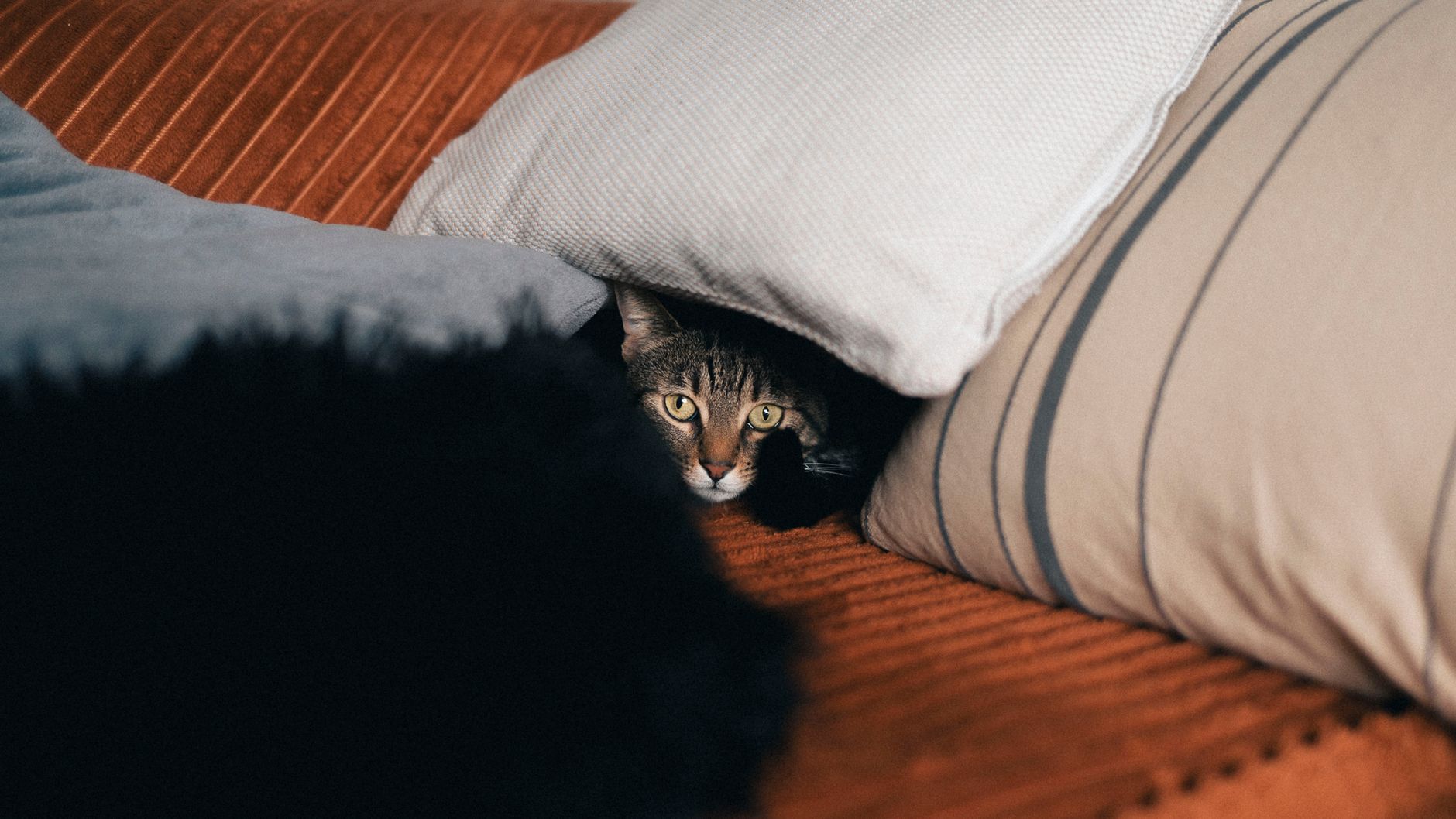
Your cat may hide because the carrier predicts a car ride or veterinary visit, so its appearance triggers fear and avoidance. This learned association is common when the carrier comes out only for stressful events. The behavior does not mean your cat cannot adapt. With gradual carrier acclimation—teaching your cat to feel comfortable around and inside it—you can build a safer association over time.
Table of Contents
- Why the Carrier Triggers Hiding
- Make the Carrier Part of Daily Life
- Build Comfort in Small Steps
- Choose a Carrier That Reduces Handling
- What to Do When You Need the Carrier Soon
Why the Carrier Triggers Hiding
Cats learn patterns quickly. If the carrier appears only before leaving home, your cat can connect it with unfamiliar places, handling, or travel and hide before you can approach.
Chasing or forcing a fearful cat into the carrier can make future avoidance stronger. The Feline Veterinary Medical Association explains that positive reinforcement helps prevent the carrier from becoming an even more frightening cue. FelineVMA positive-reinforcement training toolkit.
Make the Carrier Part of Daily Life
Leave the carrier open in a room where your cat spends time. Add familiar bedding, treats, toys, or food so your cat can investigate it without pressure.
The goal is not to make your cat enter immediately. Reward calm behavior near the carrier first, then reward brief voluntary entries. Keep the carrier available between appointments instead of storing it away until an urgent trip.
Build Comfort in Small Steps
Move forward only when your cat is relaxed at the current stage. FelineVMA recommends progressing from resting on a blanket, to entering the carrier, accepting the top and closed door, staying inside longer, and finally tolerating gentle lifting.
FelineVMA veterinary-visit guidance A practical sequence is: If your cat stops eating, bolts, growls, or repeatedly tries to escape, return to the last comfortable step. Progress may take time, especially when the carrier already has a strong negative association.
- Reward looking at or approaching the carrier.
- Place treats just inside, then farther toward the back.
- Briefly touch or replace the top before rewarding.
- Close the door for a moment, then gradually extend the time.
- Lift the carrier only after your cat remains calm inside.
Choose a Carrier That Reduces Handling
A sturdy hard carrier with a removable top can make veterinary examinations easier. A worried cat may remain in the lower half while the veterinarian examines it, reducing the need to pull or dump the cat out. For travel, cover the carrier and keep it level and secured on the vehicle floor behind a front seat.
FelineVMA advises that non-crash-tested carriers should not be secured with a seat belt. 2025 FelineVMA motor-vehicle transportation statement A covered, stable carrier may also reduce stress during the visit. In a study of 67 cats, a combined protocol using a pheromone-prepared, covered, stable carrier was associated with faster sedation and a lower propofol induction dose, but the study did not test carrier training alone. Veterinary Record study summary.
What to Do When You Need the Carrier Soon
If travel cannot wait for full training, place familiar bedding inside and call your veterinarian for advice. Veterinary guidance may include medication for anxiety or motion sickness when appropriate, but medication does not replace gradual carrier training.
Even an older cat can learn a new association with the carrier. Allow extra time when possible, avoid turning the process into a chase, and use calm rewards before the next appointment.