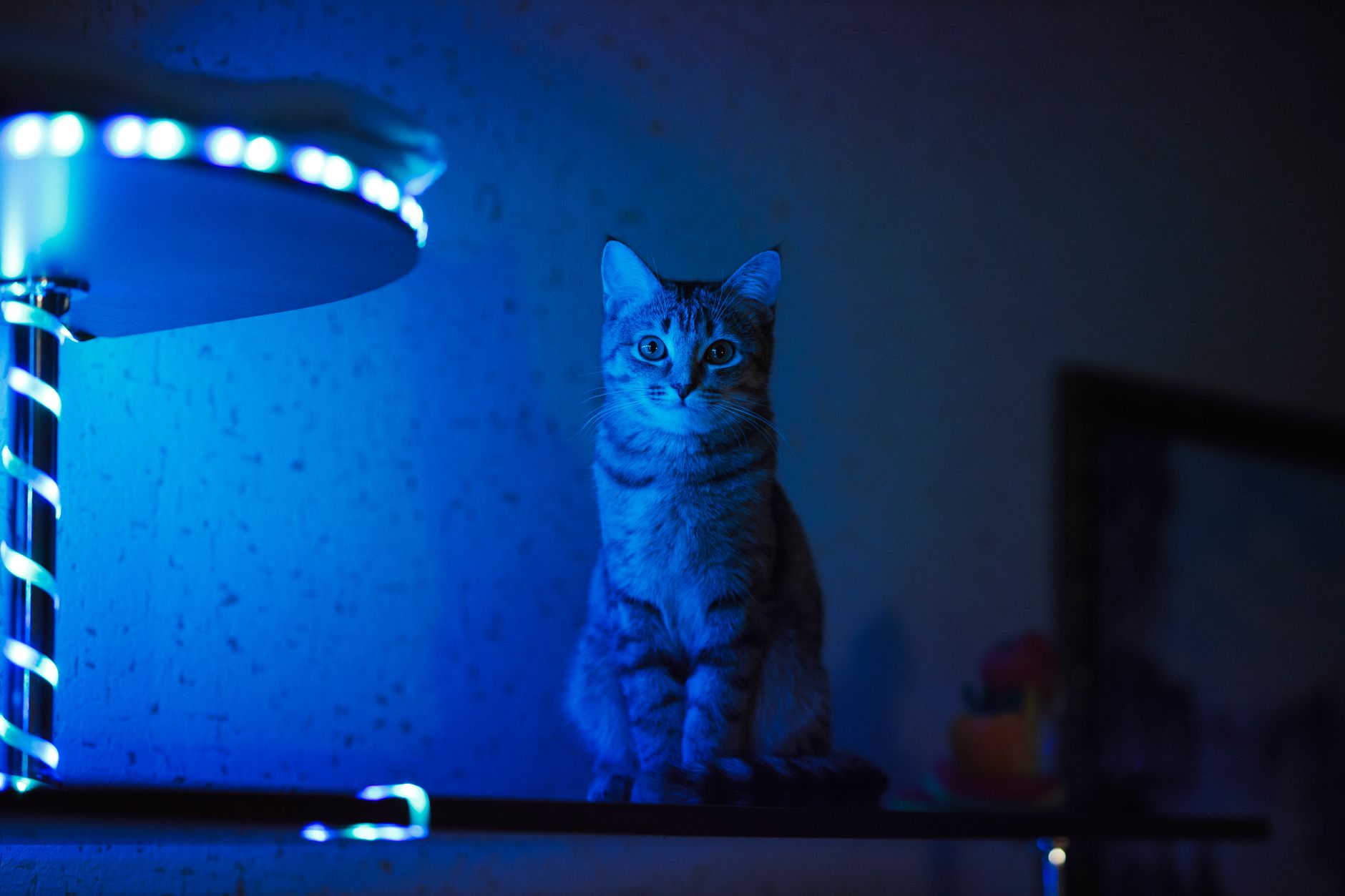
Cats stay comfortable at home when noise stays soft and predictable and light allows quiet rest and safe movement. Comfort means easy access to a private hide, a high perch, and a dim sleeping spot. Shy cats, new arrivals, and seniors react most to loud sound and bright, exposed rooms. You can lower strain by masking sudden sounds, softening light, and giving choices for hiding and height.
Table of Contents
- Why does everyday noise bother cats?
- Which sounds help cats settle?
- How do you protect cats on fireworks night?
- How does cat vision affect lighting at home?
- Where should cats rest and hide?
Why does everyday noise bother cats?
Cornell University College of Veterinary Medicine reports cats hear up to about 60 kilohertz, while people typically stop at 16-20 kilohertz. That extra range lets cats hear ultrasonic prey sounds and household noises people miss, described in the Cornell hearing guide.
High whines from chargers, clicks from appliances, and sudden bangs can therefore draw attention or startle. Watch ears, tail, and movement toward cover for early signs of annoyance. Turn down alerts, move noisy play away from resting cats, and keep routines steady.
Which sounds help cats settle?
Louisiana State University researchers tested 20 pet cats across three visits spaced two weeks apart. Twenty minutes of cat-specific music called Scooter Bere's Aria before and during exams gave lower stress scores than Fauré's Élégie or silence. SciTechDaily reports the result favors slower, species-shaped sound over ordinary classical radio in the LSU cat-music report. ScienceDaily described a small SAGE Publications surgery test with 12 anesthetized female cats.
Classical music gave the lowest breathing rates and pupil size, pop ranked middle, and heavy metal highest. Surgery and anesthesia limit what this says about relaxed cats at home. Keep volume low and choose calm, simple tracks for rest time. Stop music that causes restlessness, hiding, or flattened ears.
How do you protect cats on fireworks night?
Kansas State University advises keeping cats inside in a crate or secure room during fireworks. Close blinds or heavy curtains to block flashes.
Mask booms with soothing music, TV, or white noise, as explained in the Kansas State fireworks safety advice. Do these checks before the first booms. Work calmly and speak softly.
- Keep doors, windows, and crate latches shut.
- Place bedding, water, litter, and a cardboard hide inside.
- Keep background sound low and steady.
How does cat vision affect lighting at home?
The tapetum lucidum, a reflective layer behind the retina, returns missed light for a second pass. Cornell University College of Veterinary Medicine links this structure to about six-times human light sensitivity. Cats can therefore use light only about 16 percent as bright as people need, described in the Cornell vision guide.
Dim corners work for movement, but total darkness still hinders play and navigation. Offer shaded rest by day and a low night light near food, litter, and stairs. Avoid sudden bright lamps and flashing toys near resting cats.
Where should cats rest and hide?
Ohio State University College of Veterinary Medicine lists a private refuge, separate resting areas, and high perches as basic indoor needs. Those spots let cats hide, sleep without disturbance, and watch from height.
Utrecht University researchers found newly arrived shelter cats with a cardboard hiding box had lower stress scores over two weeks. Box cats also settled faster than cats without boxes. Place at least one box or covered bed per shy cat, plus a clear high lookout.