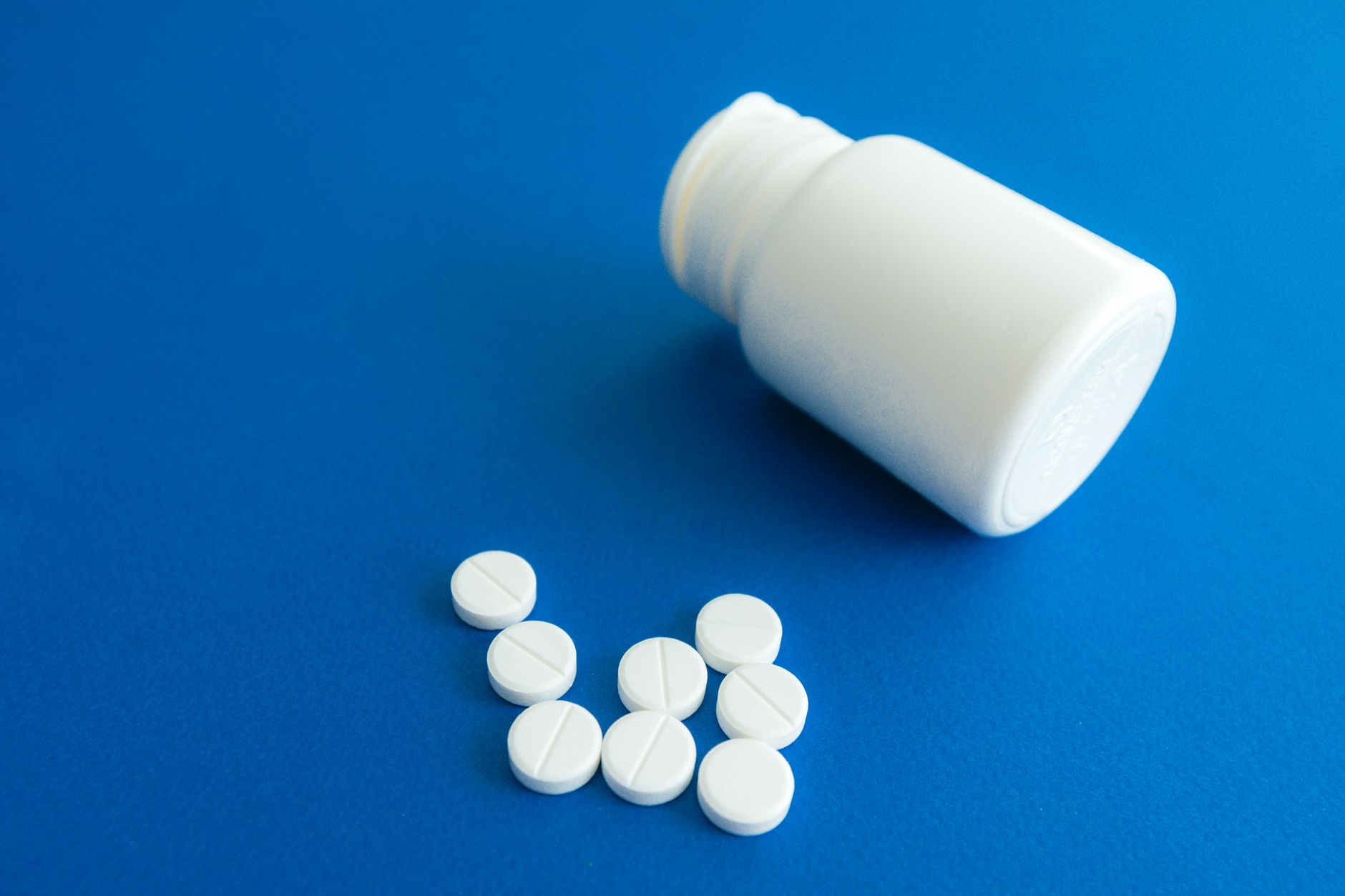
Oral minoxidil and cats are still a dangerous combination, because the low-dose pills prescribed for hair loss contain the same drug that has poisoned cats through Rogaine. A swallowed tablet sends that drug straight to the gut, and the FDA label says at least 90% of oral minoxidil is absorbed from the GI tract in people and the laboratory animals tested.
What a pill does change is where the hazard sits. A scalp product leaves the drug on your hair, hands and pillow; a tablet keeps it in a bottle until the moment one rolls off a counter, falls out of a pill organizer or snaps in half over the sink. The first published poisonings from minoxidil tablets in pets were two dogs, reported in 2026. We found no published case report of a cat eating one, which means nobody can tell you how much of a tablet a cat can tolerate.
If your cat has licked, eaten or been splashed with minoxidil, call your veterinarian or an emergency animal hospital now, even if your cat seems fine. Two animal poison control centers answer around the clock: the ASPCA Animal Poison Control Center at (888) 426-4435 and Pet Poison Helpline at (855) 764-7661. Both may charge a consultation fee.
Why minoxidil pills are turning up in more homes
Minoxidil tablets are labeled for high blood pressure; the FDA patient leaflet describes the drug as “a drug for lowering the blood pressure.” What is new is their use for hair loss. A 2021 review in the Journal of the European Academy of Dermatology and Venereology found that “low-dose oral minoxidil has proven to be an alternative for patients with alopecia,” with regimens “varying from 0.25 to 5 mg daily.” The same review notes that women generally take less than men: “from 0.25 to 2.5 mg daily, while men require higher doses for maximal efficacy, from 1.25 to 5 mg a day.”
This use is off label. A 2022 review lists oral and sublingual minoxidil as not FDA approved; off-label, and a 2025 expert summary in the Journal of the American Academy of Dermatology says low-dose oral minoxidil “has increasingly been used off label to treat a variety of hair loss conditions but without any standard recommended best practices.” An international consensus statement in JAMA Dermatology, built by “43 hair loss specialist dermatologists from 12 countries,” concluded that small studies look promising but “larger trials and standardized guidelines are lacking.” As the American Academy of Dermatology puts it for pet owners, “Minoxidil is also available in pill form. This form must be prescribed.”
On the tablet strengths, the FDA label says “Minoxidil tablets for oral administration contain either 2.5 mg or 10 mg of minoxidil,” and the patient leaflet adds that “Your doctor may prescribe half a tablet; the tablets are scored (partly cut on one side) so that you can easily break them.” The low end of the hair-loss range sits well below the smallest tablet strength, so ask your pharmacist exactly how your dose is supplied. If it involves breaking tablets, every half and every crumb is a piece of the drug.
What the tablet label says the drug does
The FDA-approved label describes minoxidil as “an orally effective direct acting peripheral vasodilator that reduces elevated systolic and diastolic blood pressure by decreasing peripheral vascular resistance.” In plain terms, it relaxes small arteries so blood pressure drops. In people taking it for hypertension, it carries a boxed warning: it “can cause pericardial effusion, occasionally progressing to tamponade, and angina pectoris may be exacerbated.”
Two numbers on the label, both measured in people, show how far the effect can outlast the drug. “The average plasma half-life in man is 4.2 hours,” yet after one effective oral dose, blood pressure starts falling within half an hour, bottoms out at two to three hours, and “The total duration of effect is approximately 75 hours.” The drug leaves the blood far faster than its effect wears off. Vets who treated a cat after skin exposure saw a long tail too, writing that the effect of a single exposure “may be at least 3 days after exposure.”
The label also says that about 90% of a dose is metabolized, “predominantly by conjugation with glucuronic acid.” That is a pathway cats are weak at for some drugs: “The domestic cat has a significantly lower capacity to glucuronidate planar phenolic xenobiotics compared with most other mammalian species.” It is tempting to join those two facts, but nobody has measured how cats handle minoxidil. A 2014 study warned that glucuronidation in cats “has to be investigated on a substance-to-substance base,” and the vets in the cat case above wrote that “the exact pharmacokinetic properties remain elusive in cats.” The cat’s metabolism may help explain its sensitivity; it has not been shown to.
What is established is the result. The ASPCA says that “When ingested by pets, minoxidil is rapidly absorbed and can cause life-threatening complications with low blood pressure, abnormal heart rhythm, fluid build-up in the lungs and possibly cardiac or respiratory arrest,” and that “Cats are more sensitive to the effects of minoxidil than dogs.”
Oral minoxidil and cats: how the exposure risk changes
With a scalp product, almost the whole dose stays on the outside of your body: a 2022 review puts skin absorption at only about 1.4%. That surface reservoir is why the published cat cases revolve around licked heads, pillowcases and spills, and why our guide to touching your cat after applying minoxidil focuses on residue.
A tablet does not create that surface reservoir. Whether any minoxidil from a pill reaches your skin, sweat or hair in amounts that could matter to a cat is a question we found no study answering, in people or in pets. That is not the same as zero; it means the risk has not been measured. The hazard that is easy to picture is the tablet itself.
| Question | Topical (solution or foam) | Oral tablet |
|---|---|---|
| Where the drug sits at home | Scalp, hair, hands, pillow, spills, tissues | Bottle, pill organizer, counter, floor, bin |
| Main route to a cat | Licking or rubbing treated skin and fabric | Eating a dropped, broken or stolen tablet |
| Published pet cases | Many, in cats and dogs | Two dogs (2026); no cat case report found |
| Residue on your skin and hair | The main problem | Not measured in any source we found |
| Amount in one exposure | Unknown, often a lick or a drop | A whole tablet is 2.5 mg or 10 mg; pieces vary |
The published cases: two dogs, one helpline story, no cat report
The first peer-reviewed tablet cases appeared in the Journal of the American Animal Hospital Association in 2026. A three-year-old golden retriever and a nine-month-old mixed-breed dog, seen at separate hospitals, had swallowed oral minoxidil tablets. “Both dogs developed hypotension, with one requiring vasopressor therapy,” and blood tests showed heart-muscle damage in both. Both recovered by their second day in hospital. The authors noted that until then, “Existing reports of minoxidil toxicosis in pets involve the topical formulation of the drug.”
For cats, the only tablet account we found is anecdotal. In a Pet Poison Helpline story, a woman who takes minoxidil for her blood pressure turned her back for a moment: “She snatched my minoxidil pill off the counter when I reached to get some water.” Her cat, Olivia, then “vomited, started acting erratic and looked panicked,” and she called the helpline. The story does not say what strength the pill was or what treatment Olivia received. The helpline’s own summary is the useful part: “Pet poisoning signs are the same for the pill form as they are for the topical treatment.”
Here is what has not been published, as far as we could find in October 2026: no case report or case series of a cat eating a minoxidil tablet, and no toxic dose for cats from any route. The dog report’s abstract does not say whether those tablets had been prescribed for hair loss or for blood pressure. The AAD still lists “Find a bottle of minoxidil pills and eat them” among the ways pets get into the drug, and with cats more sensitive than dogs, a tablet or a fragment of one should be treated as an emergency, not a wait-and-see.
A pill routine for a home with a cat
Every step below comes from one practical aim: the tablet never leaves your hand except to go into your mouth or back into a closed container.
- Close the door first. The ASPCA advises taking oral medication “in a closed room, away from pets.” Pet Poison Helpline’s toxicologist made the same point in Olivia’s story: “Pets are pros at swooping in and snatching something off a counter.”
- Get your water before you open the bottle. Olivia’s pill vanished in the moment her owner reached for a glass.
- Open the bottle over a table or tray, not the edge of a counter or sink. A tablet that bounces onto the floor is at cat height.
- Break tablets in the same closed room, wipe the surface afterwards, and put a spare half straight back into the bottle rather than leaving it loose.
- Count when you drop one. If a tablet or a piece goes missing, keep the cat out of that room until you find it.
- Store it locked away. The ASPCA’s wording is “securely and locked away from any pet access.” The FDA warns that “kitchen and bathroom counters, shelves, and other high places may not be secure enough,” that “medication containers that are child safe may not be pet safe,” and that pets chew through pill vials and blister packs.
- Treat pill organizers as part of the risk. The Merck Veterinary Manual lists “countertops, pill minders, mail-order packages” among the places pets find prescription drugs. Keep the organizer in a closed cupboard.
- Dispose of leftovers properly. MedlinePlus asks you to dispose of unneeded medicines “in a way so that pets, children, and other people cannot take them,” and the FDA points to community take-back programs as the best option.
- Tell everyone who handles your pills or your cat, including partners and pet sitters.
If a tablet goes missing or your cat gets one
If you see your cat with a tablet, find a chewed piece, or cannot account for one dropped in a room your cat could reach, call your veterinarian or a poison control line straight away, even if your cat looks normal; the ASPCA says signs can “develop rapidly or be delayed up to 12 hours.” Before or during the call, have the bottle in hand. Pet Poison Helpline asks owners to note “what medication was ingested, how much was consumed, including the strength and quantity, and when the exposure occurred.” The strength printed on your prescription label matters here, because a 10 mg tablet and a fraction of a 2.5 mg tablet are very different amounts of drug.
Our first-hour guide for when a cat licked minoxidil applies to any form of the drug, and our main page on minoxidil toxicity in cats covers the warning signs and the poison center data. For other prescription drugs that harm cats, see human medicine and cats.
Switching to pills is your prescriber’s decision
Some owners will read this and wonder whether to ask for tablets because of their cat. That choice belongs to you and the clinician who treats your hair loss, not to a cat website. Oral minoxidil is a prescription blood-pressure drug used off label for hair, it carries a boxed warning in people, and the dermatology literature itself says best practices are still being worked out.
What you can do is give your prescriber the whole picture, including the fact that you live with a cat. The AAD’s advice for worried owners is to talk with a board-certified dermatologist, because “Another treatment for regrowing your hair may be an option.” If you stay with a scalp product, our comparison of minoxidil foam vs liquid covers the practical differences between the two topical forms.
Whatever form you choose, the 2026 dog report states the background plainly: “Minoxidil has long been recognized as a cardiovascular toxin in dogs and cats.”
Frequently Asked Questions
Can my cat get sick from licking me if I take minoxidil pills?
No published study has looked at this. The cat cases on record involve topical minoxidil on skin, hair, pillows or spills. Wash your hands after handling tablets, and if your cat licks a surface where a tablet was broken or crushed, call your vet or a poison control line.
Is a small piece of a minoxidil tablet dangerous to a cat?
No toxic dose for cats has been published, so no amount can be called safe. Cats are more sensitive to minoxidil than dogs, according to the ASPCA. Treat any piece your cat may have swallowed as an emergency and call straight away.
Are sublingual minoxidil tablets any different for cats?
Sublingual minoxidil is the same drug, used off label for hair loss and placed under the tongue. The pet risk is the same as for any minoxidil tablet: keep it in a closed container and take it in a room your cat cannot enter.
Should I tell my vet that I take oral minoxidil?
Yes. Minoxidil poisoning can look like other illnesses. In one published cat case, the treating vets wrote that they did not suspect minoxidil at first. Knowing that minoxidil is in the house helps your vet think of it.
Sources
- MINOXIDIL tablet (Par Health USA, LLC) — DailyMed, U.S. National Library of Medicine, label updated June 11, 2026; read October 8, 2026
- Review of oral minoxidil as treatment of hair disorders: in search of the perfect dose — Journal of the European Academy of Dermatology and Venereology, 2021
- Summation and recommendations for the safe and effective use of topical and oral minoxidil — Journal of the American Academy of Dermatology, 2025
- Low-Dose Oral Minoxidil Initiation for Patients With Hair Loss: An International Modified Delphi Consensus Statement — JAMA Dermatology, 2025
- Minoxidil: a comprehensive review — Journal of Dermatological Treatment, 2022
- Cardiovascular Complications of Minoxidil Toxicosis in Two Dogs — Journal of the American Animal Hospital Association, 2026
- Hair Loss Drug Can be Deadly to Pets — Pet Poison Helpline (Toxin Tails), August 2023; read October 8, 2026
- Minoxidil and Pets: What You Need to Know — ASPCA, February 26, 2026; read October 8, 2026
- Dermatologists caution: Minoxidil can be toxic to cats and dogs — American Academy of Dermatology, last updated 8/17/26; read October 8, 2026
- Properly Store Medications to Keep Your Pet Safe — U.S. Food and Drug Administration, content current as of 06/14/2024; read October 8, 2026
- Poisonings from Human Prescription Drugs — Merck Veterinary Manual (pet owner version), last updated May 2026; read October 8, 2026
- Molecular genetic basis for deficient acetaminophen glucuronidation by cats: UGT1A6 is a pseudogene, and evidence for reduced diversity of expressed hepatic UGT1A isoforms — Pharmacogenetics, 2000
- Comparing the glucuronidation capacity of the feline liver with substrate-specific glucuronidation in dogs — Journal of Veterinary Pharmacology and Therapeutics, 2014
- Successful management of suspected minoxidil toxicosis in a cat following accidental dermal exposure — Veterinarni Medicina, 2022
- Minoxidil — MedlinePlus, U.S. National Library of Medicine, read October 8, 2026
This article is general information for cat owners, written from the published veterinary literature and poison control guidance listed above. It is not a diagnosis or a treatment plan for your cat. If you think your cat has been exposed to minoxidil or any other medication, contact a veterinarian or an animal poison control center straight away. Rogaine is a registered trademark of its owner; Cat Professor is not affiliated with any drug maker.