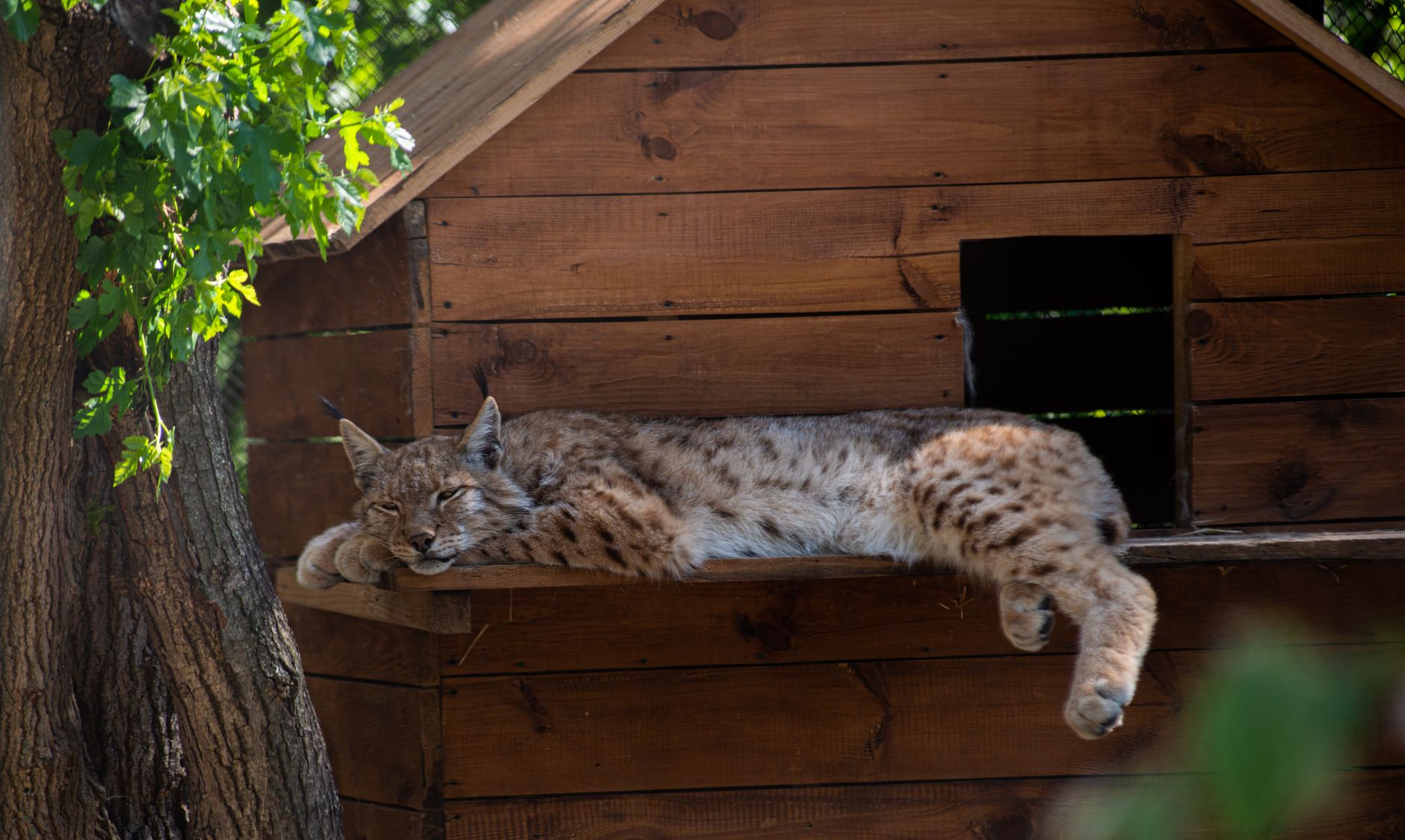
Orphaned bobcat kittens have found shelter at a wildlife rehabilitation center in Saratoga, where specialized staff and veterinarians provide round-the-clock care to give the young wildcats a second chance at survival. When infant bobcats lose their mothers—whether through human-vehicle conflicts, poaching, or natural mortality—their survival rate in the wild drops dramatically without immediate intervention. A dedicated wildlife center equipped with proper housing, nutrition protocols, and behavioral specialists becomes their only realistic path to eventual release back into the wild, as orphaned bobcats cannot be raised by humans in typical domestic settings.
Wildlife rehabilitation centers like the one in Saratoga represent critical infrastructure for native carnivore populations. These facilities understand that bobcat kittens require vastly different care than domestic cats; they must maintain their natural fear of humans while being healthy enough to hunt and survive independently upon release. The process takes months and involves careful management of every aspect of the kittens’ environment, from temperature control in their enclosures to the types of prey they practice hunting.
Table of Contents
- How Do Bobcat Kittens Become Orphaned and Why Does Rehabilitation Matter?
- The Specialized Care Requirements for Orphaned Bobcats in Captivity
- Behavioral Development and the Critical Period for Socialization
- Pre-Release Assessment and the Readiness Evaluation Process
- Disease Prevention and the Health Risks Unique to Captive Groups
- The Role of Local Habitat Assessment and Release Site Selection
- The Long-Term Population Impact and the Broader Conservation Picture
- Frequently Asked Questions
How Do Bobcat Kittens Become Orphaned and Why Does Rehabilitation Matter?
Bobcat kittens lose their mothers through several common pathways. Road mortality remains one of the leading causes of adult bobcat death in areas where wildlife habitat borders developed land. Illegal poaching, disease, territorial conflicts with other predators, and natural predation from larger animals like coyotes or mountain lions also claim bobcat mothers, leaving litters vulnerable. Once separated from their mothers, newborn bobcats cannot fend for themselves; they depend entirely on hunting education, socialization with their siblings, and the protective territory their mother establishes.
Without intervention, orphaned bobcat kittens die from starvation, dehydration, predation, or disease within days or weeks. The rehabilitation center’s role is to bridge this critical gap, providing nutrition that mimics what a mother bobcat would supply while protecting the kittens from predators and environmental stress. This intervention is not merely sentimental—it directly supports population stability in regions where bobcats face ongoing pressure from habitat loss and human activity. In areas with limited bobcat populations, saving even a single litter can contribute measurably to genetic diversity and reproductive potential for the species.
The Specialized Care Requirements for Orphaned Bobcats in Captivity
Raising orphaned bobcats presents unique challenges that distinguish the work from domestic cat rescue. The kittens require formula specifically formulated for wild felids, not standard domestic cat formula, because nutritional ratios and caloric density differ significantly. Feeding frequency in early weeks is extremely demanding—very young kittens need bottle feeding every two to four hours around the clock, which is why rehabilitation centers must maintain staff shifts dedicated solely to feeding and monitoring. Temperature regulation is another critical factor.
Bobcat kittens cannot thermoregulate effectively in early weeks, so enclosures must maintain precise warmth through heating pads or climate-controlled rooms. Any deviation—too cold leading to hypothermia or too warm causing stress—can be fatal. A limitation of even well-resourced centers is that they cannot perfectly replicate the natural den environment a mother bobcat would provide, so staff must balance optimal welfare with practical constraints. Additionally, keeping the kittens sufficiently wild is paradoxical work; caretakers must minimize human contact to prevent the animals from bonding to people, which would render them unsuitable for release into the wild.
Behavioral Development and the Critical Period for Socialization
Bobcat kittens go through distinct developmental phases that determine their eventual success in the wild. Between four and twelve weeks of age, they transition from nursing to consuming prey, and this window is crucial for learning predatory behavior. Rehabilitation staff deliberately expose kittens to live prey items—starting with insects and small rodents—to trigger and refine hunting instincts. If this socialization with appropriate prey species is delayed or omitted, the kittens may never develop efficient hunting skills, making them unable to sustain themselves after release.
Peer socialization among littermates or similarly-aged kittens also matters. Bobcats are generally solitary animals, but young ones learn essential communication, play behavior, and social boundaries through interaction with siblings. A center with multiple orphaned litters may strategically group compatible kittens to allow this natural development. Conversely, incompatible pairings can lead to aggression or stress-related illness, which is why staff must carefully assess individual temperament and adjust group housing accordingly.
Pre-Release Assessment and the Readiness Evaluation Process
Before any bobcat kitten returns to the wild, rehabilitation staff must verify that the animal meets specific physical and behavioral benchmarks. The kitten must weigh within normal range for its age, show no signs of illness or injury, and demonstrate consistent hunting ability in controlled scenarios. Behavioral assessment is equally important—staff observe how the kitten responds to novel stimuli, whether it flees from perceived threats (as a wild animal should), and whether it shows any signs of habituation to humans.
This evaluation process can take three to six months or longer, depending on the individual animal’s development and the center’s assessment criteria. A kitten that appears healthy but shows persistent curiosity about human handlers or fails to hunt efficiently will not be cleared for release, as these traits dramatically reduce survival odds in the wild. The trade-off is that maintaining an animal in captivity longer strains facility resources and staff time, but premature release of an unprepared bobcat is worse—it virtually guarantees suffering or death.
Disease Prevention and the Health Risks Unique to Captive Groups
When multiple orphaned bobcats are housed in a rehabilitation facility, disease transmission becomes a significant concern. Young, stressed animals have compromised immune systems, making them vulnerable to feline panleukopenia, feline leukemia virus, and respiratory infections that can sweep through group housing quickly. Centers must maintain strict protocols: separate housing for sick animals, dedicated equipment that is not moved between enclosures without sanitization, and regular veterinary monitoring.
A critical limitation is that rehabilitation centers often lack the ability to vaccinate against all potential diseases without compromising the animal’s wild status. Some vaccines trigger immune responses that could mask natural disease resistance, and the ethical question of vaccinating an animal intended for release into an environment with disease-carrying wildlife adds complexity. Staff must therefore rely heavily on quarantine procedures, biosecurity measures, and careful monitoring rather than vaccination alone. Any bobcat showing signs of serious illness faces a difficult decision point: treatment attempts might not succeed, and an animal that recovers may carry chronic infections that affect its long-term survival in the wild.
The Role of Local Habitat Assessment and Release Site Selection
Before a rehabilitated bobcat is released, the center must identify a suitable location with adequate prey density, suitable denning habitat, and minimal risk from human activity or vehicle traffic. The release site selection is as important as the animal’s physical condition; releasing a healthy bobcat into unsuitable habitat or an area already occupied by established adult bobcats leads to territorial conflicts and starvation. Staff typically work with wildlife biologists and habitat ecologists to map local bobcat territories and identify low-density areas where a young cat has realistic chances of establishing its own range.
Some rehabilitation centers use radio telemetry—fitted collars that transmit location data—to track released bobcats for weeks or months after release, monitoring their movements and survival. This practice provides valuable data about how successfully the rehabilitation program works and where post-release support might be needed. However, collars add stress to the animal and are an additional expense that smaller centers cannot always afford.
The Long-Term Population Impact and the Broader Conservation Picture
Individual rescue cases matter because they accumulate. A center that successfully rehabilitates and releases ten bobcat kittens per year across five years has contributed fifty individuals to the local population. In regions where human-wildlife conflict is reducing bobcat numbers, this contribution can shift population trends measurably.
However, rehabilitation is fundamentally a response to symptoms rather than causes; it does not address the underlying habitat loss, vehicle mortality, or poaching pressures that create orphans in the first place. The most sustainable path forward combines rehabilitation with habitat protection, wildlife crossing structures to reduce road mortality, and community education about coexistence with native predators. A wildlife center’s work is vital and often heroic, but it exists within a larger conservation context. The orphaned bobcats receiving care at Saratoga represent both a success story of rescue and a reminder that wildlife populations thrive only when habitat, safety, and human tolerance all exist together.
- —
Frequently Asked Questions
Can I raise an orphaned bobcat kitten at home?
No. Bobcats are wild animals with specific dietary, environmental, and behavioral needs that domestic settings cannot meet. Hand-raising a bobcat kitten creates an animal that is neither wild nor domestic, reducing its survival chances in the wild and making it a liability if it matures and develops predatory or aggressive behavior toward humans.
How long does bobcat rehabilitation take?
Rehabilitation typically requires three to six months, sometimes longer. The timeline depends on the kitten’s age when rescued, its health status, and how quickly it develops hunting skills and wild behavior.
What happens to bobcats that cannot be released?
Bobcats that fail behavioral or health assessments—those too habituated to humans or unable to hunt successfully—cannot be released safely. Some centers place such animals in accredited sanctuaries where they live permanently, though space is limited and placement options are rare.
Are bobcats endangered?
Bobcats are not federally endangered in most of North America, but populations vary regionally. Some areas have healthy numbers while others have declining populations due to habitat loss and vehicle mortality. Local conservation status determines whether rehabilitation efforts focus on general welfare or targeted population recovery.
How can I help orphaned bobcats without working at a center?
Support rehabilitation centers through donations, volunteer work, or habitat conservation efforts. At the community level, you can reduce bobcat orphaning by driving carefully in wildlife areas, reporting poaching to authorities, and supporting habitat protection policies.
Will a rehabilitated bobcat remember the center staff?
Young bobcats raised with minimal human contact may not form specific bonds with individual staff members. The goal is deliberate—center staff work to remain unmemorably “human” to the kittens, so the animals view humans as threats rather than as social entities, which aids their survival in the wild. —