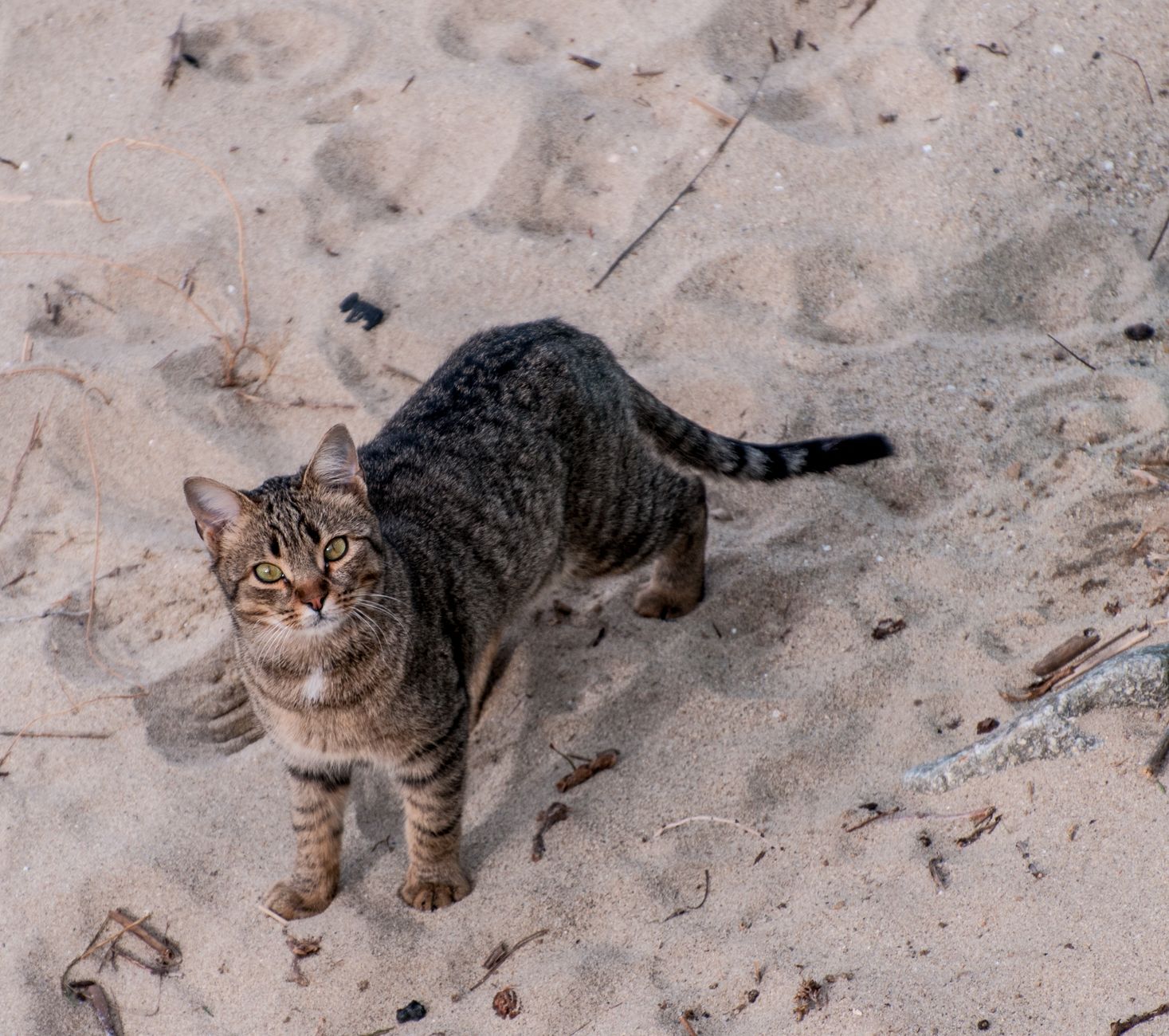
A sand cat colony sighting in Libya captured widespread attention through social media after a viral video drew the online community’s focus to these elusive felines in their natural habitat. Sand cats are among the most difficult wild cats to document and study, spending much of their time in remote desert regions where human observation is rare. The discovery underscores how technology and social media now play unexpected roles in wildlife documentation, sometimes alerting researchers to populations and behaviors that might otherwise remain unrecorded for years.
Sand cats are highly adapted to life in the harshest desert environments, where few other mammals can survive. Their unique physiology—including fur-covered paws that protect against hot sand and sharp rocks—makes them perfectly suited to arid landscapes. The Libya sighting provides valuable data about their range and social behavior, though the circumstances of how a viral video led to scientific interest demonstrate both the promise and challenges of crowd-sourced wildlife monitoring.
Table of Contents
- How Viral Video Documentation Reveals Hidden Sand Cat Populations
- Sand Cat Biology and Why Libyan Colonies Matter for Conservation
- Behavioral Insights from Colony Observations
- Comparing Sand Cats to Other Desert-Adapted Feline Species
- Challenges in Verifying Wild Felid Identifications
- Sand Cat Ecology and Habitat Requirements
- The Role of Technology in Future Wildlife Documentation
How Viral Video Documentation Reveals Hidden Sand Cat Populations
Social media has fundamentally altered how wildlife discoveries reach the scientific community. Before the internet era, a video of unusual desert cats in Libya would have remained local knowledge or been shared through slow academic channels. Today, a single compelling clip can reach thousands of people within hours, and among those viewers may be researchers, wildlife conservationists, or veterinarians who recognize the significance of what they’re seeing. The sand cat colony case illustrates this modern phenomenon: ordinary people in the field captured something extraordinary, and online sharing accelerated the discovery process.
However, viral documentation comes with serious limitations. Videos uploaded without geographic metadata can be difficult to locate precisely, and without proper taxonomic expertise in the viewer base, misidentifications happen frequently. Sand cats can be confused with other wild feline species, and the quality of phone video footage may obscure critical identifying features. When a discovery goes viral before it reaches experienced researchers, the initial rush of attention can sometimes obscure rather than clarify the actual biological significance of what was recorded.
Sand Cat Biology and Why Libyan Colonies Matter for Conservation
Sand cats weigh between 1.5 to 3.5 pounds and are among the smallest wild cat species in Africa. They have exceptionally large ears relative to their head size, which serve both as radiators to dissipate heat and as sophisticated listening devices for detecting prey—particularly rodents—beneath the sand. Their survival strategy depends on being nocturnal, solitary hunters that spend the heat of the day in burrows or dense vegetation. A documented colony presence, rather than isolated individuals, suggests stable habitat conditions and adequate prey availability. Libya’s Saharan regions present challenging terrain for conservation efforts.
Political instability and lack of infrastructure in some areas mean that wildlife surveys are infrequent and often incomplete. Sand cat populations in North Africa remain poorly documented compared to those in Central Asia, and most scientific knowledge comes from small numbers of observations. A verified colony discovery can fill critical gaps in understanding the species’ range and establish a baseline for monitoring population health over time. The limitation, however, is that a single viral video, even if authentic and geographically accurate, represents only a snapshot. Establishing true population viability requires ongoing study, camera trap monitoring, and collaborative fieldwork—resources that may be difficult to secure in politically unstable regions.
Behavioral Insights from Colony Observations
Sand cats are generally considered solitary animals, and observations of multiple individuals in proximity raise interesting questions about their social structure. Unlike lions or other gregarious cats, sand cats do not form pride-like groups. When colonies do form, they typically indicate either a concentration of resources—such as an unusually dense rodent population—or possibly family groups of mothers and nearly-independent offspring. The behaviors visible in video documentation can reveal habitat use patterns: whether cats are moving along specific routes, using consistent denning sites, or hunting during particular times.
Understanding these behavioral details matters for both wildlife management and for anyone keeping sand cats in captivity or rehabilitation settings. In zoos and sanctuaries, sand cats display specific temperament traits that differ markedly from domestic cats, including extreme wariness of humans and a preference for minimal environmental complexity. The Libya colony observations provide behavioral data that can inform how rehabilitators and researchers approach these animals in professional settings. A significant limitation is that single video observations cannot establish behavioral patterns—animals may alter their behavior when aware of observation, and isolated incidents do not reflect typical daily or seasonal routines.
Comparing Sand Cats to Other Desert-Adapted Feline Species
Sand cats share their desert habitat with other specialized felines, including the caracal in some regions and the African wildcat in North African territories. Each species occupies a distinct ecological niche, though their ranges sometimes overlap. Sand cats are smaller and more strictly specialized for extreme aridity than caracals, which can adapt to more varied habitats. The African wildcat is more generalist and can tolerate human-altered landscapes better than sand cats.
Distinguishing sand cats from these similar species requires expertise in field identification—another reason why viral documentation without expert verification can be unreliable. The tradeoff in using citizen video documentation versus formal scientific surveys is time versus accuracy. A professional biological survey team would spend weeks in the field using standardized methods, but a viral video can trigger immediate attention and inspire funding for proper research. In the case of the Libya sighting, the combination of crowd attention and subsequent expert verification may ultimately prove more efficient than waiting for a scheduled academic expedition. However, this model works only when verification actually occurs, and many viral wildlife claims fade from attention before experts can assess them.
Challenges in Verifying Wild Felid Identifications
Misidentification represents the most significant risk in viral wildlife documentation. Sand cats possess distinctive features—relatively large ears, small body size, compact build—but so do several other small wild cats. Without clear views of identifying characteristics such as paw structure, facial markings, or body proportions, confirmation can be difficult from video alone. Geographic location is equally critical: a sand cat in Libya is significant, but the same species found in regions where it was already documented adds little new information.
Researchers attempting to verify the Libya discovery faced practical obstacles inherent to remote wildlife work. Accessing the site requires not only navigating difficult terrain but also coordinating with local authorities and ensuring the safety of field teams. Weather patterns can make certain areas inaccessible for months. The window between viral documentation and actual field verification may be weeks or months, during which the animals have likely dispersed or altered their behavior. Another limitation is that not all viral videos are authentic—hoaxes and misrepresentations exist in the wildlife documentation space, though the sand cat case appears to have generated sufficient credible interest to warrant serious follow-up.
Sand Cat Ecology and Habitat Requirements
Sand cats require specific environmental conditions to survive. They are found in areas with sparse vegetation, sand dunes, and rocky outcrops that provide shelter and hunting grounds. Their diet consists almost entirely of small mammals—rodents, shrews, and hyraxes—supplemented occasionally by birds, insects, and reptiles. They require access to water, though they can obtain much of their moisture requirement from prey.
In Libya, suitable habitat includes the Sahara’s rocky plateaus and sand seas where rodent populations support viable predator densities. Climate change and habitat degradation represent emerging threats to sand cat populations. As desertification accelerates and water sources become scarcer, the already harsh conditions sand cats tolerate may push toward uninhabitability. The discovery of a documented colony provides a reference point for monitoring how these populations respond to environmental change over the coming decades. Documented locations can become focal points for conservation efforts, whether through habitat protection, reduction of human persecution, or international trade regulation.
The Role of Technology in Future Wildlife Documentation
The sand cat colony discovery exemplifies a shift in how wildlife science intersects with public technology. Satellite imagery, drone monitoring, acoustic recording, and camera traps increasingly allow real-time data collection from remote locations. When combined with social media’s ability to distribute images and videos instantly, these tools create new possibilities for population monitoring.
The Libya case demonstrates that crowdsourced observations, when properly verified, can accelerate scientific understanding. Future wildlife documentation will likely rely increasingly on this hybrid model: citizens capturing and sharing observations while researchers provide expertise for verification and scientific interpretation. For sand cats specifically, this approach could establish baseline data on Libyan populations that guides conservation strategy for the species. The practical value depends on sustained interest and funding for follow-up research, which remains uncertain for most viral wildlife discoveries beyond their initial social media moment.
- —